

2787 Clay Road, Austell, GA 30106
For more information about senior living options: (866) 208-4318
Milly's Home Care Costs & Pricing
Milly's Home Care offers competitive pricing for its services compared to both Douglas County and the broader state of Georgia. For semi-private rooms, Milly's rates are $1,500 per month, significantly lower than Douglas County's average of $2,318 and Georgia's average of $2,529. Private rooms at Milly's are priced at $2,000 monthly, which remains more affordable than the county's $2,587 and the state's $2,864. Even for studio accommodations, Milly's fee of $3,200 is attractively priced when juxtaposed against Douglas County's $3,432 and Georgia's $3,520 averages. This pricing structure positions Milly's Home Care as an appealing choice for individuals seeking quality care services without compromising their financial resources.
| Floor plans | Milly's Home Care | Douglas County | Georgia |
|---|---|---|---|
| Semi-Private | $1,500 | $2,318 | $2,529 |
| Private | $2,000 | $2,587 | $2,864 |
| Studio | $3,200 | $3,432 | $3,520 |
Memory care communities with a similar price nearby
-
from -$150 / mo
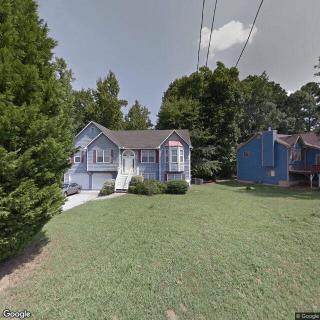
Le'glen Personal Care Home
$1,350 to $2,150 / month23.8 miles away -
from +$250 / mo
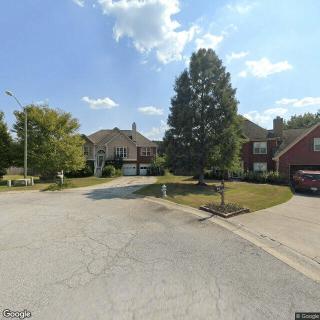
Clover Senior Living
$1,750 to $4,700 / month4.5 miles away -
from +$100 / mo
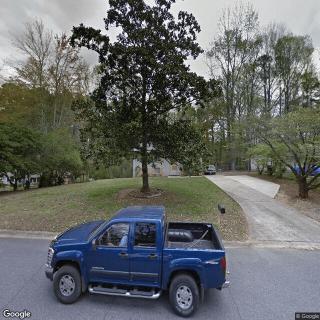
My Care Your Care Home
$1,600 to $1,900 / month3.5 miles away -
from +$200 / mo
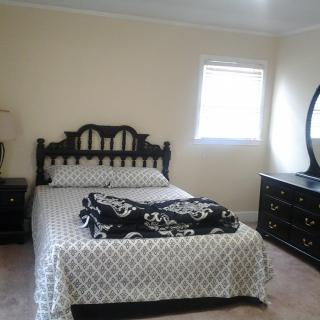
Hall of Grace Personal Care Home
$1,700 / month15.7 miles away -
from +$146 / mo
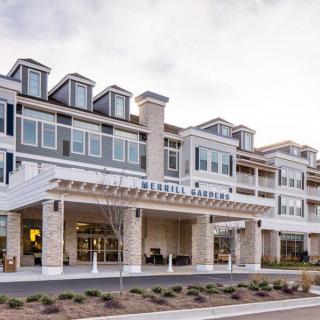
Merrill Gardens at Woodstock
$1,646 to $5,595 / month19.6 miles away
Overall Review of Milly's Home Care
Cons
 Milly's Home Care is cramped and small for seven residents.
- The home is described as an older building.
- The staff level is minimal: only one caregiver, with limited support from the owner's daughter.
- There are safety concerns about what would happen if the sole caregiver is unavailable.
- The reviewer has decided not to use Milly's Home Care.
Review
Milly's Home Care is best suited for families seeking a highly intimate, home-like setting where a very small group of residents can be cared for with close, personal attention. The arrangement leans into a micro-community model, seven beds in a compact, older house, where routines can feel familiar and caregivers can know each resident well. This setup will appeal to those who value a warm, neighborly atmosphere and are comfortable with a highly hands-on, small-team dynamic. It is not the right match for families chasing modern amenities, expansive space, or a facility with robust, professional staffing structures. In short, this is a niche option for those prioritizing closeness and simplicity over scalability and contemporary facility standards.
On the downside, the core risk is the staffing model itself. The operation hinges on a single on-site caregiver, with only occasional relief help from the owner’s daughter. The most pressing concern is what happens if that caregiver becomes unavailable due to illness or age-related limitations, the very situation that could leave multiple residents underserved or unmet. The review frames this plainly: a one-person caregiving model creates a fragile continuity of care, and the lack of backup coverage translates into real vulnerability. For families unwilling to monitor and potentially compensate for staffing gaps, this is a red flag that cannot be ignored.
Space and facility quality amplify the staffing concerns. An older, smaller home housing seven residents creates a cramped environment where movement, safety, and privacy can be compromised as needs intensify. The reviewer’s observation that the space feels tighter than what even a small home would imply underscores a practical border: comfort and dignity may be strained when care demands rise. In a setting that already operates with minimal staff, crowding compounds risk, fatigue, and the likelihood of delayed responses. The warmth of a family atmosphere may exist, but it comes at the cost of modernized space and scalable infrastructure.
Pros and cons must be weighed with concrete questions in mind. The potential upside lies in highly personalized interaction and the sense of a small, familiar community where staff likely knows the residents’ routines and preferences. Yet those benefits rest on the caregiver’s capacity to meet all needs without interruption and the ability to maintain safety in a cramped footprint. Without robust backup coverage, formal licensing clarity, and reliable medical oversight, the positives may be short-lived. Families should press for clear answers about shift coverage, licensing status, activity planning, and emergency protocols to determine whether the intimate setting can truly deliver dependable, continuous care.
Alternatives become particularly compelling for anyone whose loved one requires more robust oversight or more space. If 24/7 surveillance, timely medication administration, and quick emergency response are non-negotiable, a larger, professionally staffed facility offers greater safety margins. If privacy, mobility, and accessible design are top priorities, a modern building with dedicated safety features will outperform a cramped, older home. For families, the question is whether ongoing family involvement to compensate for staffing gaps is realistic and sustainable. Milly's Home Care may work for a very specific subset of families, but its lack of scalable staffing makes other options a prudent consideration for those prioritizing reliability and predictable care.
Bottom line: Milly's Home Care serves a narrow niche where intimacy and a low resident count are valued over formal structure and redundancy. For families willing to tolerate staffing fragility and a compact, older environment, it can offer a warm, connected living experience. Yet for those seeking dependable, scalable care with built-in backup and contemporary amenities, alternatives deserve serious consideration. Prospective residents should approach with a rigorous checklist: confirm backup staffing arrangements, verify licensing and safety standards, assess the facility’s capacity to handle medical needs beyond basic assistance, and evaluate whether the living space meets daily comfort and safety expectations. If the answers lean toward caution, advancing to a larger, better-supported option is the prudent path.
 6 resident community capacity
 1-bedroom apartments
 Assisted Living
 Board and Care Home
 Memory Care
 Cable or satellite TV
 Dining room
 Fully furnished
 Garden
 Housekeeping services
 Move-in coordination
 Outdoor space
 Private
 Telephone
 Wi-Fi/high-speed internet available
 William B Hartsfield-Atlanta International (18 miles away)
 24-hour supervision
 Activities of daily living assistance
 Ambulatory care
 Assistance with bathing
 Assistance with dressing
 Assistance with transfers
 Diabetes diet
 Diabetic care
 High acuity care
 Incontinence care
 Meal preparation and service
 Medication management
 Special dietary restrictions
 Transportation arrangement (medical)
 Transportation to doctors appointments
 Excellent access to nearby dining, parks, pharmacies, physicians, places of worship, and a hospital.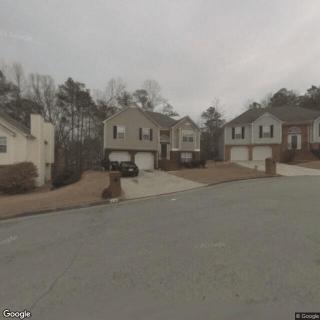
 Delirium and Dementia: Unraveling the Key Differences
 Are Dementia and Alzheimer's Disease Lethal? A Comprehensive Exploration
 Exploring the Power of Reminiscence Therapy for Individuals With Dementia