
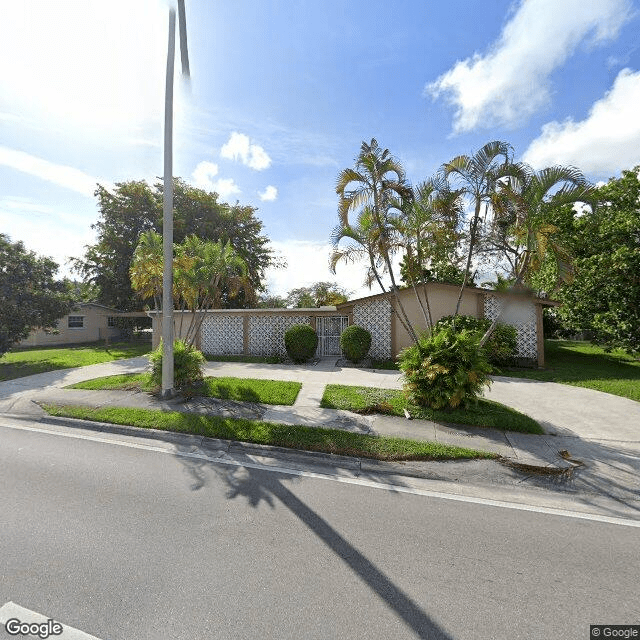
8000 Sw 88 St, Miami, FL 33156
To contact a resident: (305) 972-0375
For more information about senior living options: (866) 208-4318
Overall Review of Macarena Assisted Living Facility Inc
Pros
 It is a super nice and cozy place to care for the elderly.
- It is a place full of love for its elderly residents.
Cons
 The facility is not well maintained.
- It is not regularly cleaned; the appearance indicates neglect.
- The washing machine is located outside and dumps wastewater containing human feces into the backyard, violating Miami-Dade county code.
- The walls need to be cleaned and painted, and the roof is covered with a tarp.
- The shed is rotten and shows signs of rodents.
- The backyard trees are not maintained or trimmed, causing frequent power outages.
- In June 2022, a neighborhood-wide outage occurred due to failing to trim trees, which led to a backyard fire.
- The facility does not have a generator large enough to power the entire house during outages.
- The elderly residents are left without air conditioning, sometimes for days.
- During hurricane season 2022, they were without power for five days with no air conditioning.
- The pool is green with tree frogs at times.
- The staff spend more time on the patio smoking and talking than caring for patients inside.
- The Miami-Dade county fire rescue is constantly being called to this location for emergencies.
Review
Macarena Assisted Living Facility Inc in Miami is best suited for families seeking a small, intimate setting where residents receive personal, affectionate attention. It works for seniors who value daily companionship and a homelike atmosphere over formal amenities or glossy, large-scale operations. In short, the community appears to serve well those who don’t demand high-end infrastructure but do need consistent warmth and hands-on care in a cozy environment.
However, serious concerns loom over the facility’s operational stability. The most consequential issues are maintenance failures and safety risks that directly affect daily living and long-term well-being. Cleanliness and upkeep are disappointing: walls show neglect, the roof is covered with a tarp, and a shed sits rotten with signs of rodents. A washing machine is situated outside and discharges wastewater into the yard, a sanitary and code violation that signals deeper lapses in basic facility management. These conditions are not minor cosmetic flaws; they point to systemic maintenance gaps that can undermine residents’ health and comfort.
Compounding the maintenance problem is a troubling lack of reliable safeguards against outages and weather disruptions. The home’s trees have not been properly trimmed, with documented power outages linked to vegetation and infrastructure stress. When outages occur, there is no generator capable of powering the entire house, leaving residents without air conditioning, often for days, during heat and hurricane seasons. The risk is not theoretical: in recent years there were prolonged outages that affected comfort, safety, and potentially medical needs. A green pool environment and signs of neglect around outdoor spaces further illustrate a broader pattern of insufficient groundskeeping and outdoor maintenance. The frequency with which emergency services are summoned for incidents adds another layer of concern about the facility’s ability to manage safety-related events.
Despite these red flags, the reviews do acknowledge a core strength: a palpable sense of care and a loving atmosphere. The staff are described as creating a welcoming, home-like ambiance, and the environment can feel “cozy” and genuinely caring. For families who prize intimate, person-centered interactions, where staff relationships with residents feel personal and affectionate, this aspect can be meaningful. In such cases, the warmth of the caregivers can translate into meaningful daily connections and a sense of belonging that larger facilities may struggle to match.
Yet warmth cannot erase the practical and safety shortfalls. The key question for decision-makers is whether the pros, the personal attention, the intimate setting, and the apparent devotion of caregivers, offset the dominant cons: ongoing sanitation concerns, structural neglect, and unreliable climate control during heat and storm events. In this case, the balance tips toward risk. The absence of robust maintenance, coupled with inadequate power resilience and recurring emergency calls, creates an environment where health, safety, and comfort are not consistently protected. For families whose priority is predictable, safe, and compliant operation, these gaps are hard to overlook.
Ultimately, Macarena Assisted Living Facility Inc is not a one-size-fits-all choice. It may suit families with tight budgets who still want a loving, hands-on staff presence and who can tolerate, or even overlook, intermittent lapses in upkeep while insisting on aggressive, transparent remediation plans. Most families, however, should consider alternatives, communities with stronger maintenance protocols, verified sanitation practices, and reliable emergency power, for residents who require dependable daily living conditions and disaster resilience. If the decision leans toward exploring Macarena, an aggressive due-diligence path is essential: insist on current maintenance schedules, confirm structural and pest control compliance, verify generator capacity and backup power plans, audit recent inspections, and, critically, observe daily operations and safety drills during a visit. Without commitments that address the core failures, the choice should be redirected toward options with proven infrastructure and rigorous upkeep.
 Assisted Living
 Activities on-site
 Devotional services off-site
 Indoor common areas
 Miami International (8 miles away)
 Ambulatory care
 Diabetic care
 Meals provided






 Exploring the Contrasts Between Assisted Living and Skilled Nursing
 8 Key Indicators That Suggest It May Be Time to Transition from Assisted Living to Skilled Nursing Care
 Vibrant Senior Living: A Comprehensive Guide for Active Older Adults