
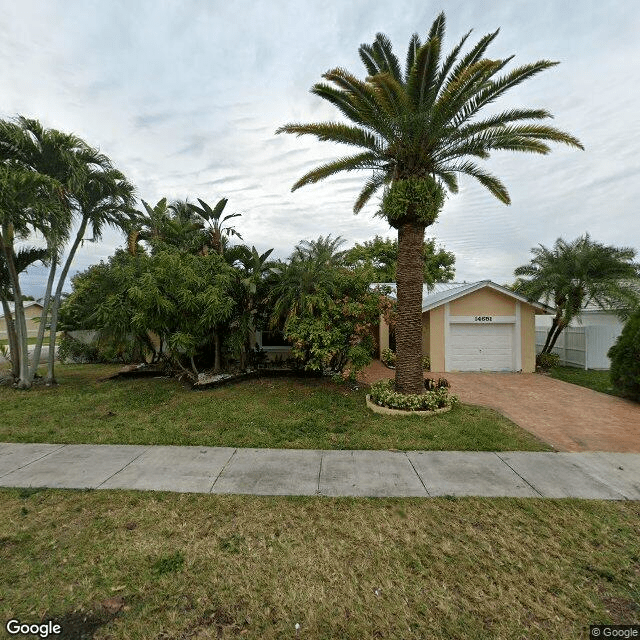
14651 Southwest 161st Street, Miami, FL 33177
To contact a resident: (305) 255-9880
For more information about senior living options: (866) 208-4318
Humble Care Assisted Living Facility Costs & Pricing
Humble Care Assisted Living Facility offers a competitive pricing structure that stands out within the context of both Miami-Dade County and the broader state of Florida. For semi-private accommodations, residents can expect to pay $1,800 per month, significantly lower than the county average of $2,250 and the state average of $3,009. Similarly, for private rooms, Humble Care's monthly rate of $2,500 is more accessible compared to Miami-Dade's average of $3,304 and Florida's statewide average of $3,699. This pricing not only reflects Humble Care's commitment to affordability but also positions it as a cost-effective option for families seeking quality assisted living services in a region where expenses can be notably higher.
| Floor plans | Humble Care Assisted Living Facility | Miami-Dade County | Florida |
|---|---|---|---|
| Semi-Private | $1,800 | $2,250 | $3,009 |
| Private | $2,500 | $3,304 | $3,699 |
Assisted Living communities with a similar price nearby
-
from +$200 / mo
Care and Love Retirement Home
$2,000 to $2,500 / month18.4 miles away -
from -$125 / mo

Assisted Living Facility Sweet Home
$1,675 to $2,675 / month10.7 miles away -
from -$300 / mo
Hogar De Amable Consuelo
$1,500 to $3,000 / month20.0 miles away -
from -$200 / mo
Epworth Village Retirement
$1,600 to $1,980 / month18.9 miles away -
from -$300 / mo
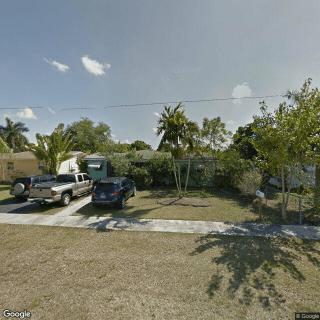
Loreto Homes
$1,500 to $2,000 / month10.2 miles away
Overall Review of Humble Care Assisted Living Facility
Pros
 They are wonderful Christian women with a passion to serve.
- They were very welcoming and provided the information needed.
- The current residents look well groomed, nourished, and happy.
- The bedrooms are a nice size.
- The gathering area offers plenty of room for everyone to sit on the sectional sofa and watch TV.
Cons
 The gathering area is a little small.
- Their pricing information on the website is incorrect.
- The price is an obstacle.
Review
This community is best suited for families seeking a small, faith-centered assisted living option in Miami where hands-on operators are central to daily life and warmth from leadership is tangible. The two people running Humble Care are described as wonderful Christian women with a genuine passion to serve, and that ethos translates into a homey atmosphere where new residents are welcomed, information is readily shared, and current residents appear well groomed, nourished, and happy. For families prioritizing personal attention, a close-knit environment, and a supportive, values-driven setting, this facility offers meaningful alignment.
Those who may want to consider alternatives are families who prioritize crystal-clear pricing and expansive common spaces. A notable friction point is price information on the website that reportedly does not align with actual costs, creating budget uncertainty from the outset. The gathering area is described as small, which can limit social spontaneity or accommodate larger family visits. For households needing more robust programming, more extensive shared spaces, or more transparent, predictable pricing, exploring other options may lead to less stress and better budget alignment.
The core pros, caring leadership, a warm, service-oriented culture, and visible attention to residents’ well-being, strongly offset the main drawbacks in several practical ways. The owners’ Christian grounding and hands-on approach tend to foster consistent routines, attentive oversight, and a sense of safety that families often seek in assisted living. Residents’ appearance and nourishment signal reliable day-to-day care, while bedrooms’ generous size supports private space within a semiprivate or single-room setup. Even with a smaller gathering area, the presence of a welcoming, family-like environment can compensate for limited public space when family members visit and participate in light, low-key activities.
That same warmth also helps mitigate the potential downsides of pricing ambiguity. When the wall of unknowns comes down, clear, itemized quotes, and direct conversations about what a semiprivate includes, families can weigh the intangible benefits of a nurturing, faith-friendly staff against the concrete cost. The residents’ well-being and the perception of ongoing attention create a sense of value that can make the price feel more reasonable, provided transparency is achieved. In short, the human elements, the trust, the feeling of being cared for, and the alignment with personal values, often justify the choice for families who can navigate the cost questions with clarity.
To make a well-informed decision, it is essential to verify pricing details directly and promptly. Request a current, written price sheet that itemizes what is included in semiprivate accommodations, meals, care levels, and any ancillary fees. Schedule a tour to observe the staff–resident interactions, the cleanliness and upkeep of bedrooms, and the overall warmth of the living spaces. Inquire about social programming, daily activity schedules, and how memory care or specialized assistance would be managed if needs change. Inquire about the size and accessibility of gathering spaces during peak visiting hours to ensure comfort for larger family visits. The more concrete the information gathered, the easier the decision becomes.
Ultimately, Humble Care Assisted Living Facility offers a compelling option for families who prize a small, personally led, faith-infused community where residents appear content and well cared for. The notable caveats center on price transparency and modest common areas, which can be meaningful constraints depending on budget and social needs. For those who can secure clear pricing and tolerate a compact shared space, this Miami option represents a dependable, values-aligned choice with the potential for strong personal connections and steady daily care. If transparency and social capacity are nonnegotiable, exploring additional communities remains prudent.
 6 resident community capacity
 Assisted Living
 Board and Care Home
 Respite Care
 Activities off-site
 Cable or satellite TV
 Dining room
 Fully furnished
 Garden
 Housekeeping services
 Indoor common areas
 Move-in coordination
 Outdoor common areas
 Private
 Telephone
 Wheelchair accessible showers
 Wi-Fi/high-speed internet available
 Miami International (15 miles away)
 24-hour supervision
 Assistance with bathing
 Assistance with dressing
 Assistance with transfers
 Diabetes diet
 Incontinence care
 Meal preparation and service
 Medication management
 Special dietary restrictions
 Transportation arrangement (medical)
 Transportation to doctors appointments
 Art classes
 Bible study group
 Day trips and outings
 Educational speakers / life long learning
 Jewish services
 Live dance or theater performances
 Live musical performances
 Stretching classes


 8 Key Indicators That Suggest It May Be Time to Transition from Assisted Living to Skilled Nursing Care
 Vibrant Senior Living: A Comprehensive Guide for Active Older Adults
 When to Transition from Assisted Living to Memory Care: Key Indicators, Steps, and Finding the Right Community