
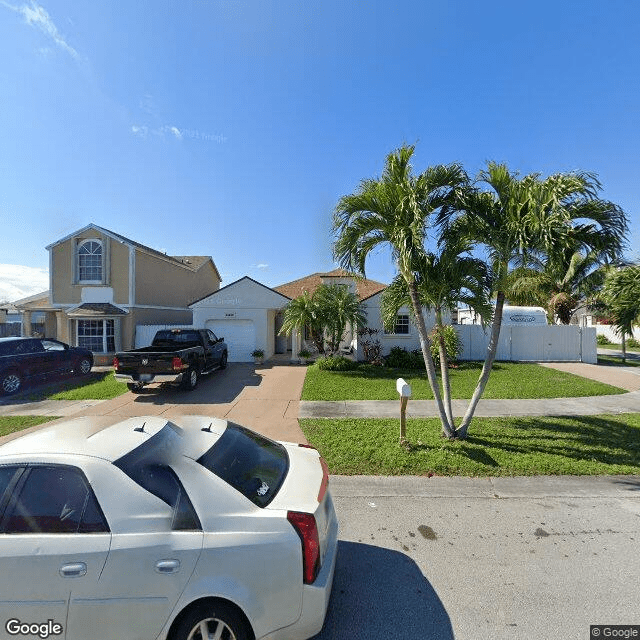
15600 Southwest 143rd Avenue, Miami, FL 33177
To contact a resident: (786) 426-3787
For more information about senior living options: (866) 208-4318
Family First Assisted Living Facility Costs & Pricing
Family First Assisted Living Facility offers competitive pricing compared to the broader market in Miami-Dade County and throughout Florida. For a semi-private room, residents at Family First pay $1,500 per month, significantly lower than the county average of $2,250 and the state average of $3,009. Private rooms are also priced attractively at $2,000, favorably contrasting with Miami-Dade's average of $3,304 and Florida's statewide figure of $3,699. Additionally, for those seeking a one-bedroom option, Family First's rate of $2,500 remains more affordable than both the Miami-Dade average of $3,775 and the state average of $3,864. These figures highlight Family First as a cost-effective choice for families seeking quality assisted living services without compromising on care or comfort.
| Floor plans | Family First Assisted Living Facility | Miami-Dade County | Florida |
|---|---|---|---|
| Semi-Private | $1,500 | $2,250 | $3,009 |
| Private | $2,000 | $3,304 | $3,699 |
| 1 Bedroom | $2,500 | $3,775 | $3,864 |
Memory care communities with a similar price nearby
-
from -$200 / mo
Caring for You #1 Assisted Living Facility, INC
$1,300 / month13.4 miles away -
from -$100 / mo
Gonzalez & Sons Home Care
$1,400 to $2,500 / month14.1 miles away -
from -$100 / mo
Gonzalez & Sons Home Care II
$1,400 to $2,500 / month14.2 miles away -
About the same
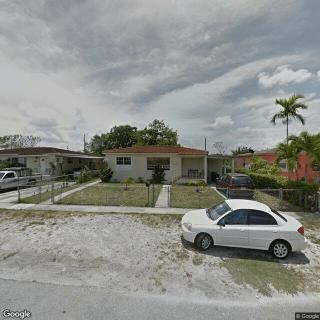
Hogar De Amable Consuelo
$1,500 to $3,000 / month19.6 miles away -
About the same
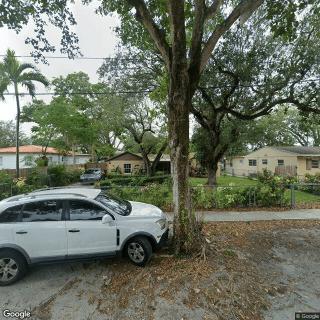
North Miami Angel Gardens ALF, Inc
$1,500 / month24.2 miles away
Overall Review of Family First Assisted Living Facility
Pros
 The staff is friendly and nice.
- The staff is very helpful when asked.
- Mom is liking the food.
- The reviewer would recommend this community.
Cons
 Mom would rather be home with me, but she can't.
- She is not doing any of the activities or social things.
- There are hardly any activities.
Review
Family First Assisted Living Facility in Miami is best suited for seniors who want a clean, orderly setting with friendly, responsive staff and a predictable daily routine, and who do not require an intensive program of activities. This community works well for residents who are reasonably independent but still need help with daily tasks and supervision, yet do not crave a bustling social calendar. Families seeking a quiet, home-like atmosphere where meals are stable and staff can be counted on to respond when asked will find a compatible match here. In short, the environment favors calm, dependable care over high-energy engagement or complex care needs.
Key positives include a clean facility and approachable staff. Reviews repeatedly highlight cleanliness and staff friendliness, with personnel described as helpful when asked. The consistency of service creates a sense of reliability for families worried about daily oversight. Meal quality, at least in the observed cases, appears acceptable and even appreciated by residents who value familiar, uncomplicated dining. These factors provide practical reassurance: a resident can be cared for with courtesy and attentiveness in a setting that feels orderly, without the friction of urgent care gaps.
Yet the main drawback is a noticeable scarcity of activities and structured social opportunities. The same feedback that praises the staff also notes that residents are not engaged in organized events or group activities, and one resident is keeping largely to herself. That combination can lead to slower social integration and under-stimulation over time, especially for residents who thrive on routine social contact or cognitive-activating programming. For a family prioritizing evenings and days spent in quiet, this may be acceptable; for others, it represents a meaningful miss.
How the positives stack against the negatives becomes a matter of priorities. The clean, orderly environment, combined with consistently friendly staff and responsive help, creates a trustworthy baseline for safety and comfort. When a resident asks for assistance, the team is accessible, and that dynamic reduces stress for caregivers and families. The predictable meals and overall calm atmosphere can preserve dignity and autonomy for residents who do not require constant programming. In scenarios where safety and ease of access take precedence over social activity, these pros can compensate for limited programming.
Who should consider alternatives? Families seeking vibrant engagement, robust activity calendars, or memory-care oriented programming should look elsewhere. If a resident benefits from daily, facilitated social groups, outings, cognitive-stimulation sessions, or structured exercise, this community may fall short. Similarly, if there is a need for more intensive assistance, specialized care, or dynamic resident life that fosters ongoing interaction, exploration of other options is prudent.
Bottom-line decision guidance: for a senior who values a clean, well-staffed, calm setting and can thrive with minimal structured activity, Family First provides a solid, low-friction home base. The clear strengths, cleanliness, accessibility of staff, and dependable meals, offer substantial practical benefits that can outweigh the limited social programming. However, for families where daily engagement and social opportunities are non-negotiable, this community may feel hollow and require a plan to supplement. Families should weigh the residentā€™s tolerance for quiet days against the desire for organized activities, and align the choice with what sustains social and cognitive vitality as well as daily safety.
 Board and Care Home
 Day Program
 Memory Care
 Private
 Miami International (14 miles away)


 Exploring the Contrasts Between Assisted Living and Skilled Nursing
 Vibrant Senior Living: A Comprehensive Guide for Active Older Adults
 Assisted Living and Memory Care: Understanding Their Core Differences