


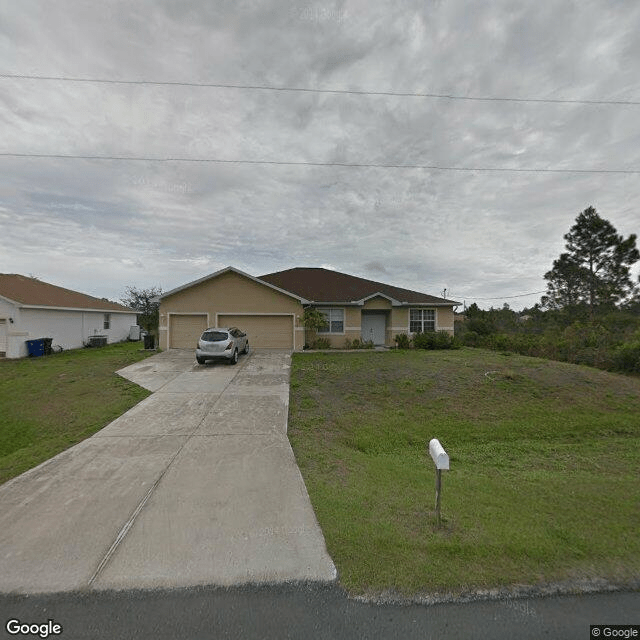
412 Muriel Street, Lehigh Acres, FL 33972
To contact a resident: (239) 200-9111
For more information about senior living options: (866) 208-4318
Alida's Loving Family Care Costs & Pricing
Alida's Loving Family Care offers competitive pricing for its services compared to both Lee County and the broader Florida state averages. For a semi-private room, the monthly cost at Alida's is $3,000, which is notably less than the Lee County average of $3,538 yet slightly higher than the statewide average of $3,009. When it comes to private rooms, Alida's charges $6,000 per month; while this is significantly higher than both Lee County's average of $4,293 and Florida's average of $3,699, it reflects the comprehensive care and personalized attention that residents receive in a more intimate setting. Overall, Alida's Loving Family Care positions itself as a valuable option by balancing quality care with reasonable pricing in comparison to local and state costs.
| Floor plans | Alida's Loving Family Care | Lee County | Florida |
|---|---|---|---|
| Semi-Private | $3,000 | $3,538 | $3,009 |
| Private | $6,000 | $4,293 | $3,699 |
Senior living communities with a similar price nearby
-
from +$320 / mo

American House Bonita Springs Independent Living
$3,320 to $4,460 / month21.0 miles away -
from -$495 / mo
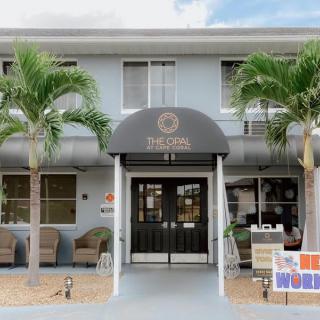
The Opal at Cape Coral
$2,505 to $3,870 / month21.7 miles away -
from +$100 / mo
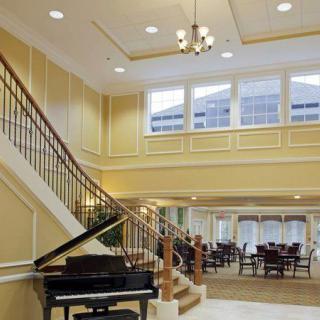
Canterfield of Fort Myers
$3,100 to $6,200 / month19.1 miles away -
from -$500 / mo
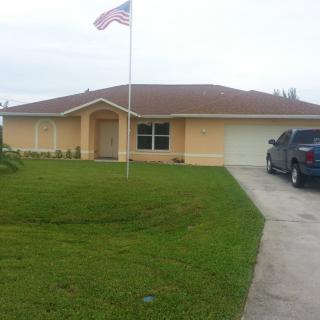
Village I Assisted Living Facility
$2,500 to $4,300 / month21.7 miles away -
from -$375 / mo
Discovery Commons Cypress Point
$2,625 to $6,000 / month16.3 miles away
Overall Review of Alida's Loving Family Care
Pros
 She enjoys her time when she goes here.
- Everything works well for her visits to this family care center.
- She is in good hands at this family care center.
- The staff provide her with great care.
- She is satisfied with the services provided.
- The care center is a nice place.
Review
Alida's Loving Family Care in Lehigh Acres, FL is best suited for families seeking a small, home-like assisted living option where the resident is treated with personal attention and dignity. The single favorable review highlights a setting where a mother enjoys her visits, feels she is in good hands, and receives care that satisfies the family’s expectations. This community shines for those who value warm, relational care over clinical polish, preferring caregivers who know residents by name and respond quickly to daily needs. For families prioritizing trust, comfort, and a straightforward caregiving experience, this is a compelling option that fosters a sense of continuity and safety.
However, those with more demanding medical requirements or a need for expansive programming may want to explore alternatives. A parent needing around-the-clock nursing oversight, specialized memory care, or access to broad on-site therapies may find that a smaller family-care setting does not offer the level of clinical resources or the volume of structured activities found in larger facilities. Prospective residents should verify whether routine physician coordination, medication management, and emergency response meet their expectations, and assess if transportation and social programming align with current independence and engagement goals.
From the available feedback, the primary advantages center on trust, attentiveness, and perceived quality of care. The reviewer notes that everything works well for their mother, who enjoys time there, and that the family feels confident she is receiving "great care." The explicit satisfaction and the decision to recommend to friends signal consistent caregiver engagement, responsiveness, and a reliable, comfortable routine. In practical terms, these factors translate into lower anxiety about daily safety, easier care coordination with family, and a predictable, gentle pace that suits many seniors seeking dignity in daily living. Such strengths can be decisive when the family’s priority is reliability over bells and whistles.
Yet the narrative stops short of detailing staffing levels, round-the-clock availability, or access to medical specialists. Without explicit information on ratios, nurse coverage, or memory-care protocols, potential drawbacks remain possible gaps to confirm. Families should probe the depth of supervision, whether licensed nurses are on-site, how medications are managed, and what happens during evenings and weekends. The absence of a detailed activity calendar or meal program in the review means one should verify opportunities for social engagement, exercise, and meaningful routines, especially for residents who thrive on variety or require structured daily structure.
Overall, the proven care quality and the expressed satisfaction act as strong offset to the typical concerns associated with small, home-like settings. The personal connection between staff and resident appears to be a core strength, reducing risks of isolation and miscommunication that sometimes plague larger facilities. When a family member readily endorses the center to friends, it serves as a practical testament to stability and trust. For decision-makers, this translates into a practical rule: prioritize a trial visit specifically to observe caregiver-resident interactions, ask for care-planning processes, and confirm that the level of oversight aligns with the senior’s medical and daily living needs. The positives here are not merely sentimental; they indicate a tangible, dependable caregiving environment.
Bottom line: Alida's Loving Family Care stands out for families who want intimate, attentive care and a home-like atmosphere where a loved one can feel secure and valued. The caveat is that families needing extensive medical management, memory-support specialization, or a wide array of scheduled therapies should actively compare with larger centers to ensure those services are available. If the aim is straightforward, consistent daily living with responsive, personal care, this community should be on the short list and merits a direct visit to confirm fit, cost, and long-term suitability. In the right circumstances, it can be a dependable, warm option that delivers peace of mind.
 Board and Care Home
 Day Program
 Air-conditioning
 Bath tubs
 Cable or satellite TV
 Devotional services off-site
 Full kitchen
 Ground floor units
 Handicap accessible
 Indoor common areas
 Outdoor common areas
 Private
 Private bathrooms
 Respite or short term stays offered
 Wheelchair accessible showers
 Wi-Fi/high-speed internet available
 Southwest Florida International (12 miles away)
 Ambulatory care
 High acuity care
 Incontinence care
 Medication management
 Anytime dining
 Bible study group
 Happy hour
 Jewish services
 Live musical performances

 Top Cars for Senior Drivers and Essential Safety Innovations
 A Closer Look at Private Pay Home Care
 Comprehensive Approaches for Arthritis: A Detailed Guide to Symptoms, Causes, and Care