
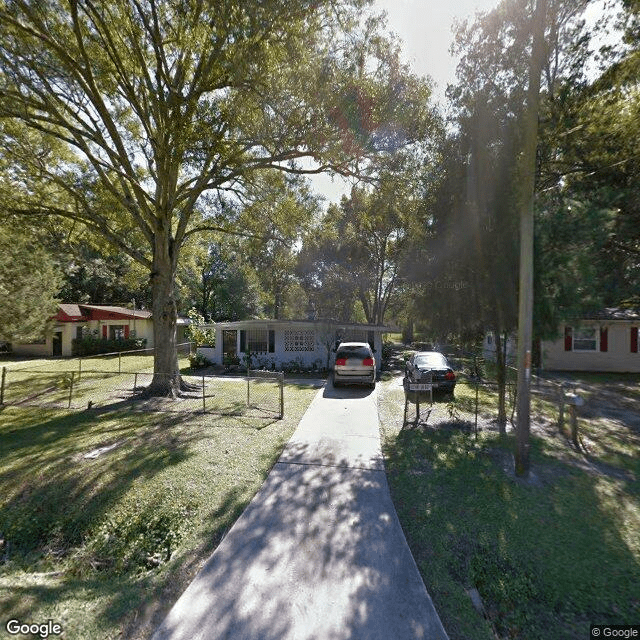
3056 W 1st St, Jacksonville, FL 32254
To contact a resident: (904) 388-7086
For more information about senior living options: (866) 208-4318
Overall Review of Stephanie's Love and Care Facility
Pros
 The home was spotless and had a pleasant scent.
- The residents were resting comfortably.
- Barbara has a genuine passion for caring for her residents.
- Barbara’s dedication and expertise are evident.
- She is a kind and compassionate woman.
- The facility felt like a home with a comforting atmosphere.
- Loving Care is described as a rare gem with attentive staff.
- The staff provided personal care and attention, took residents outside, and facilitated socialization.
- Families are grateful every day for finding Barbara and her staff.
Cons
 Two other mainstream facilities provided horrible experiences.
- The family had a traumatic experience at a larger local Assisted Living/Memory Care Facility.
- The place might not look like much from the outside.
Review
Stephanie's Love and Care Facility in Jacksonville, FL is best suited for families seeking a small, home-like environment where an experienced nurse-run operation delivers highly personalized daily care. The setting operates like a private residence with a deliberately low resident count, which translates into attentive supervision, meaningful interactions, and a calm, predictable routine. For those who want to see a caregiver-led approach in action, where a seasoned RN with decades of hands-on experience oversees operations and staff, this is the model that will feel most reassuring. The overall impression from long-standing, satisfied families is that the care provided here is trustworthy, patient-centered, and consistently organized around the comfort and dignity of every resident.
That said, there are clear alternatives to consider for families with more complex medical needs or a preference for a larger, more resource-rich campus. The intimate eight-resident cap is a double-edged sword: it guarantees depth of attention, but it also constrains capacity, program breadth, and the range of on-site services. For loved ones who require extensive memory-care programming, high-intensity medical management, or a broader activity calendar and transportation options, a bigger facility with a formal infrastructure may be a better fit. In short, those needing rapid access to specialized therapies or 24/7 clinical staffing should evaluate other options before committing.
On the upside, the strongest pros anchor decision-making here. The environment is impeccably kept, clean, odor-free, and calm, set in a house-like space where residents appear at ease and unhurried. The operator’s 30 years as a registered nurse surfaces in every detail: careful oversight of staff, thoughtful care plans, and a practical, hands-on approach to daily needs. Families repeatedly emphasize the transparency of operations, the willingness to answer questions directly, and the ability to interact with care providers on a timetable that respects family involvement. The openness to visits at any hour, the emphasis on personal attention, and the proactive socialization of residents create a sense of safety that larger institutions sometimes struggle to match. The setting also supports spontaneous family contact, which can be a decisive comfort for decision-makers weighing ongoing care.
Nevertheless, the small scale carries practical limitations. The most obvious constraint is capacity; eight residents max inevitably limits the breadth of social opportunities, specialized programming, and the availability of backup coverage during vacations or illness. While staff are clearly committed, the model does not promise the same depth of medical equipment, on-site specialists, or rapid escalation pathways that larger facilities routinely provide. For families with residents who have complex medication regimens, requiring frequent professional monitoring, or who might suddenly need expanded memory-care supports, the fit may falter unless contingency plans are in place. In short, the charm and warmth of a home environment come with trade-offs in scale and medical redundancy.
The key to weighing these factors lies in the alignment of expectations with the care model. The pros, the intimate setting, nurse-led oversight, transparent operations, and genuine, day-to-day kindness, offset many potential drawbacks for seniors who thrive on routine, personal connection, and visible caregiver stability. For families prioritizing peace of mind over amenities, this arrangement delivers a reassuring level of attention, predictability, and social warmth that larger campuses often struggle to replicate. The opportunity to observe care in real time, ask direct questions, and participate in daily life with the resident adds a practical confidence that should not be undervalued.
For families mulling next steps, the recommendation is clear: if the priority is a trustworthy, empathetic home-like environment with accessible, responsive care from a nurse-led operator, Stephanie’s Love and Care Facility offers a compelling match in Jacksonville. If, however, the loved one requires robust memory-support programs, extensive clinical services, or a wider network of activities and transportation, alternative options should be seriously explored. Prospective residents should insist on meeting the caregiver team, request a sample daily schedule, review how medications are managed, and confirm how emergencies are handled after hours. The right choice hinges on whether the home-like model truly aligns with the resident’s medical complexity, social needs, and the family’s comfort with capacity and resources.
 Board and Care Home
 Jacksonville International (11 miles away)


 Comprehensive Insights into Palliative Home Care: What It Is and What to Expect
 Skilled Nursing Facilities vs. Nursing Homes: Making Sense of the Differences
 A Detailed Examination of Nursing Home Costs Across the U.S.