

1500 4th Ave W, Bradenton, FL 34205
To contact a resident: (941) 747-7997
For more information about senior living options: (866) 208-4318
Overall Review of Advocates Incorporated
Pros
 Senior Crossroads delivers exceptional care and support to both clients and their families.
- Denise, the owner, guides the team to ensure the best possible outcomes.
- Michelle and the staff are deeply committed and treat clients with the same compassion and respect they would give their own loved ones.
- They provide invaluable support and guidance to all of their clients.
- Denise is extremely hands-on and makes herself available at all hours.
- Denise's team is very involved with all of their clients and treats them as if they were their own family members.
- Denise is a wonderful advocate who ensures clients receive treatment, and she is a great listener and communicator.
- Denise and her team go above and beyond the call of duty.
- Denise coordinates doctors, appointments, and medications to keep care on track.
- Their advocacy has life-saving effects on clients' care.
Review
This community is best suited for families facing complex elder-care logistics who need relentless, hands-on advocacy to navigate hospital stays, multiple specialists, and transitions between care settings. The strongest care-management models center on a founder-led, highly available team that treats clients with the care and scrutiny usually reserved for family. In the reviews, Denise Drabik and her colleagues are described as deeply compassionate, highly responsive, and relentlessly practical, able to schedule tests, coordinate appointments, attend key visits, and mobilize a vetted network of providers. For Bradenton families dealing with ongoing medical hurdles or with a loved one who lives at a distance, this level of on-the-ground partnership can be the difference between chaos and a coherent, life-affirming care plan.
Those who may want to consider alternatives are households with more modest needs or tighter budgets, or those who prefer to stay within a single facility’s own care-management structure. If the goal is occasional guidance rather than a comprehensive, always-on partnership, or if the family can comfortably coordinate with a local set of providers without a dedicated advocate, another model may fit better. Likewise, families who require minimal outside intervention, or who favor a leaner approach to care planning, should compare options that emphasize shorter engagement or lower ongoing costs. The key is to match the intensity of the service to the complexity of the loved one’s medical and daily living needs.
The strongest pros in a robust care-management relationship largely offset the main cons when they are aligned with real needs. The advantages include constant availability, an owner-led approach, and a team that treats clients as family, leading to highly personalized attention and rapid problem solving. The ability to coordinate appointments with specialists, secure tests, accompany the client to visits, and adjust plans on the fly reduces family stress and helps ensure treatment integrity. A wide, vetted network of third-party providers enables access to home health aides, one-on-one supports, and other services that might be difficult to assemble from scratch. The trade-off is cost and the potential perception of overreach; when the value is proven through fewer hospitalizations, better care continuity, and clearer communication, the cons recede in importance.
Evidence from the reviewed experiences highlights a clear, repeatable pattern: a boots-on-the-ground partner who can travel, visit hospitals, and advocate from within the health system. The model thrives on hands-on leadership, frequent updates to families, and proactive problem resolution. Families repeatedly note that the team’s availability, often described as around the clock, minimizes the sense of being out of the loop and accelerates care decisions. Attentive staff like Michelle and others conduct hospital and doctor visits, coordinate with specialists, and ensure plans are put in motion. Even when distant relatives rely on this presence, the result is a tangible increase in the loved one’s quality of life and a substantial reduction in family anxiety.
For families evaluating Advocates Incorporated, use these lessons as a checklist. Seek a clearly defined care-management process with a dedicated point person who is reachable outside standard hours, a team that will physically accompany the client to appointments when needed, and a transparent communications cadence that keeps families informed at every turn. Ask for details about how care plans are developed, how often they are updated, and how decisions are escalated when a crisis arises. Probe the breadth and vetting of the provider network, the flexibility to arrange home health and in-home supports, and the ability to coordinate across different facilities and payers. Finally, request concrete references that can speak to responsiveness, reliability, and outcomes.
The bottom line is decisive: for families needing a high-touch, comprehensive care-management partner, this service model offers a powerful combination of hands-on leadership, seamless coordination, and a family-centered approach. If that level of involvement aligns with the loved one’s needs and the budget allows, Advocates Incorporated should be pursued with confidence, using the evidence-based expectations highlighted by the strongest care-management experiences. If the situation calls for lighter touch, closer proximity to a single facility, or cost-conscious options, alternatives that emphasize more limited engagement may be the prudent path.
 Assisted Living
 Activities on-site
 Devotional services off-site
 Indoor common areas
 Sarasota Bradenton International (7 miles away)
 Ambulatory care
 Diabetic care
 Meals provided




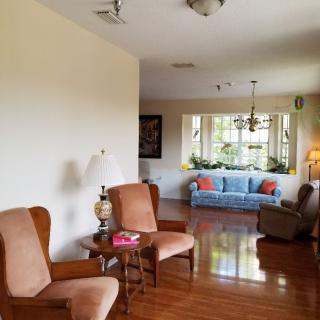



 Comprehensive Residential Support and Assisted Living Solutions for Individuals with Disabilities
 Comprehensive Supportive Living Arrangements for Adults with Disabilities
 Funding and Affording Assisted Living: A Thorough Overview