For more information about senior living options: (866) 208-4318
4.4 from 32 reviews
5 stars
22
4 stars
6
3 stars
2
2 stars
0
1 stars
2
Whitney Center Costs & Pricing
Whitney Center offers a studio room at a monthly cost of $94,800, which significantly exceeds the average rates in both New Haven County and the state of Connecticut. Within New Haven County, the typical cost for similar accommodations is approximately $6,890 per month, while the statewide average stands at around $5,919. This discrepancy highlights that Whitney Center is positioned as a premium option in the market, likely reflecting its unique amenities, services, or level of care provided to residents. Potential clients should consider these factors alongside their budget and personal needs when evaluating options.
Floor plans
Whitney Center
New Haven County
Connecticut
Studio
$94,800
$6,890
$5,919
Overall Review of Whitney Center
differentiator4 reviews mention this
Staff support comes through
Nurses and assistants are described as highly attentive and responsive.
Residents and family members repeatedly highlight nurses and other assistants as friendly and attentive, including regular check-ins. One review also notes the care team’s visibility when issues came up and describes a staffed health-care unit on the premises. This lines up with the community offering 24-hour call support, 24-hour nursing, and 24-hour supervision.
common7 reviews mention this
Dining feels restaurant-style
Food quality stands out, with dining described as more formal than cafeteria service.
Several reviews mention well-prepared meals and a dining experience that feels upscale, including one description of fine dining with waitstaff dressed for service. Other residents also talk about variety in meal options, even when one reviewer felt the meals were not the best. The community offers restaurant-style dining and supports special dietary needs like low/no sodium and vegetarian options.
common7 reviews mention this
Activities keep days full
Residents are consistently able to stay busy with frequent activities and events.
Reviews describe daily opportunities to connect and participate, along with movies and community programming that happen often. Families also mention activities such as bingo and game nights, plus scheduled outings and trips to local areas. The community’s offerings include planned day trips, fitness programs, resident-run activities, and scheduled daily activities.
common3 reviews mention this
An all-in-one campus feel
Visitors describe an apartment-like setting where many services are under one roof.
Multiple reviews characterize the building as upscale and apartment-like, with a campus setup designed to handle more than just housing. Families mention conveniences such as a salon, store, pool and fitness options, and other spaces included on-site. That matches the community amenities like a wellness center, fitness room, beauty salon, and outdoor space.
caveat2 reviews mention this
The main downside is cost
Pricing is a recurring concern for some families.
At least two reviewers flag cost as a major drawback, with one saying the community was too expensive despite liking the apartments. Another review calls it an expensive facility while still describing many experiences and on-site features. For studio pricing specifically, the listed studio price is far above county and state benchmarks.
How we summarize
Counts show how many written reviews mention each theme; a review can touch several themes, and only frequently mentioned themes are displayed.
Features
Housing
500 resident community capacity
Types of Care
Assisted Living
Continuing Care Retirement Community (CCRC)
Respite Care
Skilled Nursing Facility
Pets
Cats allowed
Dogs allowed
Amenities
Activities on-site
Air-conditioning
Beautician on-site
Beauty salon
Cable or satellite TV
Computer center
Devotional services off-site
Fitness room
Fully furnished
Gaming room
Garden
Housekeeping services
Indoor common areas
Kitchenette
Laundry
Move-in coordination
Outdoor space
Overnight guests
Private bathrooms
Resident parking
Restaurant-style dining
Small library
Telephone
Wellness center
Wi-Fi/high-speed internet available
Transportation
Community operated transportation
Transportation & parking
Transportation arrangement
Transportation arrangement (non-medical)
Care Services
24-hour call system
24-hour nursing
24-hour supervision
Activities of daily living assistance
Ambulatory care
Assistance with bathing
Assistance with dressing
Assistance with transfers
Care with behavioral issues
Coordination with health care providers
Diabetes diet
Diabetic care
Meal preparation and service
Medication management
Physical therapy
Special dietary restrictions
Dining
Diabetes diet
Low / no sodium
Meals provided
Special dietary restrictions
Vegetarian
Activities
Activities on-site
Community-sponsored activities
Concierge services
Devotional activities offsite
Fitness programs
Planned day trips
Resident-run activities
Scheduled daily activities
Languages Spoken
English
Videos
Nearby Places of Interest
Pharmacies
Walgreens (0.6 miles)
Walgreens (1.1 miles)
CVS Pharmacy (1.3 miles)
Apex Pharmacy, Home Care & Nutrition Center (1.9 miles)
Walgreens (2.5 miles)
People's Pharmacy Express (2.8 miles)
CVS Pharmacy (2.8 miles)
Restaurants
Wood-n-Tap Bar & Grill (1.4 miles)
McDonald's (1.7 miles)
Nica's Market (2.3 miles)
Edge of The Woods Market (2.4 miles)
Modern Apizza (2.5 miles)
September in Bangkok (2.6 miles)
Friendly's (2.6 miles)
Cafes
Panera Bread (1.4 miles)
Starbucks (3 miles)
Kaiydens Coffee (3.1 miles)
Starbucks (6 miles)
Starbucks (7 miles)
Physicians
Dermatology Physicians of Connecticut (1.6 miles)
Douglas J Grunwald MD (2.1 miles)
Dixwell Medical Walk-In Center (2.1 miles)
Cornell Scott - Hill Health Center of 226 Dixwell Avenue New Haven, CT (2.1 miles)
Highly Maintained Body Shop (2.5 miles)
Kennedy & Perkins Opticians - New Haven (2.5 miles)
CT Orthopaedic Specialists (2.7 miles)
Parks
East Rock Park (1.8 miles)
Edgewood Park (2.7 miles)
Wooster Square Park (3.1 miles)
Theaters
Cinemark North Haven (2.6 miles)
Hospitals
Yale New Haven Hospital Saint Raphael Campus (2.9 miles)
Hill Health Center Grant Street Partnership (4.2 miles)
Veterans Affairs CT Healthcare System: West Haven Medical Center (5 miles)
Hospital of Saint Raphael (6.9 miles)
Harbor House (7.1 miles)
Yale New Haven Hospital Blood Drawing Station (7.4 miles)
Transportation
New Haven State Street Station (3 miles)
New Haven Union Station (NHV) - Metro North/Amtrak/Shore Line East (3.5 miles)
Whitney Center offers a studio room at a monthly cost of $94,800, which significantly exceeds the average rates in both New Haven County and the state of Connecticut. Within New Haven County, the typical cost for similar accommodations is approximately $6,890 per month, while the statewide average stands at around $5,919. This discrepancy highlights that Whitney Center is positioned as a premium option in the market, likely reflecting its unique amenities, services, or level of care provided to residents. Potential clients should consider these factors alongside their budget and personal needs when evaluating options.
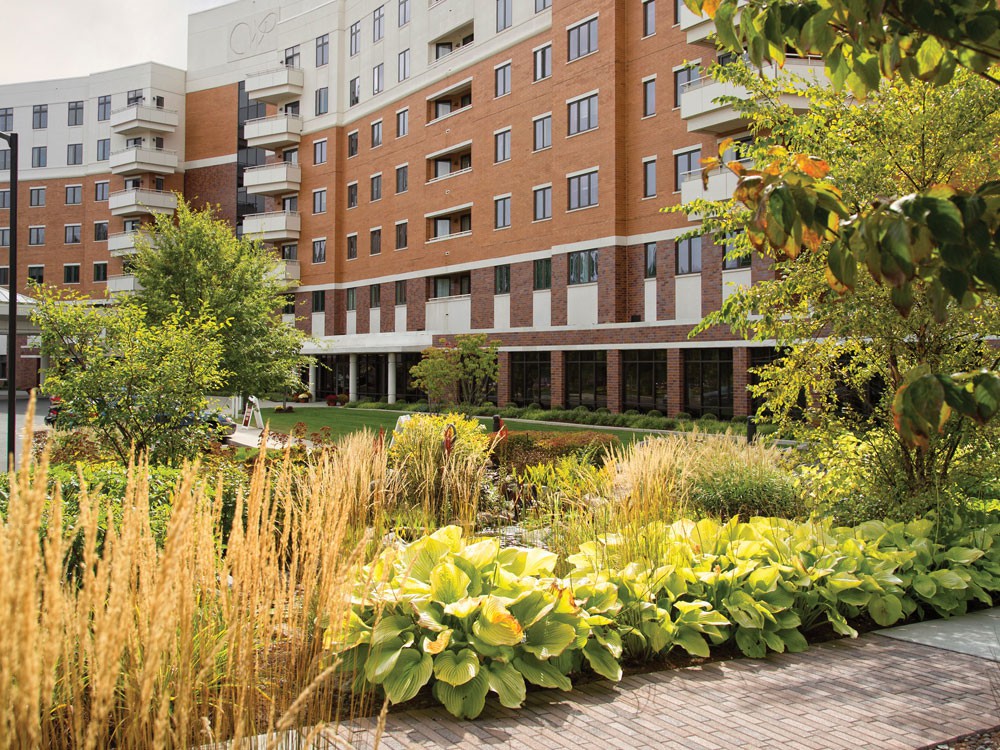
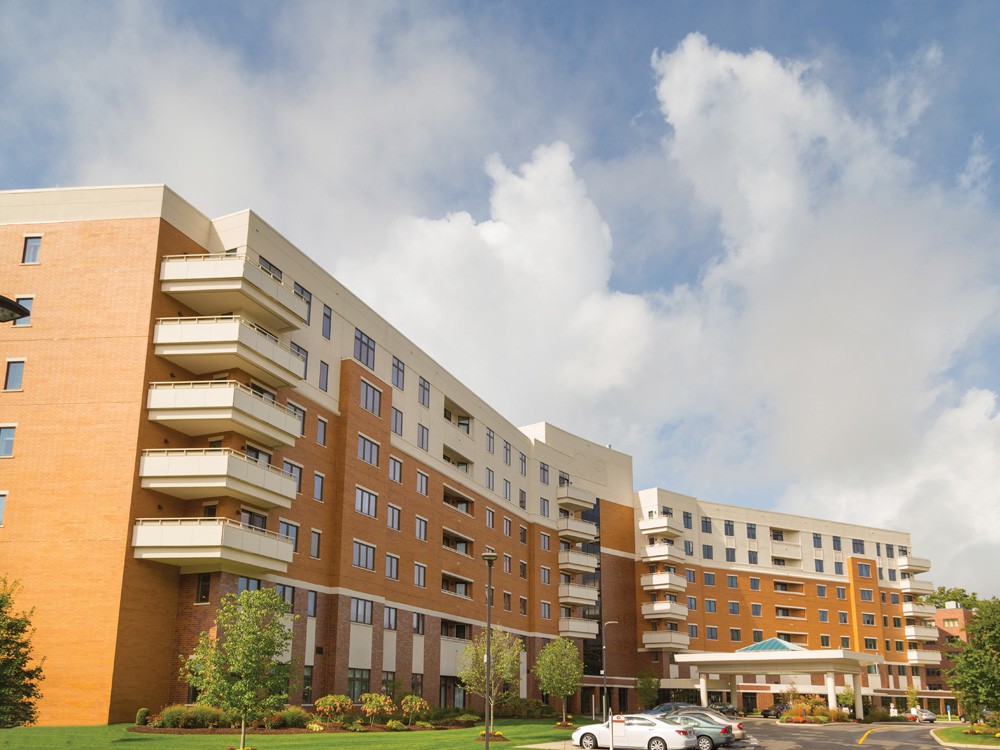
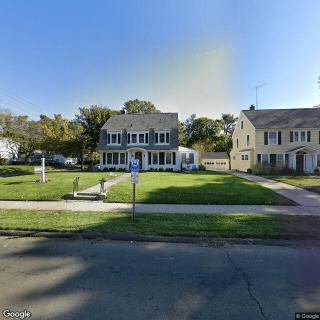
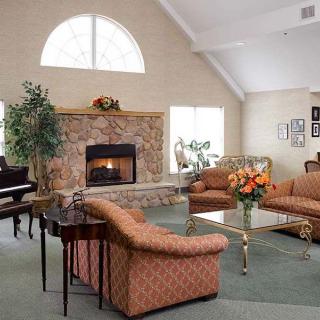
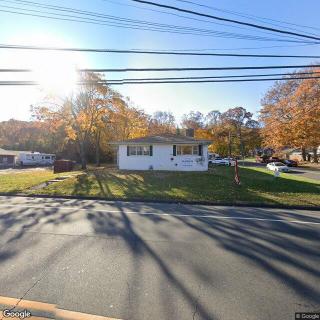
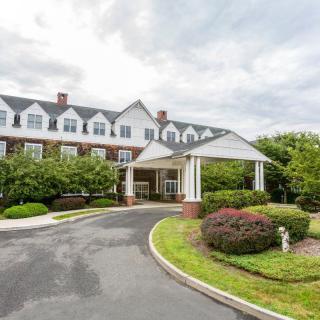
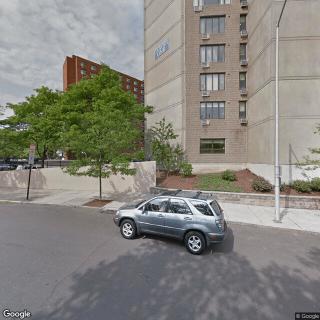
Whitney Center on seniors.fyi includes 6 photos including images showing garden, building, landscaping, hallway, interior, windows, architecture, apartment building, and more.
Nearby Communities
Meadow Mills
Hamden, CT
4.5 from 52 reviews
$6,250 / month
Well-maintained memory-care focused facility with attentive staff and engaging activities.
Davenport-Dunbar Residence Inc
Hamden, CT
3.9 from 10 reviews
Convenient location with nearby dining, parks, healthcare, transport, and cultural options.
Home Instead - Hamden, CT
Hamden, CT
4.7 from 26 reviews
Compassionate staff with hands-on owner involvement.
Atria Larson Place
Hamden, CT
4.4 from 91 reviews
$3,195 to $5,300 / month
Beautiful, well-maintained community with engaging activities and friendly, attentive staff.
A & D Home Health Solutions
Hamden, CT
3.5 from 8 reviews
Caring, reliable caregivers and accommodating service.
Garden View Manor
Hamden, CT
3.6 from 7 reviews
Benchmark Senior Living At Hamden
Hamden, CT
4.4 from 91 reviews
$4,100 to $6,650 / month
Attentive staff in a clean, activity-rich community with personalized care.
Hamden Rehabilitation & Health Care Center
Hamden, CT
3.6 from 80 reviews
Spacious, clean rooms with attentive staff.
Tower One/Tower East
New Haven, CT
4.3 from 29 reviews
Vibrant kosher environment with engaging activities and convenient on-site amenities.
Medicaid coverage for assisted living varies by state and is primarily available to low-income individuals, with eligibility dependent on strict income and asset limits. Some states offer HCBS waivers for specific services in assisted living, but families must generally cover room and board costs, and should verify facility acceptance of Medicaid while considering potential waiting lists.
Medicaid waivers for assisted living services provide vital support for seniors and individuals with disabilities in need of long-term care, with varying state-specific eligibility criteria and benefits. These waivers cover personal care and case management but often do not fully cover room and board, leading to waiting lists for many applicants.
The article examines the complexities of assisted living for individuals with disabilities, emphasizing the need for tailored care solutions that enhance quality of life and social inclusion, while addressing financial challenges and advocating for community integration. It discusses various housing options, the importance of financial assistance through public benefits, and highlights trends towards integrated and technology-driven solutions in disability-focused housing.
Balcony, Modern Architecture, and Apartment Building
Home Office
Get PricingAsk A QuestionSchedule A TourContact Senior Advisor
By clicking submit, you agree to our Partner's Terms of Use. You
also consent to receive calls and texts, which may be autodialed, from our Partner. Your consent is not a condition to
using our Partner's service. Please visit our Partner's Privacy Policy for information about their privacy practices.








 500 resident community capacity
 Assisted Living
 Continuing Care Retirement Community (CCRC)
 Respite Care
 Skilled Nursing Facility
 Cats allowed
 Dogs allowed
 Activities on-site
 Air-conditioning
 Beautician on-site
 Cable or satellite TV
 Computer center
 Devotional services off-site
 Fitness room
 Fully furnished
 Gaming room
 Garden
 Housekeeping services
 Indoor common areas
 Kitchenette
 Laundry
 Move-in coordination
 Outdoor space
 Overnight guests
 Private bathrooms
 Resident parking
 Restaurant-style dining
 Small library
 Telephone
 Wellness center
 Wi-Fi/high-speed internet available
 Community operated transportation
 24-hour call system
 24-hour nursing
 Ambulatory care
 Assistance with bathing
 Assistance with dressing
 Assistance with transfers
 Care with behavioral issues
 Diabetes diet
 Diabetic care
 Medication management
 Physical therapy
 Special dietary restrictions
 Concierge services
 Planned day trips
 English
 Well-maintained memory-care focused facility with attentive staff and engaging activities.

 How and When Medicaid May Cover Assisted Living Costs
 A Detailed Exploration of Assisted Living Medicaid Waivers Across the United States
 Comprehensive Residential Support and Assisted Living Solutions for Individuals with Disabilities