
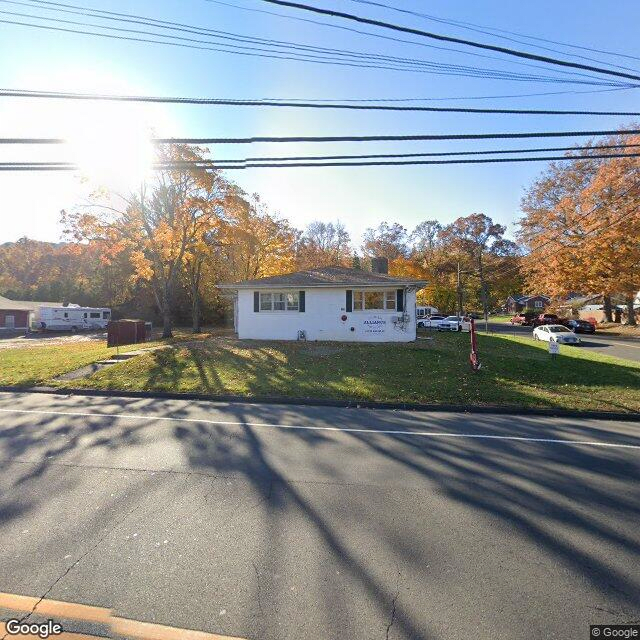
1840 State Street, Hamden, CT 06517
To contact a resident: (203) 624-1558
For more information about senior living options: (866) 208-4318
Overall Review of Garden View Manor
Pros
 The facility provides independent living.
- The air conditioning works well in the summer.
- Breakfast and lunch are nice.
- The staff are friendly and non-abusive.
- The place is very peaceful, clean, and well-kept, and makes residents feel at home.
- The janitors do a good job and are friendly.
Cons
 The facility is overcrowded and lacks privacy.
- Clients are packed in like sardines.
- The entrance hill is a 40% incline that exhausts residents and is dangerous.
- As a result, many clients become shut-ins.
- The owner allegedly called a resident a slob and refused help organizing.
- The place is described as a COVID-19 superspreader.
- The VA reportedly calls it the best place available, implying low quality.
Review
Garden View Manor in Hamden, CT, is best suited for independent-living seniors who want predictable meals, a courteous, approachable staff, and a modest, home-like environment at an attainable price. It works best for those who can tolerate a crowded atmosphere and a physically demanding approach to access, including navigating a steep incline to reach the building. The daily rhythm, balanced meals, friendly faces, and a sense of being looked after by a staff that does not escalate tensions, can feel practical and comforting for residents who prioritize social contact and straightforward, hands-on support without requiring intensive care.
Those who should seriously consider alternatives are residents who prize privacy, quiet, and single-occupancy autonomy, or anyone who relies on easy, wheelchair-friendly access. The property presents a long, hilly approach that is difficult for walkers and those with limited mobility, especially in winter. Crowding in common areas and hallways dulls the sense of personal space, and reports of room-switching and miscommunications point to a management style that can undermine stability. For family members or residents with high privacy needs, ongoing room changes and a crowded footprint can translate into ongoing psychosocial strain rather than a predictable home environment.
The strongest positives, air conditioning in the summer, solid breakfast and lunch offerings, and staff who are courteous and non-abusive, offer real daily value. Meals provide routine nourishment, and a stable, friendly staff can reduce the friction that sometimes arises in senior living settings. These benefits partly offset the downsides by creating a dependable daily structure, social contact, and a sense of safety through consistent, approachable personnel. However, those advantages do not fully counterbalance the core drawbacks: the space is perceived as crowded, private moments feel scarce, and the physical access to the building imposes a stress test that many residents must endure each day.
The most notable drawbacks center on space, privacy, and access. Reviews describe overcrowded common areas, limited personal space, and an atmosphere where individual room arrangements can feel arbitrary or unsettled. A resident recounted being promised a private room but ending up in a double, accompanied by a harsh remark from the owner about personal organization. The logistical reality, an uphill approach that challenges walkers, coupled with a street known for pedestrian hazards, amplifies safety concerns, particularly in winter when mobility becomes more restricted. Taken together, these elements erode the sense of autonomy and quiet that many families expect from a comfortable senior living option.
For families evaluating options, practical steps matter. Request a clear, written understanding of room configurations and future room-change policies before signing. Visit at various times of day to gauge crowd levels, noise, and the actual lived experience rather than a staged tour. Check the specific accessibility of entrances, hallways, and bathrooms, and verify whether transportation or proximity to essential services can be customized to individual mobility needs. Ask about VA or other assistance programs’ coordination and whether these supports influence room type, services, or costs. The goal is to separate the everyday positives from the risk of disruption and to ensure the level of independence desired aligns with the building’s realities.
Bottom line: Garden View Manor can serve as a practical, budget-conscious option for independent seniors who value dependable meals, a friendly staff, and a welcoming, home-like feel, provided tolerance for crowding and uphill access remains high. For those who require quiet privacy, single-occupancy living without frequent room changes, or easier, downhill accessibility, pursuing alternatives is wise. Families should weigh the comfort and routine against the potential for ongoing space limitations, management quirks, and logistical hurdles, and align the choice with the resident’s mobility, privacy preferences, and tolerance for a bustling, hillside setting.
 Independent Living






 Seniors and Modern Transportation: Exploring Uber, Lyft, and Other Ride-Hailing Options
 Comprehensive Guide to Qualifying for Home Health Care Services
 Powerful Realities of Elder Abuse and the Most Effective Ways to Report It