
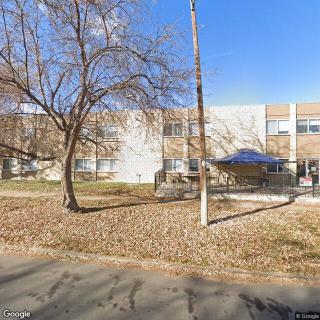
5201 Sherman, Denver, CO 80216
For more information about senior living options: (866) 208-4318
Overall Review of David House RTF
Pros
 It is a great place to get sober and stay sober.
- It offers large, clean 2- and 3-person rooms.
- The house manager and assistant manager have single rooms, providing on-site leadership.
- The 3-person rooms downstairs have private bathrooms and clean mattresses and bedding for those starting their recovery.
- Upstairs there are double beds and 2-person rooms, with opportunities to graduate to the upstairs rooms as residents progress.
- There are kitchens on both floors with two refrigerators each and residents have their own shelves to store food.
- There are big-screen TVs on both floors and coffee is provided as part of the rent.
- Washer and dryer are available on each floor, free to use, with laundry detergent included.
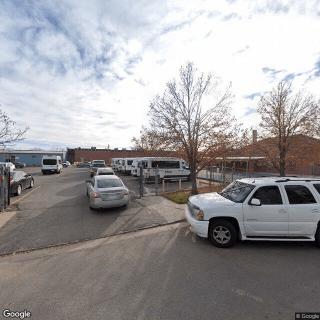
- An outdoor BBQ is available, and parking is provided.
- There is a wheelchair-accessible ramp.
Cons
 No visitors are allowed inside the house.
- If a resident comes in drunk or high, they will be asked to leave.
- There is a 9 p.m. curfew unless residents work after hours.
- There are random drug and alcohol tests on site.
Review
David House RTF in Denver is best suited for adults at the early stages of sobriety who need a highly structured, accountability-driven environment to establish a new life. The 19-bed house concentrates supervision and peer support in a compact, predictable setting where daily routines, chores, and sobriety expectations are woven into every day. Residents begin in larger downstairs three-person rooms and, as stability is demonstrated, have an established pathway to move upstairs into two-person rooms. Staff occupy single rooms, modeling the level of personal responsibility that the program expects, while practical amenities, two kitchens, laundry on each floor, and readily available supplies, keep daily life manageable and focused on recovery.
Those considering alternatives should note who may not be an ideal match. This community is less suited for individuals seeking a high degree of privacy or flexible family visitation, or for those needing intensive medical oversight or memory-care supports. If the goal is a traditional assisted-living model with professional nursing on site, or a setting designed primarily for medical care rather than sobriety maintenance, other facilities may be a better fit. Families looking for frequent indoor visits or looser rules should explore options that emphasize more autonomy or more permissive visitation, as the no-visitors-inside policy and tight curfew can feel restrictive to some residents and their loved ones.
The strongest pros center on a sober-living framework that emphasizes accountability, employment, and routine. Residents benefit from practical conveniences that reduce daily friction: kitchens split between floors, two refrigerators per kitchen, personal food storage, laundry facilities with detergent included, and ample cabinet space for dry goods. In-house amenities extend to cleaning supplies, toilet paper, paper towels, coffee, and utilities like Xfinity Wi-Fi and cable. Outdoor social time is supported by an on-site BBQ (with propane paid separately), and parking is available for those who drive. Accessibility is addressed with a wheelchair ramp, and a clear boundary between inside and outside is reinforced by the code-entry system and 9 p.m. curfew. The structure, coupled with random drug testing and on-site UA/breathalyzer checks, creates a safety net that minimizes relapse risk and keeps accountability above a fluid standard.
Yet the main cons are not negligible and warrant careful consideration. The restrictive elements, no indoor visitors, a strict curfew, and a policy requiring daily chores, can feel heavy for someone seeking greater privacy or more spontaneous social interaction. Overnight passes are contingent on working after 30 days, which can slow reintegration with family and friends for residents who are still navigating job stability. While the shared rooms and compact footprint help control costs, they can feel confining for residents who crave more personal space. Additionally, some residents may find the outside-only smoking policy and the reliance on the resident’s own discipline to meet expectations as potential friction points, especially during early sobriety when structure can be both a lifeline and a constraint.
The fit, then, hinges on alignment of recovery goals with the program’s architecture. For families prioritizing sobriety maintenance, employment, and a tangible, incremental path from recovery to independence, this house offers a practical, proven platform. Its clear rules, responsibilities, and milestones translate into measurable progress and reduced relapse risk, while the bundled amenities, from laundry to utilities, simplify budgeting and daily living during a transition period. In short, the pros, structure, supervision, job-oriented pacing, and a cost-conscious, well-equipped living space, tend to outweigh the cons for residents who want a disciplined launchpad rather than a flexible, private, high-autonomy setting.
Bottom line: David House RTF is a strong pick for individuals who want a structured, recovery-centered environment with clear boundaries, steady routines, and support that helps bridge to independent living or return to work. It delivers practical stability, tangible progress markers, and a community-driven culture that can be a game changer for those in early sobriety. It is not the best choice for those who require privacy, liberal visitation, medical oversight, or a more autonomous lifestyle. For families weighing options, this community should be high on the list when sobriety, employment readiness, and a cost-effective, support-rich environment align with the resident’s needs and goals. A visit to observe daily rhythms, talk through curfew expectations, and meet the house leadership will clarify whether this disciplined pathway is the right match.
 15 resident community capacity
 Assisted Living
 Cable or satellite TV
 Dining room
 Fully furnished
 Garden
 Housekeeping services
 Move-in coordination
 Outdoor space
 Telephone
 Wi-Fi/high-speed internet available
 Denver International (18 miles away)
 24-hour supervision
 Activities of daily living assistance
 Assistance with bathing
 Assistance with dressing
 Assistance with transfers
 Diabetes diet
 Meal preparation and service
 Medication management
 Special dietary restrictions
 Transportation arrangement (medical)
 Transportation to doctors appointments

 Assisted Living and Memory Care: Understanding Their Core Differences
 Beyond the Bingo Hall: 50+ Enriching Activities for Seniors in Assisted Living
 Understanding the Distinctions: Assisted Living and Memory Care Explained