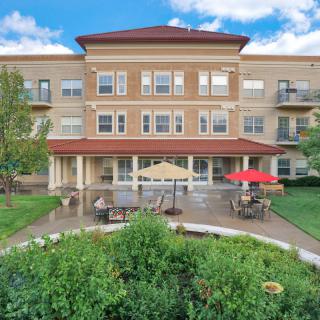
Acoya Cherry Creek is an assisted living community in Denver, CO.
Information last verified:
301 South Harrison Street, Denver, CO 80209
For more information about senior living options: (866) 208-4318
4.7 from 36 reviews
5 stars
31
4 stars
3
3 stars
0
2 stars
0
1 stars
2
Acoya Cherry Creek Costs & Pricing
Acoya Cherry Creek offers premium living options that reflect its upscale environment and amenities, with monthly costs significantly higher than both Denver County and the broader state of Colorado. For a one-bedroom unit, residents can expect to pay $5,260, which is notably above Denver County's average of $3,768 and the state average of $4,119. The two-bedroom option is similarly priced at $7,190, contrasting sharply with Denver County's rate of $3,789 and Colorado's average of $4,580. These figures suggest that Acoya Cherry Creek caters to those seeking a luxurious lifestyle in a sought-after location, providing a unique value proposition for its residents despite the higher price point.
Floor plans
Acoya Cherry Creek
Denver County
Colorado
1 Bedroom
$5,260
$3,768
$4,118
2 Bedrooms
$7,190
$3,789
$4,580
Assisted Living communities with a similar price nearby
Residents repeatedly highlight the quality of meals and menu variety.
Dining comes up often in resident and family feedback, with multiple people describing meals as excellent and enjoyable. Several mention a rotating menu and consistent three-meal-a-day experience, and one notes a chef by name. This matches the community’s focus on restaurant-style dining and also includes options discussed in resident dietary needs. Overall, dining is described less like cafeteria service and more like a planned, thoughtful part of daily life.
common8 reviews mention this
Activities keep people busy
The schedule of activities is a major part of daily life.
A large share of reviews mention that there are many activities and events, including opportunities to stay engaged and meet others. Some residents describe socializing through shared meals and neighborhood community, while others point to day-to-day programming as a key reason they feel settled. The community also offers planned daily activities, community-sponsored events, and day trips, aligning with what residents say they experience. For families, the activity calendar is often linked to smoother transitions and an improved mood after moving in.
common18 reviews mention this
Warm staff across touchpoints
Residents and families describe staff as consistently warm and responsive.
Many reviews focus on friendliness and attentiveness, describing staff at the concierge/front desk, dining, and caregiving roles as welcoming and accommodating. Several people describe feeling supported during a major move, with staff and caregivers helping with requests and transitions. Even when reviews mention specific individuals, the overall theme is that residents are treated with care and respect in day-to-day interactions. One cautionary review exists, but most feedback portrays strong service across multiple departments.
common4 reviews mention this
On-site nursing and caregiving
Residents mention on-site nursing and on-site caregiving support.
A few reviews explicitly call out nursing staff being on site, alongside care from caregivers/aides. Families also describe comfort with the level of support and the feeling that staff help meet changing needs as residents settle in. This lines up with the community’s assisted-living support framework, including help with activities of daily living and coordination with health care providers. Reviews emphasize reassurance rather than clinical detail, but the presence of care staff is part of what people notice most.
caveat2 reviews mention this
Pricing runs above local benchmarks
Pricing is positioned well above typical county and state levels.
Cost is a recurring consideration, and the community’s published pricing sits at a notable premium versus both county and state benchmarks. For families comparing options, that gap may matter most when budgeting across studio and apartment sizes. Reviews are more often about fit and daily experience than sticker shock, but the pricing position is something to weigh up front. If you’re cost-sensitive, it may help to confirm which services and apartment features are included for the unit you’re considering.
common2 reviews mention this
Location and nearby errands
Nearby shopping and services are close for daily needs.
Some reviews describe the area as convenient for living day to day, and the surrounding neighborhood includes practical options within a short drive or walk. Nearby options listed include pharmacies and common stops like Walgreens, CVS Pharmacy, and King Soopers Pharmacy, plus coffee and restaurants nearby. This can make it easier to handle errands and keep familiar routines after moving. At the same time, one review notes the neighborhood can be busy if you’re not used to a city environment.
How we summarize
Counts show how many written reviews mention each theme; a review can touch several themes, and only frequently mentioned themes are displayed.
Acoya Cherry Creek offers premium living options that reflect its upscale environment and amenities, with monthly costs significantly higher than both Denver County and the broader state of Colorado. For a one-bedroom unit, residents can expect to pay $5,260, which is notably above Denver County's average of $3,768 and the state average of $4,119. The two-bedroom option is similarly priced at $7,190, contrasting sharply with Denver County's rate of $3,789 and Colorado's average of $4,580. These figures suggest that Acoya Cherry Creek caters to those seeking a luxurious lifestyle in a sought-after location, providing a unique value proposition for its residents despite the higher price point.
The guide highlights the importance of assisted living facilities for aging veterans needing daily support, discusses unique challenges they face, and outlines available financial assistance from the VA, including the Aid and Attendance program. It emphasizes understanding eligibility criteria and navigating the VA system to access necessary benefits effectively.
The article compares assisted living and skilled nursing facilities, detailing their differing levels of assistance, medical support, cost structures, and day-to-day experiences. It emphasizes that assisted living is for those needing help with daily activities while maintaining independence, whereas skilled nursing facilities provide intensive medical care with 24-hour staff supervision.
The transition from assisted living to skilled nursing care is often prompted by complex medical needs that assisted living cannot meet, with key indicators including frequent health declines, increased falls, severe memory issues, and caregiver burnout. Families should recognize these signs early to discuss options with healthcare providers and prepare for the emotional and logistical aspects of moving to a facility that offers comprehensive medical support.
Get PricingAsk A QuestionSchedule A TourContact Senior Advisor
By clicking submit, you agree to our Partner's Terms of Use. You
also consent to receive calls and texts, which may be autodialed, from our Partner. Your consent is not a condition to
using our Partner's service. Please visit our Partner's Privacy Policy for information about their privacy practices.


 137 resident community capacity
 1-bedroom apartments
 Assisted Living
 Independent Living
 Air-conditioning
 Beautician on-site
 Cable or satellite TV
 Computer center
 Dining room
 Fitness room
 Full kitchen
 Fully furnished
 Gaming room
 Garden
 Guest parking
 Housekeeping services
 Laundry
 Move-in coordination
 Outdoor space
 Party space
 Private bathrooms
 Restaurant-style dining
 Small library
 Telephone
 Wellness center
 Wi-Fi/high-speed internet available
 Denver International (18 miles away)
 Community operated transportation
 24-hour call system
 Activities of daily living assistance
 Assistance with bathing
 Assistance with dressing
 Assistance with transfers
 Dementia waiver
 Diabetes diet
 Hospice waiver
 Medication management
 Mental wellness program
 Personal care assistants
 Special dietary restrictions
 Transportation arrangement (medical)
 Arts and crafts
 Book club
 Concierge services
 Educational speakers / life long learning
 Games
Games Live musical performances
 Planned day trips
 Religious services
 English
 Friendly staff in a welcoming setting; competitive pricing.




 Assisted Living Support for Veterans: A Complete and Detailed Overview
 Exploring the Contrasts Between Assisted Living and Skilled Nursing
 8 Key Indicators That Suggest It May Be Time to Transition from Assisted Living to Skilled Nursing Care