
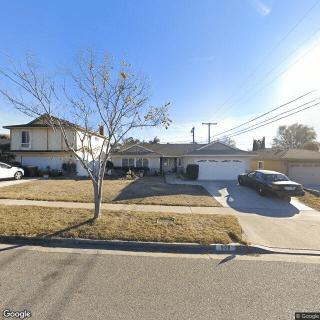
16652 Huggins Avenue, Yorba Linda, CA 92886
For more information about senior living options: (866) 208-4318
Overall Review of Phamily Home Elderly Care 2
Pros
 Harmony Home Care provides knowledgeable and caring staff to assist clients.
- Monica consistently exceeds expectations with dementia care and keeps families informed.
- Frieda and the Harmony team are responsive and work to find the right caregiver fit for each family.
- Monica G. delivers outstanding, compassionate, and professional care for loved ones.
- The care team shows dedication, flexibility, and proactive problem-solving that support families.
- Alejandra, Nataly, Destiny, Lisa, Stacey, and Kim are exemplary caregivers at Harmony Home Care.
- Freda, the owner, is exceptional—easy to contact, warmly engaged with families, and dedicated to high-quality care.
- Harmony Home Care offers reliable scheduling and 24-hour coverage options that enable loved ones to stay at home.
Cons
 They had countless problems and were very unhappy with the other agency's caretakers.
- The previous agency's scheduling was really bad, with 1–2 day gaps and late notices about no-shows.
- They said dealing with another company claiming to be run by Freda Gammon was a huge mistake.
- The mom is not a fan of strangers in her home.
Review
Phamily Home Elderly Care 2 in Yorba Linda is best suited for families seeking deeply personalized, at‑home support backed by a highly engaged care team and hands‑on leadership. The model reflected in the reviewed experiences centers on consistent caregivers who build trust and familiarity, a calm, person‑centered approach to challenging moments, and a structure that keeps loved ones safely at home rather than in a facility. This is especially compelling for relatives managing dementia, post‑stroke recovery, or complex daily living needs who value a steady routine, meaningful companionship, and the dignity that comes from home life. For households prioritizing flexibility, responsive issue‑resolution, and a relationship with the care team, Phamily Home Elderly Care 2 presents a clear fit.
The strongest asset is the caregiver team’s quality and character. Across the testimonials, caregivers are described as knowledgeable, genuinely caring, and willing to go “above and beyond” to support both the patient and the family. Names repeatedly highlighted, Monica, Frieda, Christina, and others, serve as examples of staff who deliver practical help with warmth, whether it’s dementia‑care calmly guiding a loved one, coordinating appointments, or providing transportation and in‑home assistance. This level of attentiveness turns daily caregiving into a stable, reassuring presence, transforming what can be a fraught experience into one marked by trust and emotional security.
Operational reliability and transparent communication emerge as equally critical strengths. Families report reliable scheduling that minimizes missed visits, with systems in place to share the next week’s lineup and to confirm coverage well in advance. The ability to monitor which caregiver is coming, receive timely updates, and count on backup options when a shift falls through translates into real life reduction of stress and uncertainty. Beyond companionship, the care team demonstrates practical competence, assisting with transfers, showers, and even training on equipment such as hoyer lifts, showing a mature, adaptable operation capable of meeting evolving medical and daily living needs.
Cost considerations, while not the sole determinant, profoundly influence decision‑making. One reviewer notes that expenses can feel overwhelming, even as the caregiver quality and reliability justify the investment, and highlights the agency’s willingness to work with families to manage costs. The non‑franchise ownership model, where the owner remains actively involved in staffing and scheduling, helps maintain a high standard, but it can also translate into pricing that reflects a highly personalized staffing plan rather than a one‑size‑fits‑all package. Prospective buyers should enter negotiations with a clear budget, a defined weekly hour target, and questions about how services scale with increasing needs.
For some families, alternatives may be preferable. Those prioritizing strict affordability, broader national coverage, or a non‑owner‑driven framework might explore other agencies or models that offer more predictable pricing, a larger caregiver pool, or different scheduling guarantees. If the preferred arrangement leans toward a less individualized approach or a non‑home‑based setting, options such as smaller, strictly budget‑driven agencies or facility care could become more attractive. The key is aligning the care approach with the loved one’s tolerance for continuity, the family’s involvement level, and the overall financial plan.
In the final assessment, the decision to pursue Phamily Home Elderly Care 2 should rest on the match between the loved one’s needs and the provider’s strength in caregiver quality, dependable scheduling, and cooperative cost management. The Harmony Home Care patterns described in the reviews offer a practical blueprint: highly skilled, compassionate caregivers; active leadership ensuring caregiver fit; transparent, advance scheduling; and tailored support for dementia and mobility challenges. Families evaluating Phamily Home should verify these elements directly, confirm caregiver continuity, demand clear weekly schedules, assess the ability to handle dementia and post‑acute care tasks, and obtain a candid cost forecast with current care‑hour estimates. When these boxes are checked, home‑based care becomes a powerful, sustainable alternative to facility living.
 6 resident community capacity
 Assisted Living
 Cable or satellite TV
 Dining room
 Fully furnished
 Garden
 Housekeeping services
 Move-in coordination
 Outdoor space
 Telephone
 Wi-Fi/high-speed internet available
 John Wayne Orange Co (15 miles away)
 24-hour supervision
 Activities of daily living assistance
 Assistance with bathing
 Assistance with dressing
 Assistance with transfers
 Diabetes diet
 Meal preparation and service
 Medication management
 Special dietary restrictions
 Transportation arrangement (medical)
 Transportation to doctors appointments
 Assisted Living Support for Veterans: A Complete and Detailed Overview
 Exploring the Contrasts Between Assisted Living and Skilled Nursing
 8 Key Indicators That Suggest It May Be Time to Transition from Assisted Living to Skilled Nursing Care