23388 Mulholland Drive, Woodland Hills, CA 91364
For more information about senior living options: (866) 208-4318
Overall Review of Motion Picture And T.V. Hospital
Pros
 The Motion Picture & Television Fund is a welcoming home for former film industry professionals, with ample room for movement, theater access, dining options, and abundant entertainment.
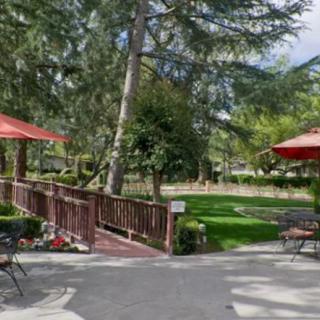
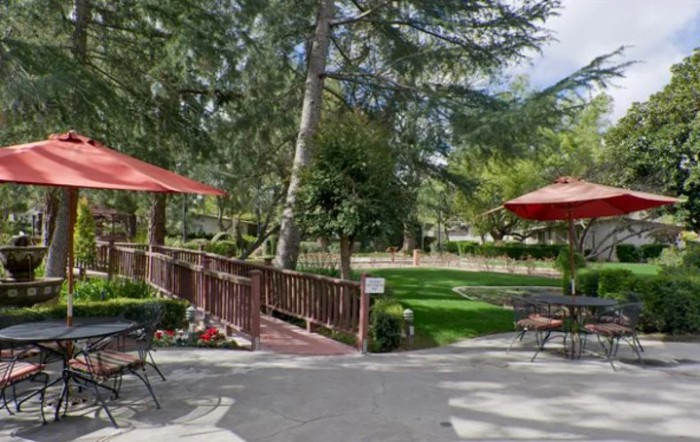
 - The grounds are large, well-kept, and offer plenty of outdoor activities.
- Residents can have their own electric car and drive around the grounds, staying active.
- The staff are welcoming and warm.
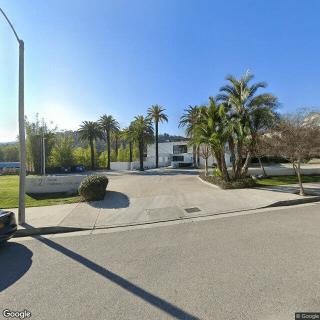
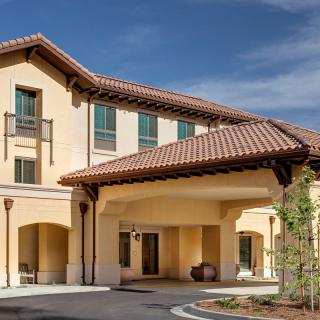
- The facility is well managed, with beautifully landscaped and maintained surroundings.
- Residents appear happy and seem to enjoy living there.
- The meals are well prepared and appreciated by the residents.
- Holiday decorations make the place festive and inviting.
Cons
 They take any money residents have left over after long stays.
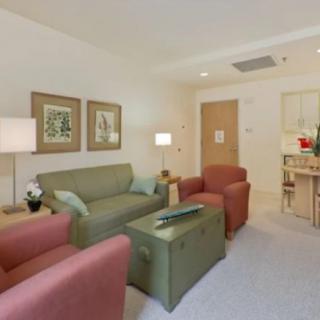
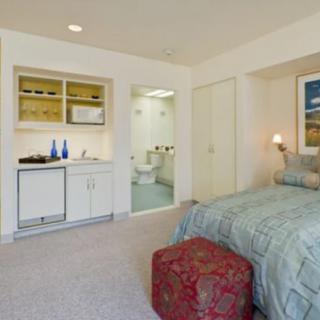
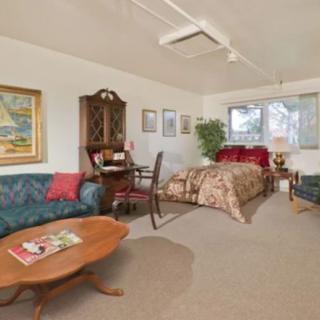
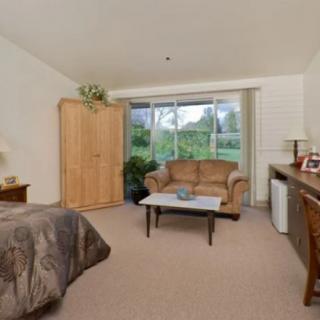
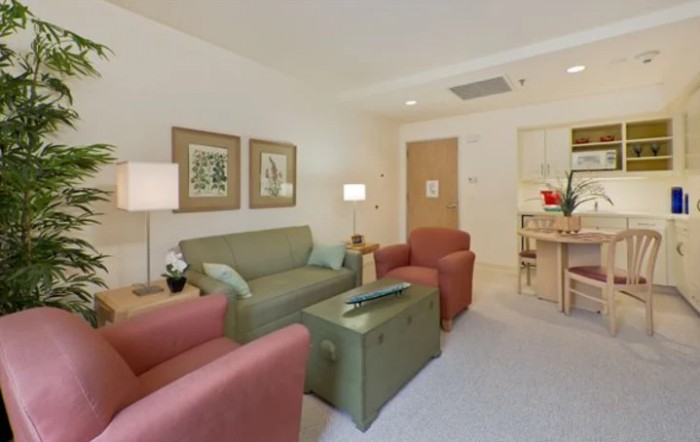
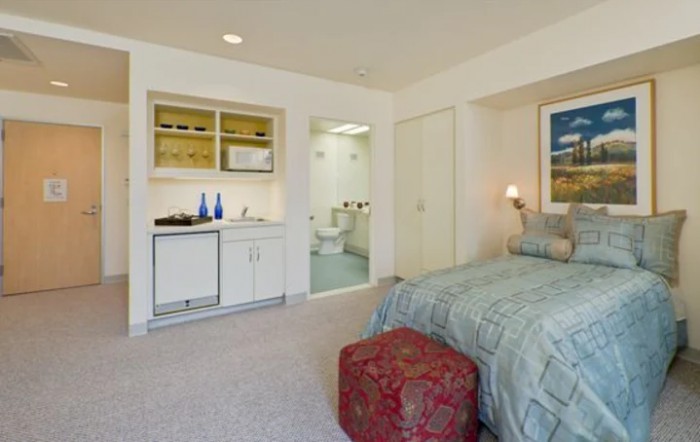
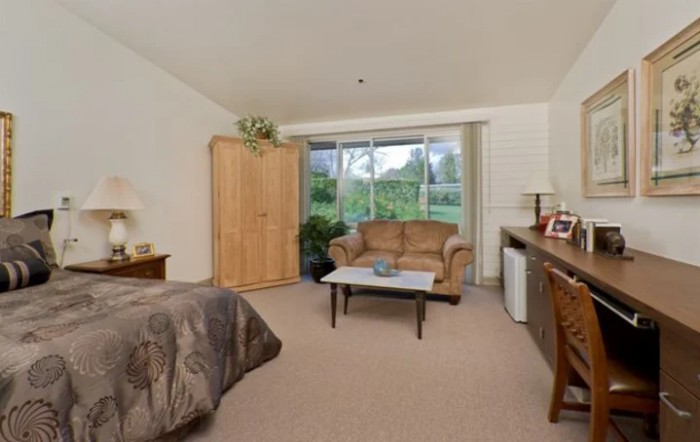
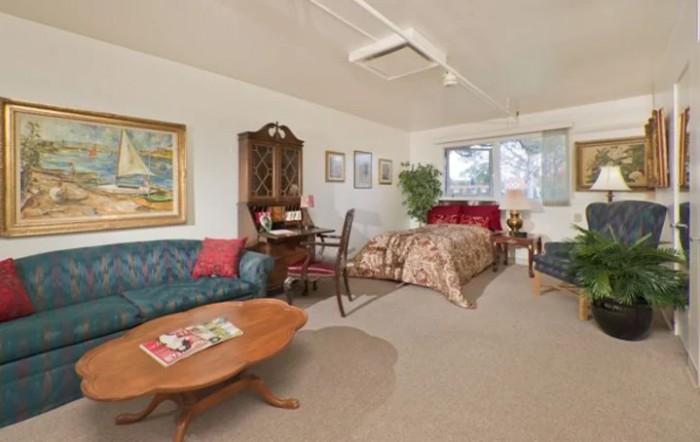
- They offer only a single room, with the bed in an alcove where the sleeping quarters are not visible.
- They move residents who develop Alzheimer's to the Alzheimer's Center, implying segregation by condition.
- They tend to have the typical assisted living home smell.
Review
Motion Picture and Television Fund in Woodland Hills is best suited for former motion picture and television industry professionals who want an affordable, activity-rich community with on-site care options and a campus built around a recognizable industry heritage. The setting blends theater outings, multiple dining rooms, and a bustling schedule of entertainment with a walkable, spacious campus and well-kept grounds. Residents have the freedom to move about and even use a personal electric car to cruise the grounds, keeping life active rather than sedentary. Importantly, care continuity is built into the model through an on-site hospital and a dedicated Alzheimer’s pathway, offering reassurance for families that health needs can be addressed without uprooting from the community.
Those who did not work in film or television, or who want a more generic senior-living culture, should consider alternatives. A notable constraint is the housing option: the community centers around a single-room arrangement, with beds in alcoves and limited options for couples or anyone seeking more space. The pricing structure is based on income with a spend-down if long-term care is required, which can be a practical choice for some but may feel asset-depleting to others. Prospective residents should weigh whether the industry-specific identity and the limited apartment configuration align with long-term preferences and lifestyle expectations.
The strongest positives justify the setting for many families. Staff are described as welcoming, residents appear engaged, and the overall atmosphere feels well managed in an upscale Woodland Hills neighborhood near Calabasas. The grounds are beautifully maintained, and the campus seems to sustain a lively, resident-driven calendar of activities. Food is reported to be well prepared, and holiday decorations reflect ongoing community investment. The presence of an on-site hospital and a dedicated Alzheimer’s Center stands out as a meaningful advantage, providing a built-in care continuum that can reduce moves and transitions if health needs escalate.
That said, the most material drawback remains the living-quarters constraint. A single-room layout will not work for couples or anyone who prioritizes shared living space or more expansive private accommodations. The familiar “assisted living home” odor, while not alarming, can be a real consideration for some when evaluating comfort and overall atmosphere. In addition, the industry-specific focus may feel like a barrier for potential residents seeking a more neutral, non-brand-centric senior-living environment where the social fabric is not anchored to past Hollywood networks.
Care continuity is a clear strength, but it should be balanced against cost realities. The on-site hospital and Alzheimer’s pathway offer comfort for families worried about escalation of care, yet the financial structure, income-based rates with spend-down, demands careful long-range planning. Prospective buyers should verify what is included in the base rate, what triggers additional fees for specialized services, and how flexible the model remains if health needs change. A practical approach is to arrange a guided tour, meet current residents, and press for exact apartment options and the timelines for upgrading to larger living spaces if and when available.
In sum, this community serves a practical, purpose-driven niche: former industry workers who value an active, socially vibrant environment, a strong care continuum on site, and the reassurance of a built-in hospital, all housed within a well-tended, scenic campus. Its advantages, engagement, affordability for the right income level, and ready access to medical and memory-care resources, offset many concerns for those who can tolerate a one-room format and industry-specific culture. For families without a film-industry connection, or for those who need larger living arrangements and a broader, more neutral community identity, it is prudent to explore alternatives that offer more spacious apartments and a broader social fabric. The decisive choice hinges on balancing space and social fit with the affordability and care infrastructure that only this campus can assert.
 195 resident community capacity
 1-bedroom apartments
 Detached homes
 Assisted Living
 Memory Care
 Skilled Nursing Facility
 Activities on-site
 Air-conditioning
 Beauty salon
 Cable or satellite TV
 Computer center
 Devotional services off-site
 Dining room
 Fitness room
 Full kitchen
 Fully furnished
 Gaming room
 Garden
 Housekeeping services
 Indoor common areas
 Laundry
 Move-in coordination
 Outdoor space
 Private bathrooms
 Restaurant-style dining
 Small library
 Swimming pool
 Telephone
 Wellness center
 Wi-Fi/high-speed internet available
 Burbank-Glendale-Pasadena (16 miles away)
 Community operated transportation
 12-16 hour nursing
 24-hour call system
 Ambulatory care
 Assistance with bathing
 Assistance with dressing
 Assistance with transfers
 Diabetes diet
 Diabetic care
 Medication management
 Mental wellness program
 Special dietary restrictions
 Concierge services
 Planned day trips
 English
 Five Subtle Dementia Indicators to Observe: An In-Depth Guide to Understanding “Does My Mom Have Dementia?”
 Dementia, Paranoia, and Caregiver Guidance: Understanding the Connection
 Engaging Memory Care Activities That Enhance Quality of Life