
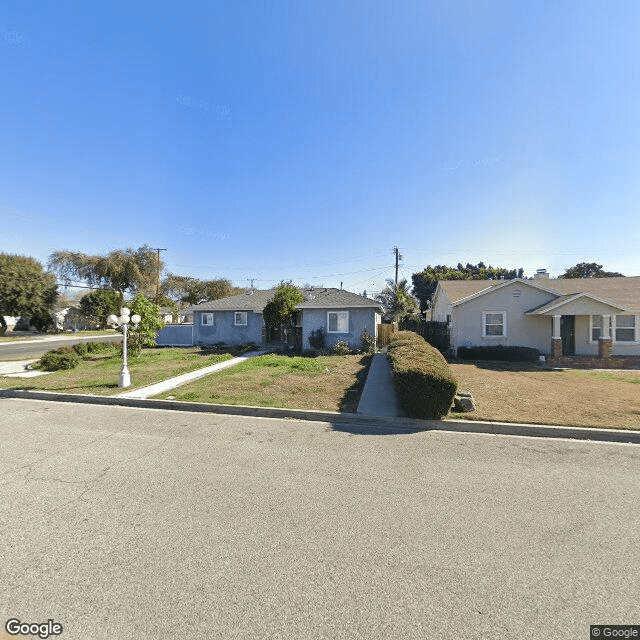
240 N. Hartley St., West Covina, CA 91790
To contact a resident: (626) 831-9990
For more information about senior living options: (866) 208-4318
Circle of Care Home Costs & Pricing
Circle of Care Home offers competitive pricing for its residents, particularly when compared to the broader market in Los Angeles County and California. For a semi-private room, residents pay $1,800 per month, significantly lower than the county average of $3,349 and the state average of $3,333. Similarly, the cost of a private room at Circle of Care Home is set at $2,500, which also undercuts both the county's average rate of $4,197 and California's average of $3,939. These prices reflect Circle of Care Home's commitment to providing affordable care without compromising on quality or comfort - making it an appealing option for families seeking supportive living arrangements for their loved ones.
| Floor plans | Circle of Care Home | Los Angeles County | California |
|---|---|---|---|
| Semi-Private | $1,800 | $3,349 | $3,333 |
| Private | $2,500 | $4,197 | $3,939 |
Senior living communities with a similar price nearby
-
from +$200 / mo
Angel's Care Guest Home
$2,000 to $3,000 / month19.4 miles away -
from +$200 / mo
Tess Loving Home
$2,000 to $2,500 / month17.1 miles away -
from +$200 / mo
House Of Grace
$2,000 to $4,200 / month11.3 miles away -
from +$150 / mo
Select Senior Care, LLC
$1,950 to $6,200 / month17.0 miles away -
from -$75 / mo
Burbank Senior Artists Colony
$1,725 to $2,495 / month22.6 miles away
Overall Review of Circle of Care Home
Pros
 Care Circle Home Health Agency is the best.
- They are a hands-on agency that truly cares about their patients.
- They are very organized and treat patients warmly.
- The nurses are highly competent and always available.
- Rose, their intake, is very calm and knowledgeable.
- The managers, Krishna and Ms. Joanne, are truly great, hands-on leaders who ensure patients receive good care.
- They cover all areas wherever patients reside and do their best to serve them.
Review
Circle of Care Home in West Covina is best suited for seniors and adults who need high-quality in-home skilled nursing and therapy, delivered with relentless hands-on attention. This community excels for families seeking a truly proactive agency that travels to the patient’s residence, coordinating care across settings and maintaining steady, responsive lines of communication. The core appeal is a team that treats patients warmly, operates with meticulous organization, and places leadership presence at the center of day-to-day care. In short, it is the clear choice for those who want expert clinical support without moving into an on-site living facility.
Those who should consider alternatives are precisely those looking for a traditional assisted living environment with a campus, scheduled social programming, and 24/7 on-site housing. If the goal is a housing-based community with built-in meal plans and a measurable social calendar, this home-health-oriented option may not deliver the setting families expect. Similarly, households seeking minimal caregiver travel or a facility with fixed, around-the-clock on-premises coverage may find that an alternative model better aligns with their preferences. For cost-conscious families, it is prudent to secure concrete pricing and insurance coverage details early, as those factors are not illuminated in the available summaries.
The strongest pros here, hands-on care, genuine regard for patients, and an organized, reliable operation, directly address some of the most common pain points in home-health services. The staff is described as highly competent, with nurses who are not only skilled but also consistently available when needed. This combination reduces care gaps, supports timely interventions, and fosters confidence among families that their loved one’s medical needs will be met without friction. Intake is portrayed as calm and knowledgeable, a crucial first impression that anchors trust and sets clear expectations from the outset. When leadership is actively involved, as noted with managers who stay engaged and hands-on, care plans stay aligned with evolving needs rather than dissolving into routine ambiguity.
A notable strength is the breadth of coverage implied by “wherever patients reside.” That capacity matters for families with mobility constraints, those who transition between home and hospital, or clients moving within the broader region. The assurance that the team can follow a patient across locations minimizes disruption and preserves continuity of care, something that often deteriorates when care teams lack mobility or clear coordination. Taken together, the operational rigor, clinical competence, and accessible leadership create a compelling value proposition for households that place priority on safety, consistent communication, and rapid responsiveness.
For decision-making, the practical course is clear: determine whether in-home, nurse-led support is the priority, or whether a facility-based living arrangement is needed. Prospective buyers should request a concrete care plan, staffing schedules, and back-up coverage policies to verify the consistency implied by “hands-on leaders.” Ask for physician referrals to confirm alignment with medical needs, and request recent client references to gauge real-world continuity. Clarify service scope, therapy modalities, wound care, IV therapy, and infusion capabilities, and confirm insurance acceptance and out-of-pocket expectations. This due diligence will reveal how well the agency’s strengths translate into day-to-day reliability for a specific loved one.
In the end, Circle of Care Home stands out for families prioritizing expert, patient-centric in-home care delivered by an organized, responsive team with visible leadership. It is the go-to option for those who want to avoid institutional living while still securing top-tier nursing and coordination across settings. Alternatives should be explored for families seeking a traditional senior living community, social programming on-site, or fixed housing arrangements. If peace of mind, prompt access to skilled clinicians, and a service model that truly follows the patient’s whereabouts are the decisive factors, this agency’s track record and operating philosophy make it the most sensible pick in its segment.
 Board and Care Home
 Cats allowed
 Dogs allowed
 Private
 Ontario International (19 miles away)







 Understanding the Nuances of Palliative Care and Hospice: A Comprehensive Exploration
 Fecal Incontinence in Older Adults: A Comprehensive Guide
 Recognizing the Journey: Understanding and Navigating Anticipatory Grief