

338 Cedar Rd, Vista, CA 92083
To contact a resident: (619) 508-6380
For more information about senior living options: (866) 208-4318
Cedar Manor Homes Costs & Pricing
Cedar Manor Homes offers competitive pricing for its residential options compared to broader market rates in San Diego County and across California. For semi-private accommodations, residents can expect to pay $2,300 per month, which is significantly lower than the county average of $3,518 and the state average of $3,333. Similarly, private rooms at Cedar Manor are priced at $2,800, again well below both the county and state figures that stand at $3,939. This positions Cedar Manor Homes as an appealing choice for individuals seeking quality care without the higher financial burden typically associated with similar facilities in the region.
| Floor plans | Cedar Manor Homes | San Diego County | California |
|---|---|---|---|
| Semi-Private | $2,300 | $3,518 | $3,333 |
| Private | $2,800 | $3,939 | $3,939 |
Senior living communities with a similar price nearby
-
from +$200 / mo

Golden Retreat - Senior Residential Care
$2,500 to $3,000 / month4.6 miles away -
from -$450 / mo
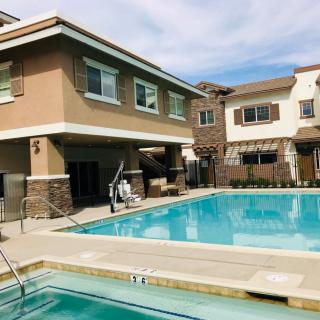
Coastal Living at San Marcos 55+ Active Living Community
$1,850 to $2,900 / month7.8 miles away -
from -$300 / mo
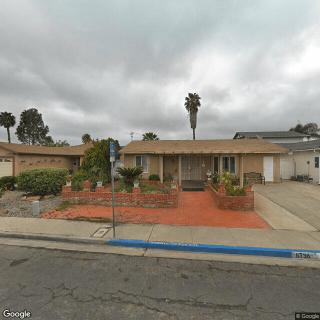
Emmaus Care I
$2,000 to $5,000 / month21.8 miles away -
from +$200 / mo

Alychris Senior Board and Care
$2,500 to $3,000 / month19.9 miles away -
from +$100 / mo

Sunland Home Care
$2,400 to $4,250 / month22.5 miles away
Overall Review of Cedar Manor Homes
Pros
 The staff members were very friendly.
- The provider has over 20 years of experience.
- The location is great.
- The provider offered two home care facilities to view.
Cons
 The staff members were not equipped to take care of Alzheimer's residents.
- The administration did not impress them.
- The communication from staff was terrible.
- Calls would just ring and no one could be reached.
- They would not recommend it to others seeking care.
- The neighbors were a little loud.
Review
Cedar Manor Homes in Vista is best suited for seniors who want a traditional, long-established setting and do not require specialized memory-care services. The community’s core appeal rests on a solid, decades-long operating track record and a convenient location that supports reliable routines and easy access to nearby amenities. For residents who can rely on standard assisted-living oversight and who value the reassurance that comes with an experienced, stable operator, this option can feel like a comfortable, low-disruption choice. Families may also appreciate the possibility of investigating related home-care resources on site, signaling a pathway to integrate care as needs evolve.
Those needing robust Alzheimer’s or dementia-specific care should look elsewhere. Feedback highlights a warmth in staff but a notable lack of readiness for memory-care needs, paired with administration that is hard to reach and inconsistent in communication. In practice, this translates into safety and care-coordination gaps that complicate wellness plans for residents with cognitive impairment. For anyone prioritizing regular, clear updates or needing dependable, proactive administration, this community presents a meaningful risk and should be weighed against stronger dementia-care options in the region.
On the positive side, Cedar Manor benefits from substantial experience, more than 20 years, and a location that remains attractive for access to services, transit, and daily conveniences. Families report a seasoned caregiving culture that can support steadier routines and fewer disruptive changes in day-to-day life. The mention of two on-site home-care facilities suggests an integrated approach to care planning, potentially easing transitions between facility-based care and at-home support for residents as needs shift over time. Those who value continuity and local familiarity may find this combination reassuring.
Yet the principal drawbacks are hard to overlook. The most significant concern is the administration and its communication, families describe ongoing difficulty reaching staff and delayed or missing responses, which undermines confidence and can slow timely reactions to health or safety changes. Coupled with the lack of Alzheimer’s-specific programming and staff training in dementia care, the operation struggles to provide the level of care coordination that dementia might demand. While neighbor noise is mentioned as a factor, it is a secondary consideration compared with the operational gaps that affect daily safety and personalized plans.
Do the strengths offset the drawbacks? To a degree, the answer depends on the resident’s profile. The veteran staff and strong location offer tangible value for those who do not require memory-care services and who can tolerate periodic communication frictions while care plans stay straightforward. For families confronting memory-impaired trajectories or who insist on steady, transparent updates, these positives do not adequately compensate for the gaps in dementia readiness and administrative reliability. The balance tilts toward alternatives for anyone prioritizing explicit dementia programming and consistently responsive management.
Smart next steps prioritize a disciplined, no-surprises evaluation. Schedule a focused tour that probes dementia-readiness, staff training in memory-care strategies, and the facility’s actual process for updating families about daily changes. Ask for direct conversations with current residents’ families about responsiveness and request sample care plans to gauge whether care expectations align with capabilities. If memory support is essential or if dependable, ongoing communication is non-negotiable, explore other Vista-area communities with explicit dementia programming and tighter administrative discipline. Cedar Manor Homes can work for the right resident, but clarity about care needs and communications is essential before moving forward.
 Board and Care Home
 Private
 MC Clellan-Palomar Airport (5 miles away)
 Diabetic care





 Understanding the Nuances of Palliative Care and Hospice: A Comprehensive Exploration
 Fecal Incontinence in Older Adults: A Comprehensive Guide
 Recognizing the Journey: Understanding and Navigating Anticipatory Grief