
3218 Mira Mesa Avenue, Oceanside, CA 92056
For more information about senior living options: (866) 208-4318
Overall Review of Kay's Guest Home
Pros
 The home is nice.
- It is a great place for someone who needs lots of hands-on care.
Cons
 Visiting hours are 9-5 which makes it hard for working people to visit.
Review
Kay’s Guest Home in Oceanside, CA is best suited for families seeking a warm, intimate setting where a loved one who requires substantial hands-on care can receive steady, attentive support. The home-like atmosphere favors residents who benefit from a caregiver-led routine, constant supervision, and daily touchpoints that reinforce safety and comfort. This is not a glossy campus with buzzy programs; it is a quiet, personal environment that prioritizes close caregiver-resident relationships and routine consistency. For someone who thrives on predictable, individualized care and a transparent, non-clinical feel, Kay’s Guest Home delivers.
Those weighing alternatives should consider visiting hours and the breadth of services. The most notable constraint evident from the experience is the visiting window of 9 to 5. For families with demanding work schedules or those needing after-work or weekend access, this policy can be a meaningful barrier. In such cases, communities with more flexible or extended visiting policies warrant serious comparison. Additionally, families seeking a facility with a wider array of on-site amenities, structured activity programming, or more formal medical oversight may want to survey other options that provide a broader service mix and longer opportunities for family involvement.
The primary strengths lie in the very factors that define a home-like care setting. A “nice home” translates into a comforting residential vibe, where staff can offer individualized attention and a grounded daily rhythm. The observation that it is a “great place for my mother in law who needs lots of hands on care” signals a staff culture oriented toward direct assistance, supervision, and practical support. For residents who require continuous hands-on help with daily activities, mobility, and safety monitoring, these advantages can translate into higher perceived quality of life, steadier routines, and reduced stress for family members who want reliable caregiving without the clinical feel of a large institution.
Yet the same strengths come with trade-offs that families must weigh. The intimate setting, while reassuring, may come with fewer specialized services, fewer amenities, and a smaller footprint for social programs compared with larger assisted living communities. The visiting-hour limitation also narrows opportunities for spontaneous family engagement, crisis communication, and after-hours collaboration with care staff. In practice, this means gifts of personal attention and a consistent caregiver team may be offset by the reduced flexibility for loved ones to participate in care plans outside standard business hours. Prospective residents should verify what happens during evenings and weekends, and whether staff can accommodate occasional exceptions or nearby alternative arrangements.
Decision-making hinges on alignment of needs with the home’s profile. Kay’s Guest Home excels for families prioritizing a genuinely homelike environment and high-touch caregiving, especially when the resident benefits from frequent hands-on assistance and a familiar, non-institutional setting. It is less well-suited for those requiring flexible visit schedules, robust programming beyond basic care, or a broader medical-services footprint on-site. To move from consideration to confidence, an evaluator should pursue a focused inquiry: confirm staff-to-resident ratios, assess how care plans are crafted and updated, review medication management procedures, and understand emergency response protocols. Clarify dining, activity calendars, and opportunities for family involvement beyond standard visiting hours to gauge whether expectations can be harmonized with reality.
In practical terms, the next steps are concrete. Schedule a tour with a care-focused lens, paying close attention to the interaction dynamics between staff and residents and the cleanliness and comfort of common areas. Talk to a staff member about daily routines, including waking times, mealtimes, assistance with bathing and dressing, mobility support, and how activities are structured to engage residents. Request to speak with a current or former family about communication cadence and responsiveness. Finally, verify licensing and compliance details, and obtain a clear sense of what happens when a resident requires more specialized medical attention or when family members cannot be present during standard hours. With a clear understanding of these dimensions, the choice becomes a precise fit for the resident’s needs and the family’s logistical realities.
 6 resident community capacity
 Assisted Living
 Board and Care Home
 Cable or satellite TV
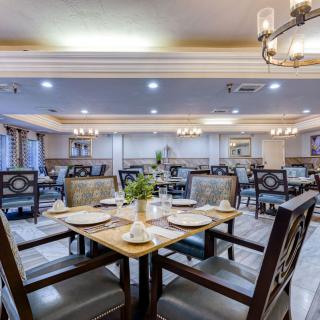
 Dining room
 Fully furnished
 Garden
 Housekeeping services
 Move-in coordination
 Outdoor space
 Telephone
 Wi-Fi/high-speed internet available
 MC Clellan-Palomar Airport (4 miles away)
 24-hour supervision
 Activities of daily living assistance
 Assistance with bathing
 Assistance with dressing
 Assistance with transfers
 Diabetes diet
 Meal preparation and service
 Medication management
 Special dietary restrictions
 Transportation arrangement (medical)
 Transportation to doctors appointments






 Social Security Benefits and Assisted Living: Navigating Options Across the U.S.
 An Extensive Exploration of the VA Aid and Attendance Benefit
 Senior Transition Services: Understanding Their Role, Cost, and Importance