
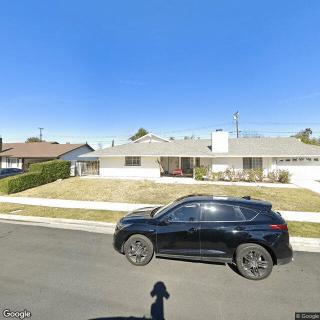
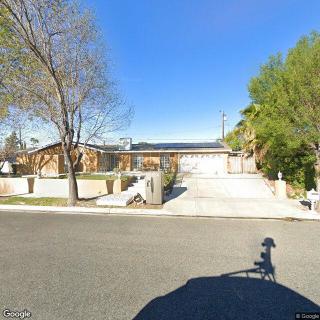
1075 Greenfield Street, Thousand Oaks, CA 91360
For more information about senior living options: (866) 208-4318
An Everlasting Spring - Senior Care Costs & Pricing
An Everlasting Spring - Senior Care offers a range of accommodations that reflect its commitment to providing quality care in a comfortable environment. For semi-private rooms, residents can expect a monthly cost of $4,290, which is notably higher than the county average of $3,438 and the state average of $3,333. Those opting for private rooms will pay $5,148 per month, again surpassing both Ventura County's rate of $4,082 and California's average of $3,939. For those preferring a studio space, the cost is set at $5,577, exceeding local and state averages of $4,021 and $4,145 respectively. While these rates are above average for the region and state, they may reflect the additional services and amenities provided by An Everlasting Spring - Senior Care designed to enhance the quality of life for its residents.
| Floor plans | An Everlasting Spring - Senior Care | Ventura County | California |
|---|---|---|---|
| Semi-Private | $4,290 | $3,438 | $3,333 |
| Private | $5,148 | $4,082 | $3,939 |
| Studio | $5,577 | $4,021 | $4,145 |
Assisted Living communities with a similar price nearby
-
from -$490 / mo
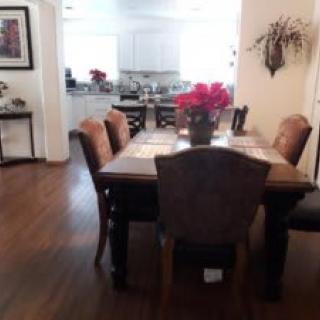
America's Care Manor
$3,800 to $4,000 / month12.5 miles away -
from -$790 / mo

California Senior Of Sherman Oaks
$3,500 to $4,000 / month24.3 miles away -
from +$210 / mo
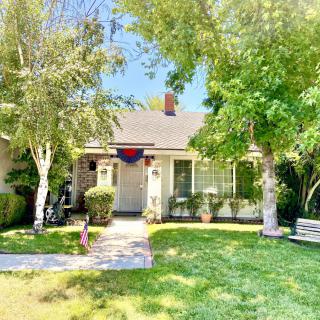
Castlemere Senior Home
$4,500 to $5,500 / month23.3 miles away -
from -$790 / mo

Assisted Comfort Home
$3,500 to $6,000 / month13.5 miles away -
from +$710 / mo
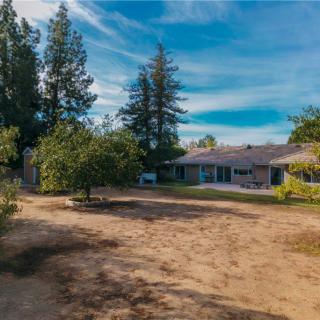
A Caring Touch Board and Care
$5,000 / month18.1 miles away
Overall Review of An Everlasting Spring - Senior Care
Pros
 The Always Best Care team provides exceptional care and treats seniors like family.
- David is devoted to helping families and guides them to the right level of care, smoothing the process.
- Karina has done a fabulous job, caring for the parents as if they were her own and becoming part of the family.
- The caregiver match was a grand slam for the family.
- Caregivers go the extra mile and provide warm companionship that supports recovery and daily life.
- The organization is professional, responsive, and compassionate, with caregivers who coordinate well with Hospice.
- Erin is comforting, empathetic, and knowledgeable, making the process seamless.
- The team is trustworthy, passionate, patient, and treats loved ones like family.
Cons
 They have heard horror stories about such services.
- The short notice of Hospice was overwhelming to them.
Review
This community is best suited for families seeking deeply personal, in-home caregiving that flexes to hospital stays, post-surgery needs, hospice coordination, and end-of-life support. It works best when a trusted care partner can be woven into daily life, with caregivers who feel like part of the family and a leadership team that keeps lines of communication open. The model shines where ongoing, attentive oversight matters: a dedicated account manager who can align services to evolving medical or personal priorities, and caregivers who adapt to changing circumstances with calm competence. In short, it is the clear choice for households that want high-touch, home-based support rather than a traditional facility.
The strongest positives center on the quality of the care team and the responsiveness of leadership. Caregivers are described as wonderful, patient, empathetic, and willing to go the extra mile, with Karina emblematic of a caregiver who can fill demanding roles and still feel like a trusted family member. The accounts of hospital stays, homebound recovery, and hospice collaboration illustrate a seamless, holistic approach where coordination with medical teams is not an afterthought. Family members repeatedly highlight how managers like David and Tom set the tone, professional, accessible, and relentlessly solution-focused, creating a dependable spine for complex care needs. The result is care that feels personal, yet highly organized and reliable.
The reviews consistently paint a picture of end-to-end support, from initial onboarding to ongoing, day-to-day assistance. Families appreciate the way the team initiates care, maintains continuity, and shows up consistently in moments of stress, whether after surgery, during caregiving transitions, or at the end of life. The caregiving experience is described as calm, dignified, and genuinely companionable, with the added assurance that the agency integrates smoothly with hospice and hospital services. This is not just about tasks being completed; it is about comfort, trust, and emotional steadiness during trying times. For households seeking ease of mind through professional coordination, the pros align closely with the most meaningful family outcomes.
There are practical caveats to weigh, even amid strong praise. While the care model excels when a compatible caregiver is in place, the experience can hinge on who is assigned and the continuity of that relationship. Not every family will encounter the same exact caregiver week to week, so questions about backup staff, shift coverage, and caregiver training levels matter. Moreover, this approach centers on in-home, highly personalized support rather than a licensed, on-site senior living community with built-in social and medical infrastructures. For families that prioritize a facility environment with around-the-clock on-site nursing or structured programming, alternatives may still be worth a look.
When weighing the pros and cons, the captured strengths tend to outweigh potential drawbacks for most scenarios. The ability to deliver compassionate, individualized care at home, paired with proactive coordination with hospice, rapid responsiveness, and a leadership team that treats families with respect, creates a compelling value proposition. The main offsetting concerns, caregiver turnover risks and the need for careful scheduling, are mitigated by the agency’s demonstrated commitment to matching families with caregivers who genuinely connect and by the availability of a responsive point person to keep plans aligned. In essence, the model is exceptionally well-suited for those who want trusted, home-based care that behaves like an extension of the family.
For families evaluating options in Thousand Oaks, this approach is a practical, high-confidence choice when the goal is to keep a loved one at home with dignified, capable support and with a trusted network that can adapt to shifting medical needs. It is less appropriate for anyone seeking a traditional senior living community or a setting where 24/7 on-site clinical nursing is the default expectation. Do not assume consistency; actively confirm caregiver rotation policies, backup coverage, and how hospice or hospital engagements will be coordinated over time. With clear expectations set, this partner offers a proven pathway to maintain safety, comfort, and meaningful connection in the home, backed by a leadership team that has repeatedly demonstrated responsiveness and compassion.
 6 resident community capacity
 Assisted Living
 Board and Care Home
 Cable or satellite TV
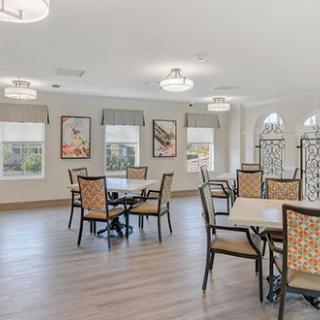
 Dining room
 Fully furnished
 Garden
 Housekeeping services
 Move-in coordination
 Outdoor space
 Telephone
 Wi-Fi/high-speed internet available
 Oxnard (19 miles away)
 24-hour supervision
 Activities of daily living assistance
 Assistance with bathing
 Assistance with dressing
 Assistance with transfers
 Diabetes diet
 Meal preparation and service
 Medication management
 Special dietary restrictions
 Transportation arrangement (medical)
 Transportation to doctors appointments

 Funding and Affording Assisted Living: A Thorough Overview
 Assisted Living Expenses and Long-Term Care Insurance: A Comprehensive Exploration
 Securing Financial Support for Assisted Living: A Comprehensive Overview