
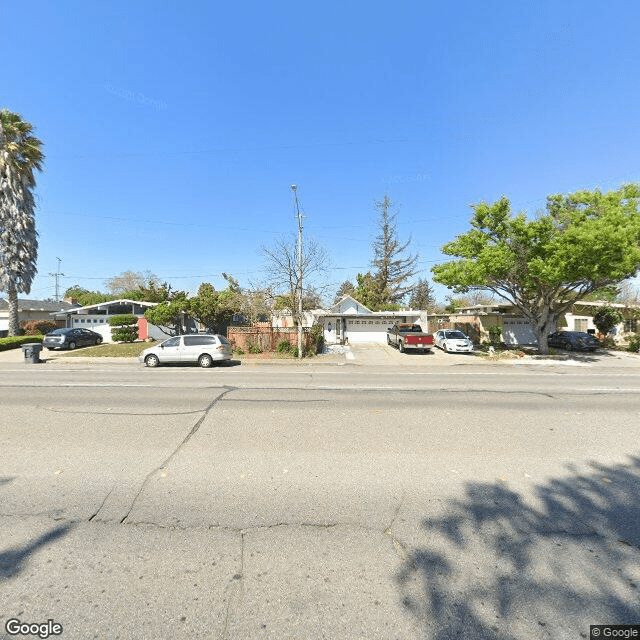
1107 E. Homestead Rd., Sunnyvale, CA 94087
To contact a resident: (408) 307-6521
For more information about senior living options: (866) 208-4318
Aroma Care Home II Costs & Pricing
Aroma Care Home II offers a competitive pricing structure for its private room accommodations, with a monthly cost of $2,500. This figure stands in stark contrast to the average costs within Santa Clara County, which are approximately $4,096, and the broader California state average of around $3,939. By providing such an attractive rate, Aroma Care Home II not only alleviates financial concerns for families seeking quality care but also highlights its commitment to delivering valuable and personalized services in a welcoming environment.
| Floor plans | Aroma Care Home II | Santa Clara County | California |
|---|---|---|---|
| Private | $2,500 | $4,096 | $3,939 |
Senior living communities with a similar price nearby
-
from -$100 / mo
Homestead Care
$2,400 to $4,570 / month3.0 miles away -
from +$200 / mo

Home Instead Senior Care
$2,700 to $3,400 / month16.6 miles away -
from +$400 / mo
Parkside Manor
$2,900 to $3,600 / month24.4 miles away -
About the same
Ava Bella Care Home
$2,500 to $3,000 / month18.5 miles away -
About the same

San Carlos Elms
$2,500 to $5,880 / month18.3 miles away
Overall Review of Aroma Care Home II
Pros
 The care givers are kind, attentive, and provide appropriate care.
- It is a good place for him.
- They are doing a good job.
- They are diligent about skin care for bed-bound residents.
- One resident is sociable and with it.
- The home’s location opposite Kaiser offers convenient access.
Cons
 All the residents except for one are fairly critical.
- The caregivers are contentious.
- They are contentious about keeping his room clean.
- The situation is sad.
- Stan can't really talk, move, or walk.
Review
Aroma Care Home II in Sunnyvale is best suited for a resident who requires close, hands-on care in a small, home-like setting and benefits greatly from immediate access to medical facilities, particularly since the community sits directly across from Kaiser. The model here is a board-and-care environment with a tight-knit staff who can provide constant supervision, diligent skin care, and careful attention to daily needs for someone who is largely non-ambulatory. In short, this is a practical home for a bed-bound or severely limited resident whose care demands are comprehensive, but whose social needs can be met with a quiet, intimate atmosphere and reliable, personable caregivers.
For families weighing alternatives, the clear caveat is that Aroma Care Home II may not be the right fit for someone seeking a robust social calendar, expansive on-site services, or specialized memory-care programming. If a loved one requires more intensive rehabilitation, frequent therapy sessions, or a setting with a larger staff and more varied activities, a larger assisted living community or a dedicated memory-care facility may offer more options. Similarly, those who place a premium on a lively, highly structured activity schedule or a long-term focus on independent living with minimal supervision should look beyond this two-person-review profile and visit facilities with broader amenity sets.
The strongest positives here are tangible and meaningful for the resident who matches the profile. The proximity to Kaiser is not merely convenience; it translates into faster medical coordination and fewer logistical hurdles when urgent or routine medical attention is needed. The small, board-and-care format fosters a highly personalized touch: caregivers who are described as kind, attentive, and appropriately diligent, with a consistent emphasis on cleanliness and order in the private spaces. For a bed-bound resident, such attentiveness, especially regarding skin integrity and routine repositioning, can materially affect quality of life and health outcomes, reducing risk where it matters most.
Yet the downsides are real and carry weight in the decision. The reviews indicate a highly frail overall population within the home, which means fewer opportunities for peer interaction and perhaps a more somber day-to-day environment. The facility’s size and model inherently limit on-site medical services and rehabilitation options. The notes about being “contentious about keeping his room clean” hint at a stringent housekeeping culture that may feel rigid to some families or residents who prefer a more relaxed atmosphere. These factors underscore that Aroma Care Home II excels in reliable, attentive daily caregiving but does not substitute for a full-service medical or activity-rich campus.
When contemplating this community, the pros and cons come into sharper relief through practical implications. The upside, proximity to Kaiser, a small, intimate setting, and a caregiving team that prioritizes skin care and hygiene, directly addresses the highest risk factors for a bed-bound individual: pressure injuries, falls, and unaddressed medical needs. The downside, limited social variety, fewer advanced therapies, and a tighter range of on-site services, will challenge families seeking a more full-spectrum living experience. This separation between strong daily caregiving and limited clinical or recreational offerings is the core trade-off to assess against the resident’s needs and family goals.
Families evaluating Aroma Care Home II should go in with a concrete plan: verify the staff-to-resident ratio during peak hours, confirm the exact wound-care practices and repositioning schedules, and request to meet the caregiving team who would be most involved in day-to-day supervision. Ask for a clear outline of what medical tasks can be handled on-site versus what requires hospital transfer, and probe how family communication is handled, frequency of updates, nightly reports, and who the primary point of contact is. If the goal is to preserve dignity, safety, and medical coordination for a bed-bound loved one, Aroma Care Home II offers a practical, warm option with a hospital-adjacent advantage that should not be overlooked.
In the end, Aroma Care Home II stands out for families needing a small, attentive, home-style setting with strong vigilance around daily care and an immediate medical touchpoint across the street. It is a compelling choice for those whose loved one is largely non-ambulatory and requires steady, compassionate supervision more than expansive amenities. Alternatives should be pursued for families prioritizing a richer social life, more aggressive rehabilitative services, or broader on-site medical programming. For the right resident and the right family, this community can deliver dependable, humane care in a compact, neighborly package, just with the expectation that some needs will be met outside rather than inside the walls.
 Board and Care Home
 Private
 San Jose International (4 miles away)
 Diabetic care
 California's Form 602A: An In-Depth Examination of Senior Care Assessment
 Comprehensive Look at Senior Blood Pressure Charts: Normal and Elevated Levels by Age
 Top Canine Companions for Older Adults