

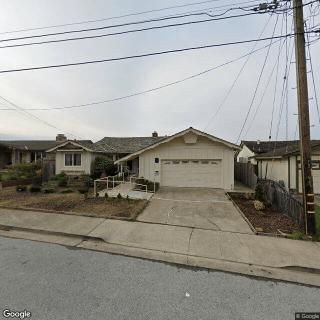
1252 Crestwood Dr, South San Francisco, CA 94080
To contact a resident: (650) 307-9586
For more information about senior living options: (866) 208-4318
Victoria Residential Care Facility for the Elderly Costs & Pricing
At Victoria Residential Care Facility for the Elderly, the cost structure is notably competitive when compared to broader benchmarks within San Mateo County and California. For a semi-private room, residents are looking at a monthly fee of $2,500, which is significantly lower than the county average of $3,830 and the state average of $3,333. Similarly, for those preferring a private room, the facility's rate of $3,500 remains more affordable than both the county's typical cost of $4,281 and California's average of $3,939. This pricing strategy positions Victoria Residential Care as an attractive option for families seeking quality care without the financial strain often associated with elder care facilities in this region.
| Floor plans | Victoria Residential Care Facility for the Elderly | San Mateo County | California |
|---|---|---|---|
| Semi-Private | $2,500 | $3,830 | $3,333 |
| Private | $3,500 | $4,281 | $3,939 |
Senior living communities with a similar price nearby
-
from +$200 / mo

Home Instead Senior Care
$2,700 to $3,400 / month16.4 miles away -
About the same

Ava Bella Care Home
$2,500 to $3,000 / month21.2 miles away -
About the same

San Carlos Elms
$2,500 to $5,880 / month14.8 miles away -
About the same

Rose Arbor Senior Care
$2,500 to $4,620 / month20.9 miles away -
from -$200 / mo

Jla Healthcare Services
$2,300 to $3,200 / month7.1 miles away
Overall Review of Victoria Residential Care Facility for the Elderly
Pros
 The owner and her staff provided top care for the reviewer’s mother.
- They were all kind, compassionate, and caring.
- The family never worried about how she was being cared for.
- The reviewer, who is an RN, would recommend Victoria House for loved ones.
- A very nice woman was noted.
Review
Victoria Residential Care Facility for the Elderly in South San Francisco is best suited for families seeking a small, intimate caregiving setting where care is delivered with hands-on attention by an owner-led team. This community excels for an elderly loved one who requires steady daily support and may be on hospice or near end-of-life, and for families who want visible, compassionate caregiving that prioritizes dignity and calm reassurance over clinical bustle. The tone from those with loved ones there is that care comes with emotional warmth and continuity; the staff are accessible and invested, and the relationship between caregivers and residents feels consistently personal. For those who value not just what is done but how it is done, with kindness at every touch, this setting can feel like a protective extension of home.
Who may want alternatives? If the priority is robust medical oversight from a larger, more clinical operation, this may feel too small. For residents requiring frequent skilled nursing on every shift, or for those who crave a wider menu of social and therapeutic activities, a bigger facility with more staff and structured programs could be a better fit. Families seeking rigorous credentialed programs, memory-care specialization, or predictable staffing rotations across three shifts may find that a larger community better aligns with expectations. In short, this place shines on personal touch; it may not be the right home for those chasing breadth of services.
Pros are tangible and pronounced. The care team is described as top-tier by families when a loved one is bedridden and on hospice, with the owner and staff delivering kindness, compassion, and consistent attentiveness. One family member who is a registered nurse notes that there was never any worry about how the mother was being cared for, a strong signal of reliability in daily management, from hygiene and comfort to pain control and emotional support. The environment appears to foster trust and open communication, with caregivers seen as caring and present. For caregivers who want to avoid the anxiety of uncertain daily oversight, this level of assurance is a meaningful asset.
Cons are less about neglect and more about scope. The strongest trade-off in a small operation is the potential for limited staff coverage at times and fewer on-site resources when a medical plan shifts rapidly. While the hospice-focused, loving approach offsets much of this risk, the lack of publicized breadth, such as diverse programming, on-site specialists beyond the core team, or large-scale activity options, means expectations should stay grounded. The evaluation hinges on whether peace of mind and companionship in care outweigh the desire for a wide array of services. A reassuring narrative from one reviewer complements a briefer, more cautious note from another, underscoring the importance of aligning needs with the facility’s intimate cadence.
Those considering Victoria should verify practical details before committing. Confirm on-site nursing presence and who leads medical care overnight, and ask how hospice needs are coordinated with outside physicians or hospital teams. Inquire about pain management, wound care, and medication administration, plus how updates are communicated to family members. Clarify response times for urgent concerns, and request a clear sense of daily routine, mealtime support, and visitation policies. It’s also wise to discuss cost structures, contract terms, and what happens if care needs increase. Gathering these specifics helps translate the warmth described by families into a reliable, practical plan for ongoing care.
Bottom line: this community stands out for families prioritizing intimate, compassionate care delivered with a consistent presence in a small, home-like setting. It is particularly well-suited for residents who require steady daily support and have hospice needs, where the emotional security of a trusted team matters as much as medical oversight. The strongest warning flag is if a resident demands a broader ecosystem of services or expects a large-scale activity roster and multiple shifts of nursing staff baked into the daily routine. For those who can anchor expectations to the facility’s strengths, personalized attention, empathetic caregiving, and a steady, hands-on approach, Victoria offers a compelling, practical choice that reduces family stress and centers the resident’s comfort.
 Board and Care Home
 Private
 San Francisco International (5 miles away)
 Ambulatory care
 Diabetic care




 A Detailed Exploration of Living Wills and Advance Directives
 Comprehensive Guide to Medicare Coverage for Hospice Care
 Caring for Those Who Care: Recognizing, Understanding, and Overcoming Caregiver Burnout