
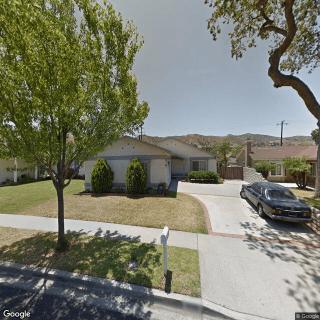
5694 Fearing Street, Simi Valley, CA 93063
For more information about senior living options: (866) 208-4318
Overall Review of Millennium Care II
Pros
 The facility is nice.
- They have been in business for a long time.
- There is a lot of diversity, and the staff are wonderful and very caring.
- They recommend it for seniors seeking day care.
- It is a nice place for a senior to go during the day.
- The staff are wonderful.
- The facility is very clean.
- It is good.
Cons
 The facility shows no regard for patients' lives.
- The staff were aware of the COVID-19 exposure but did not inform the patient.
- The facility did not inform families about exposure, putting high-risk individuals at risk.
- Millennium Care allowed exposed patients to return to the facility, further exposing others to COVID.
- The lack of responsibility by Millennium Care is unacceptable and puts patients at risk.
- The facility should be shut down.
Review
Millennium Care II in Simi Valley is best suited for seniors who want a daytime social and supervised setting with a long-standing local presence. The facility has operated for years, and reviewers consistently note a diverse, caring staff and a clean, well-maintained environment. For families seeking a cost-conscious option that can provide companionship, basic supervision, and structured activities during the day, this community offers a practical fit. The strongest pull is the staff’s demonstrated warmth and the sense that residents are treated with genuine attention, which can make daytime care feel more personal than a generic day program.
Those considering alternatives should note a different set of priorities. Families with seniors who require around-the-clock supervision, high medical oversight, or heightened transparency about safety incidents may find Millennium Care II lacking. Reviews highlight a deep concern about safety and communication, raising questions about how quickly and clearly important information is shared with families. For residents with complex medical needs, frequent monitoring, or a need for rigorous infection-control accountability, other communities with robust medical staffing, stronger incident reporting, and clearer family notification protocols may be a better match.
On balance, the known pros, longstanding operation, a diverse and caring staff, and a clean, approachable atmosphere, provide meaningful value that can offset some hesitations for families prioritizing social engagement and daytime oversight. The positive impressions from staff interaction, along with remarks about cleanliness and the general day-program vibe, suggest a setting where seniors can participate in activities, receive supervision during the day, and enjoy a respectful, personable staff attitude. However, these strengths do not erase the core risks raised in multiple reviews, which center on safety lapses and problematic communication surrounding serious health events.
The main concerns are hard to ignore. Several reviewers allege that residents and their families were not informed promptly about health threats and exposures, with consequences that affected others beyond the facility. The most pointed criticisms describe a pattern of inadequate notification and insufficient contact tracing, raising alarms about how quickly families would know if a resident is exposed or becomes ill. Such claims paint a picture of a community where safety transparency is inconsistent, and where the emotional burden falls heavily on families trying to protect vulnerable loved ones. In a setting where one or two families feel endangered, the entire value proposition shifts.
Understanding how the positives interact with the negatives is crucial for decision-making. The proven strengths, staff compassion, cleanliness, and a solid daytime program, remain compelling for families whose priorities are social engagement and reliable daytime supervision at a reasonable cost. But the weight of safety and communication concerns cannot be dismissed. If a solution is found lacking in transparency or if the perceived risk to vulnerable seniors feels unacceptable, those gaps are likely to outsize the benefits. In short, the positives can sustain a satisfactory experience for many residents, but the reported safety lapses create a serious red flag for risk-averse families.
The practical path forward is clear. Arrange a thorough tour and ask pointed questions about current staff-to-resident ratios, daily schedules, and how emergencies are handled. Request direct conversations with current residents and family members to gauge day-to-day realities. Verify licensing status, inspection history, and any recent corrective actions, and press for explicit explanations about notification practices and incident reporting. If transparency, prompt communication, and demonstrable safety protocols are non-negotiables, exploring alternatives, especially communities with stronger formal safety oversight and clearer, documented family communication, will be prudent. Millennium Care II can be a good fit for daytime care and social engagement, but for families prioritizing airtight safety, consistent communication, and rigorous oversight, another option may better align with those non-negotiables.
 6 resident community capacity
 Assisted Living
 Board and Care Home
 Cable or satellite TV
 Dining room
 Fully furnished
 Garden
 Housekeeping services
 Move-in coordination
 Outdoor space
 Telephone
 Wi-Fi/high-speed internet available
 Burbank-Glendale-Pasadena (19 miles away)
 24-hour supervision
 Activities of daily living assistance
 Assistance with bathing
 Assistance with dressing
 Assistance with transfers
 Diabetes diet
 Meal preparation and service
 Medication management
 Special dietary restrictions
 Transportation arrangement (medical)
 Transportation to doctors appointments




 An Extensive Exploration of the VA Aid and Attendance Benefit
 Senior Transition Services: Understanding Their Role, Cost, and Importance
 Exploring the Path to Senior Living: A Comprehensive Look at Independent Living and Assisted Living