
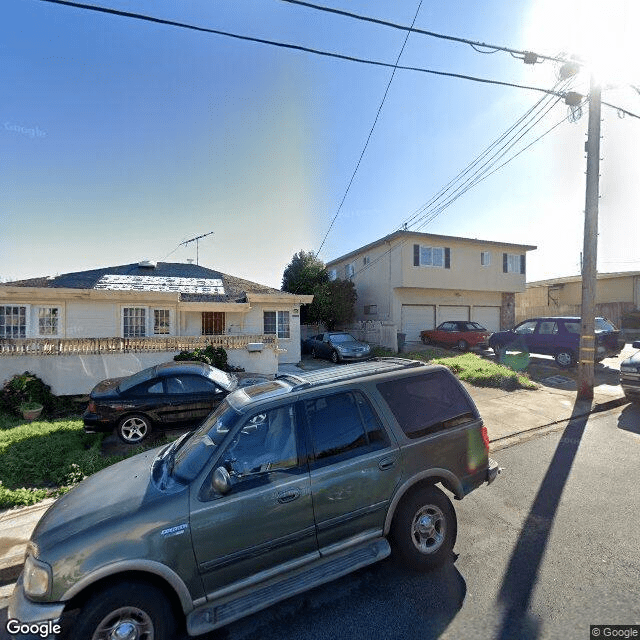
356 Mastic Ave, San Bruno, CA 94066
To contact a resident: (650) 583-8336
For more information about senior living options: (866) 208-4318
Lifetime Home Costs & Pricing
Lifetime Home presents a competitive pricing structure compared to both San Mateo County and the broader California market. For semi-private accommodations, Lifetime Home charges $2,500 per month, significantly lower than the county average of $3,830 and the state average of $3,333. When it comes to private rooms, Lifetime Home's rate of $3,500 remains more affordable than San Mateo County's average of $4,281 and slightly surpasses California's average of $3,939. However, for those seeking one-bedroom units, Lifetime Home's monthly fee of $6,950 is notably higher than both local and state averages - $5,821 in San Mateo County and $4,340 across California. Overall, while Lifetime Home offers appealing rates for shared accommodations and private rooms, its pricing for one-bedroom options reflects a premium that may warrant further consideration for potential residents.
| Floor plans | Lifetime Home | San Mateo County | California |
|---|---|---|---|
| Semi-Private | $2,500 | $3,830 | $3,333 |
| Private | $3,500 | $4,281 | $3,939 |
| 1 Bedroom | $6,950 | $5,821 | $4,340 |
Senior living communities with a similar price nearby
-
from +$200 / mo

Home Instead Senior Care
$2,700 to $3,400 / month13.1 miles away -
About the same

Ava Bella Care Home
$2,500 to $3,000 / month19.3 miles away -
About the same

San Carlos Elms
$2,500 to $5,880 / month11.5 miles away -
About the same

Rose Arbor Senior Care
$2,500 to $4,620 / month23.8 miles away -
from -$200 / mo
Jla Healthcare Services
$2,300 to $3,200 / month3.7 miles away
Overall Review of Lifetime Home
Cons
 Nothing was available.
- Jovel never returned his phone calls.
- No one called back, making it hard to provide a rating.
- There was nothing available anyway.
Review
Lifetime Home in San Bruno is best suited for families in the very early stages of the search who can tolerate a protracted admissions process. The sole feedback available points to a setting where current availability is effectively nonexistent and the admissions contact offered little reassurance through timely follow‑up. In practical terms, this community functions more as a tentative option to monitor than a ready-to-move-in solution for buyers with a looming deadline.
Those needing immediate placement or dependable communication should look elsewhere. The absence of returned calls signals a breakdown in the essential admissions workflow, and the combination of no vacancies plus weak responsiveness raises serious questions about how future needs would be managed. Nearby communities with transparent waitlists and prompt outreach are more appropriate for anyone facing a concrete move date, a health change requiring timely care, or a desire for a confidently navigated admissions path.
On the upside, the lack of visible positives in the feedback doesn’t flip into a clear advantage; rather, it underscores that the core advantages typically used to weigh options, program variety, staffing stability, and resident services, have not been demonstrated. When the entry point is blocked by no vacancies and no reciprocal contact, any potential benefits are effectively moot. The real decision hinge becomes whether the time horizon can extend long enough to tolerate ongoing uncertainty without compromising planning for safety, care, and daily living.
For families evaluating options, the recommended moves are concrete: request explicit admission timelines, ask for a guaranteed callback window, confirm current vacancy status in writing, and arrange a visit only after clear availability is stated. If the only signal is silence, shift focus to communities with measurable outreach and defined hold policies. Take notes on how admissions teams respond to inquiries and compare that responsiveness across several options to avoid stalling at a critical moment.
Beyond responsiveness, benchmark the usual decision factors: true cost of care, what levels of care are offered, and how the community handles escalating needs. Location matters for visits and family involvement, while tour quality and transparency about waitlists reveal much about organizational culture. A well-structured admissions process, with timely updates and realistic wait-time estimates, often predicts smoother transitions than marketing-focused promises.
In sum, Lifetime Home is not a best-fit choice for anyone requiring timely placement or dependable communication. It remains a potential option for those who can afford to wait and monitor, but only if the admissions process improves dramatically. For immediate needs, or for families unwilling to navigate uncertain follow-up, alternatives with proactive outreach and clear, trackable wait times should be prioritized. The prudent path is to press for concrete data, compare multiple communities, and let responsiveness be the deciding factor before committing to any move.
 Board and Care Home
 Private
 San Francisco International (2 miles away)
 Diabetic care
 Personalized care with 24/7 supervision and diabetes-friendly dining



 Recognizing the Journey: Understanding and Navigating Anticipatory Grief
 Encouraging Participation in Adult Day Care: A Guide to Supporting a Hesitant Parent
 Comprehensive Exploration of Living Wills and Other Advance Directives