
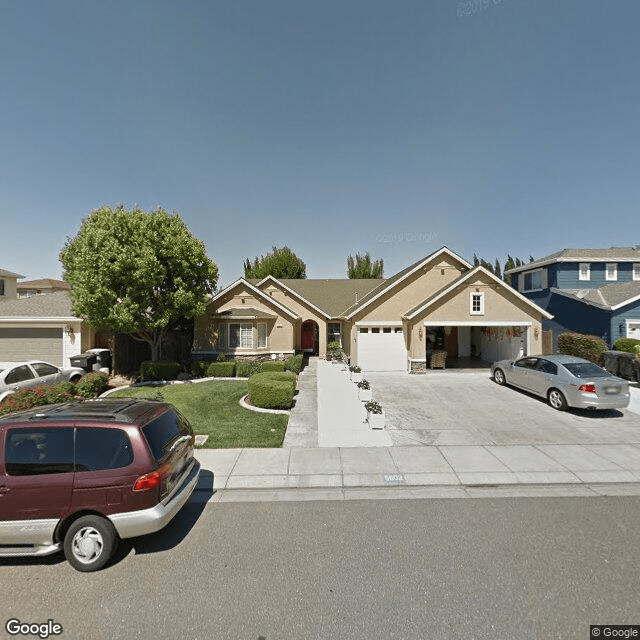
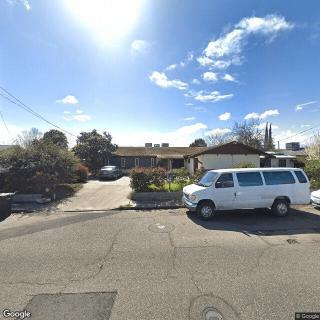
5603 Portico Drive, Riverbank, CA 95367
For more information about senior living options: (866) 208-4318
Crossroads Manor Costs & Pricing
Crossroads Manor offers competitive pricing for various room types when compared to averages in Stanislaus County and across California. For instance, a studio at Crossroads Manor is priced at $2,865, which is significantly lower than the county average of $3,925 and the state average of $4,145. Similarly, their one-bedroom option at $3,200 also undercuts both the county ($3,685) and state ($4,340) figures. In contrast, the semi-private rooms at Crossroads Manor are priced at $3,500 - higher than the county's average of $3,241 but still below California's statewide rate of $3,333. Notably, their two-bedroom accommodations are more competitively priced at $3,560 compared to the county's $3,932 and well below California's substantial average of $5,270. While private rooms are slightly higher than the local county pricing at $4,000 versus $3,754, they remain in step with California's broader market which stands at approximately $3,939. Overall, Crossroads Manor provides a range of options that cater to budget-conscious individuals seeking quality living arrangements while remaining mindful of regional price variances.
| Floor plans | Crossroads Manor | Stanislaus County | California |
|---|---|---|---|
| Studio | $2,865 | $3,925 | $4,145 |
| 1 Bedroom | $3,200 | $3,685 | $4,340 |
| Semi-Private | $3,500 | $3,241 | $3,333 |
| 2 Bedrooms | $3,560 | $3,932 | $5,270 |
| Private | $4,000 | $3,754 | $3,939 |
Memory care communities with a similar price nearby
-
from -$365 / mo
Stetson Court Living
$2,500 / month24.0 miles away -
from -$365 / mo
Beta Care Home
$2,500 to $4,000 / month5.2 miles away -
from +$135 / mo
Prestige Assisted Living at Manteca
$3,000 to $4,745 / month14.6 miles away -
from +$335 / mo

Stratford at Beyer Park
$3,200 to $4,595 / month2.4 miles away -
from -$340 / mo
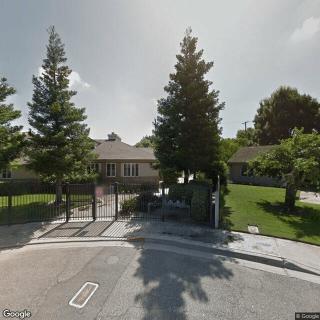
Covenant Retirement Communi
$2,525 to $4,000 / month15.6 miles away
Overall Review of Crossroads Manor
Pros
 Crossroads Manor provides warm, dedicated care in a small six-bed setting.
- The owners, Jerry and Czarina, are kind, compassionate, and attentive.
- The facility is clean, not crowded, and feels like a safe, homey environment for residents.
- The staff go above and beyond to help residents feel comfortable and adjust.
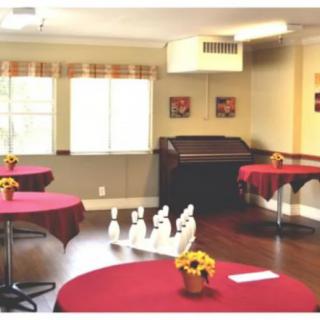
- Crossroads Manor decorates for holidays and celebrates residents' birthdays, adding a joyful atmosphere.
- The six-resident limit creates an intimate, family-like community, with visitors accommodated.
- Families receive daily updates and photos of meals and activities, showcasing ongoing care.
Cons
 The reviewer notes that many of the claimed amenities were never observed during the three months there.
- There were no menus, and meals were served with no choices.
- There was no gym or weight/game room.
- The resident was told she could not ask for the bedpan after 8:30 p.m. and had to wear a diaper, which distressed her.
- The 10-hour delay to access bathroom facilities was described as cruel.
- The staff speak limited English.
Review
Crossroads Manor in Riverbank is best suited for seniors who want a true home environment and very personal attention from a small, family‑run team. With only six beds, the residence operates more like a private home than a campus, yielding constant visibility from the owners and staff. This community shines for families seeking warmth, safety, and real-day‑to‑day connection: frequent check‑ins, quick responses, and genuine affection in a setting where residents are known by name. The model works especially well for individuals who value a dignified, low‑key routine, where celebrations, photos, and daily life are part of the fabric. It is a natural fit for those who place emphasis on caregiver continuity and family involvement over glossy amenities.
On the upside, the six‑bed footprint translates into remarkable attentiveness. Owners Jerry and Czarina are described as kind, compassionate, and deeply hands‑on, delivering a level of care that feels far more personalized than larger facilities. The home is consistently clean, and residents appear happy and well cared for, with staff who go the extra mile to ease transitions and foster comfort. Families routinely mention daily updates, pictures of meals, walks, and moments of progress, that reinforce trust. Holidays are celebrated with decorations and parties, which strengthens community bonds and helps residents feel seen. The small team and intimate setting also support flexible visiting and meaningful interactions throughout the day.
However, potential residents should enter with eyes open to some trade‑offs. Several observations point to a residential home atmosphere rather than a full‑featured assisted living campus. Some families report that amenities claimed by the facility, such as a broader menu selection and on‑site fitness options, weren’t evident during their time there. The environment is not a gym or a therapy center, and activities can be more low‑key. Nighttime care raised concerns in one account: a long stretch with limited access for help and a feeling of being constrained around bathrooms. Language barriers were noted as well, with staff speaking limited English, which can complicate communication for families needing very clear, real‑time information about a loved one’s day.
These cons do not erase the strengths. The biggest selling points, the intimate caregiver ratio, the sense of family stewardship, and the home‑like rhythm, often offset the absence of industrial‑scale amenities. The six‑resident cap reduces noise, confusion, and waiting for assistance, while the personal updates and proactive care help families stay anchored in their loved one’s daily experience. The option to visit easily, the frequent photos and video updates, and the chance to participate in small, personalized activities (like birthday celebrations and outdoor walks) counterbalance the lack of a gym, formal menus, or a formal calendar of excursions. For many seniors, this is precisely the environment where comfort and dignity rise above breadth of services.
That said, this community is not ideal for every scenario. If a resident requires comprehensive medical oversight, routine rehabilitation, or robust memory‑care programming, a larger, more clinical setting may be necessary. Families seeking a wide menu with choices and a structured activity calendar, a fully bilingual staff, or round‑the‑clock nurses will want alternatives. Prospective movers should also clarify night‑time care policies, confirm the actual availability of promised amenities, and gauge whether the small‑team model can sustain any rising care needs over time. In short, Crossroads Manor excels for comfort, conversation, and family‑involved care; it may fall short where clinical intensity and diverse activity options are non‑negotiables.
Decision‑makers should schedule a visit with clear questions in hand: who will be the primary caregivers, what does a typical night look like in terms of assistance, can current residents share their daily routine, and is there a sample menu and activity plan to review? Given the six‑bed limit, one can expect a high‑touch experience with prompt communication. When the match is right, Crossroads Manor delivers a warm, secure, and genuinely homelike home that keeps seniors connected, engaged, and cared for, an appealing option for families prioritizing heart over size and a stable, trusted living arrangement over a glossy facility brochure.
 6 resident community capacity
 Assisted Living
 Board and Care Home
 Memory Care
 Respite Care
 Cable or satellite TV
 Devotional services on-site
 Dining room
 Fully furnished
 Garden
 Housekeeping services
 Move-in coordination
 Outdoor space
 Private
 Telephone
 Wi-Fi/high-speed internet available
 Modesto City-County-Harry Sham (7 miles away)
 24-hour supervision
 Activities of daily living assistance
 Assistance with bathing
 Assistance with dressing
 Assistance with transfers
 Diabetes diet
 Diabetic care
 Meal preparation and service
 Medication management
 Special dietary restrictions
 Transportation arrangement (medical)
 Transportation to doctors appointments
 Catholic services



 Dementia, Paranoia, and Caregiver Guidance: Understanding the Connection
 Engaging Memory Care Activities That Enhance Quality of Life
 When to Transition from Assisted Living to Memory Care: Key Indicators, Steps, and Finding the Right Community