
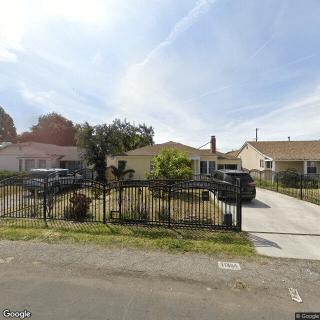
11323 Calvert Street, North Hollywood, CA 91606
For more information about senior living options: (866) 208-4318
Ellee Residential Care 2 Costs & Pricing
Ellee Residential Care 2 offers a competitive pricing structure for its private rooms, with a monthly cost of $3,355. This rate is notably lower than the average costs in Los Angeles County, which stand at $4,197, and also below the statewide average of $3,939 for similar care facilities in California. By providing quality residential care at this more affordable price point, Ellee Residential Care 2 positions itself as an attractive option for families seeking dependable services without compromising on comfort or neighborhood standards.
| Floor plans | Ellee Residential Care 2 | Los Angeles County | California |
|---|---|---|---|
| Private | $3,355 | $4,197 | $3,939 |
Assisted Living communities with a similar price nearby
-
from +$145 / mo
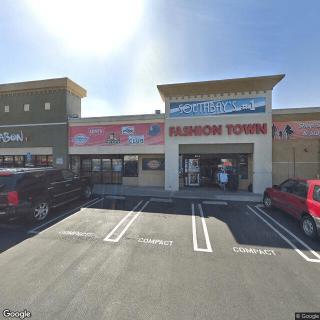
Kind Heart Home Care VI
$3,500 to $5,000 / month24.9 miles away -
from +$645 / mo
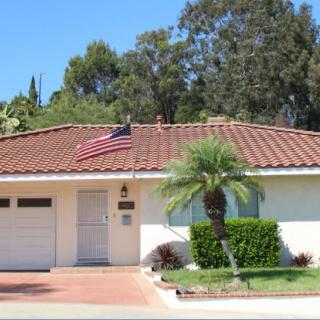
Palomino Residential Care
$4,000 to $6,000 / month16.7 miles away -
from -$605 / mo
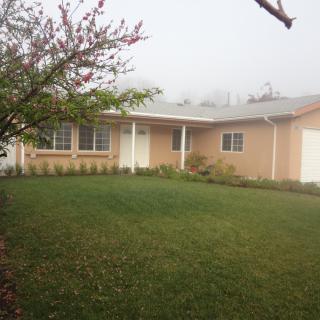
Dignity Care Home 1
$2,750 to $4,150 / month7.1 miles away -
from +$445 / mo
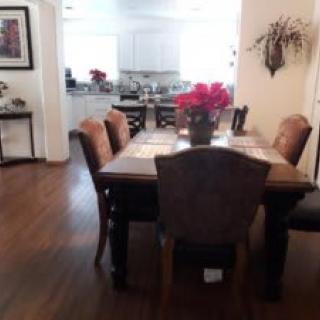
America's Care Manor
$3,800 to $4,000 / month18.2 miles away -
from +$145 / mo
Hollywood Healthy Living
$3,500 to $5,000 / month3.1 miles away
Overall Review of Ellee Residential Care 2
Pros
 The staff are caring, kind, and very professional.
- The food is great.
- They would wholeheartedly recommend this place.
- Their mother is very happy with her new friends and the staff at Prestige.
- The overall experience at Prestige has been wonderful, and Eleanor the owner is appreciated.
Cons
 None found.
Review
Ellee Residential Care 2 in North Hollywood is best suited for seniors who want a small, home-like setting where staff attention feels personal, consistent, and genuinely nurturing. The two positive reviews describe a culture of care in which staff are not only kind and professional but also visibly engaged with residents’ daily well‑being. Visitors consistently observe happy expressions on the faces of the residents, and the praise extends to the quality of meals. The owner, Eleanor, is singled out as a driver of a hands-on, accountable operation. For families prioritizing warmth, simplicity, and a sense of belonging over sprawling campus amenities, this community stands out as a practical, reliable option.
Those who may want to consider alternatives are families seeking higher-acuity medical oversight, highly structured memory care, or a larger community with more extensive on-site services and programming. The reviews provide no detail on clinical staffing levels, on-site nursing, or specialized dementia care, so those needing rigorous clinical support should compare Ellee Residential Care 2 against facilities expressly offering memory-care wings, registered nurses on site, or advanced rehab services. Price transparency, long-term care contracts, and a broader activity calendar are also not addressed in the available feedback, so readers should verify these elements directly if they are critical.
On the positive side, the core strengths are clear and meaningful. The staff’s demeanor, described as caring, kind, and professional, translates into a daily atmosphere that appears warm and predictable, which can significantly ease transitions for both residents and families. Observed resident happiness during visits suggests reliable quality of life in a setting that emphasizes personal attention rather than transactional care. The cuisine receives direct commendation, an often underestimated but essential component of daily well-being that supports appetite, mood, and social dining experiences. Eleanor’s ownership presence signals a level of accountability that many families value when entrusting care to a smaller operation.
The absence of stated drawbacks in the two reviews is itself informative but not conclusive. The lack of details about medical capabilities, memory-care options, or emergency protocols means potential residents must probe these areas directly rather than rely on general impressions. Similarly, without pricing information, contract terms, or long-term care pathways, there is a risk of misalignment between expectations and realities as needs evolve. The small data set also means the community’s strengths could reflect exceptional experiences rather than a consistent, scalable model across multiple residents or over time.
Despite the gaps, the pros, attentive, professional staff; visible resident happiness; high-quality meals; and engaged leadership, do offset several common concerns families raise when evaluating smaller care settings. A home‑like environment often translates into stronger day-to-day morale, easier family communication, and quicker adaptation for new residents. When a loved one values companionship, regular social cues, and a sense of being well cared for in a intimate setting, these elements carry substantial weight. The leader’s accessible involvement further reinforces reliability in daily operations and problem response, which can be a decisive factor for many.
In the end, Ellee Residential Care 2 emerges as a strong recommendation for families prioritizing warmth, personal attention, and a homey atmosphere over expansive campus features. It appears particularly suitable for seniors who flourish in small-team dynamics, where staff learn preferences quickly and can tailor meals, routines, and social interactions accordingly. Those with advanced medical needs, dementia-specific programming, or a demand for wide-ranging activities and facility-led clinical services should approach with a clear checklist: confirm on-site medical staffing, review memory-care capabilities, inspect safety and emergency procedures, and obtain transparent pricing and service agreements. A guided visit, with direct conversations with staff, a sample meal experience, and a tour of daily routines, will reveal whether Ellee Residential Care 2 aligns with the loved one’s evolving requirements.
 6 resident community capacity
 Assisted Living
 Board and Care Home
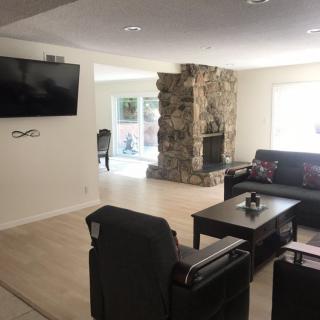
 Cable or satellite TV
 Dining room
 Fully furnished
 Garden
 Housekeeping services
 Move-in coordination
 Outdoor space
 Telephone
 Wi-Fi/high-speed internet available
 Burbank-Glendale-Pasadena (2 miles away)
 24-hour supervision
 Activities of daily living assistance
 Assistance with bathing
 Assistance with dressing
 Assistance with transfers
 Diabetes diet
 Meal preparation and service
 Medication management
 Special dietary restrictions
 Transportation arrangement (medical)
 Transportation to doctors appointments






 Medicare Coverage for Assisted Living: An In-Depth Exploration
 Choosing the Right Senior Care: A Detailed Exploration of Assisted Living and Nursing Homes
 Understanding the True Cost of Assisted Living in 2025: A Comprehensive Guide