
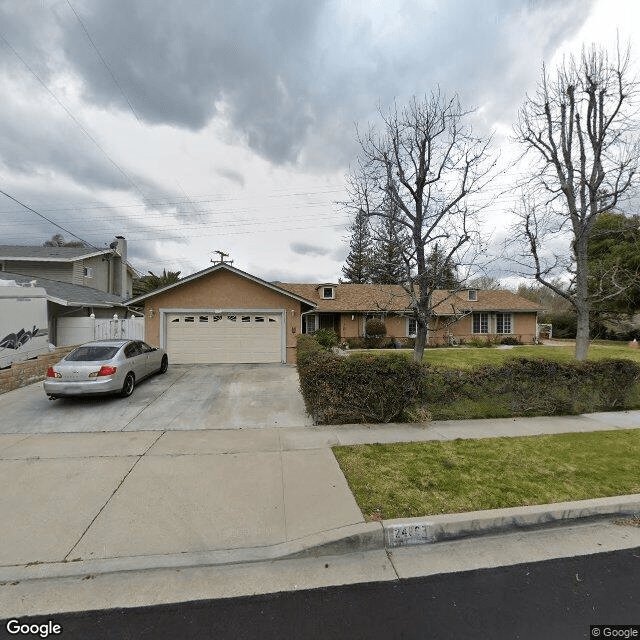
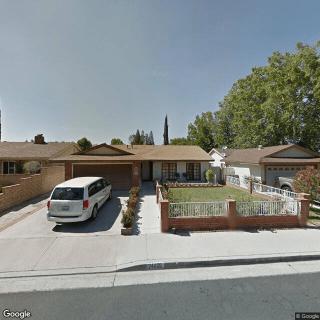
24869 Fourl Road, Santa Clarita, CA 91321
To contact a resident: (818) 462-3187
For more information about senior living options: (866) 208-4318
Agape Residential Care, Inc Costs & Pricing
Agape Residential Care, Inc offers competitive pricing for its residential care services, particularly when compared to local and statewide averages. For a semi-private room, Agape charges $2,100 per month, significantly lower than the Los Angeles County average of $3,349 and the California state average of $3,333. Similarly, the cost for a private room at Agape is set at $3,500, which is more affordable than both the county rate of $4,197 and the state figure of $3,939. This pricing structure positions Agape Residential Care as an attractive option for those seeking quality care in a supportive environment without compromising on affordability.
| Floor plans | Agape Residential Care, Inc | Los Angeles County | California |
|---|---|---|---|
| Semi-Private | $2,100 | $3,349 | $3,333 |
| Private | $3,500 | $4,197 | $3,939 |
Senior living communities with a similar price nearby
-
from +$100 / mo
Precious Someone Homecare
$2,200 to $3,300 / month11.5 miles away -
from -$300 / mo

Fountain Home Care Services - Reseda, CA
$1,800 / month11.7 miles away -
from -$300 / mo
Green Valley Home Care
$1,800 to $2,000 / month13.0 miles away -
from +$100 / mo
Granada Hills Gardens
$2,200 to $3,500 / month7.8 miles away -
from +$400 / mo
Our Home
$2,500 to $3,000 / month14.6 miles away
Overall Review of Agape Residential Care, Inc
Pros
 They provided excellent care.
- The care was almost one-on-one.
- The staff, including Maria, Stephanie, and George, were great.
- The environment felt almost like a family.
- The facility was neat and clean at every visit.
- The care was very satisfactory and worthy of recommendation.
- The staff were truly excellent.
- The facility is small and well-suited for a few clients.
Review
Agape Residential Care in Santa Clarita is best suited for families seeking an intimate, high-touch caregiving environment where a senior can receive near one-on-one attention in a home-like setting. The experiences shared describe a small, focused operation with a staff that feels like a close-knit team, the kind of atmosphere where caregivers know each resident’s routines, preferences, and needs. Neatness and cleanliness are repeatedly noted, reinforcing a sense of order and safety. For families navigating transitions after a hospital stay or during caregiving gaps, the model prioritizes personal connection and steady oversight, delivering reassurance that a loved one will be observed closely in a calm, manageable environment rather than a bustling, impersonal campus.
That said, there are clear reasons to consider alternatives. The most important is scale: the home appears to accommodate only a handful of clients, potentially limiting medical resources, staff diversity, and the breadth of programming. For residents who require robust medical oversight, frequent skilled nursing, or a vibrant schedule of activities and outings, a larger assisted living community would typically offer more comprehensive support and a broader social fabric. Similarly, if dementia-specific or memory-care services are a priority, prospective residents may need to look for programs with established memory-care wings or dedicated staff. In short, the strengths lie in warmth and attentiveness, while the trade-offs are the limitations that come with a small operation.
The core advantages, near-constant attentiveness, a family-like vibe, and consistently clean, orderly surroundings, align with the most pressing family concerns in intimate care. The reviews center on almost personalized care, with named staff members delivering dependable service and meals prepared on-site by a caregiver who also functions as a kitchen presence. Those factors translate into tangible peace of mind: a trusted routine, fewer impersonally managed moments, and an environment that feels safe and familiar. The small footprint further strengthens trust, because staff can build continuity, track subtle health changes, and respond quickly. The main cons, as implied, are the constraints of size: fewer residents, fewer peers for social interaction, and less capacity for broad programming or emergencies that require a larger team. Yet these very constraints become strengths when measured against the goal of individualized, dependable care.
When evaluating a stay here, families should pressure-test practical details that reveal true day-to-day quality. Clarify the care ratio and the expected cadence of daily life, including how meals are tailored to dietary needs and how medications are managed. Inquire about on-site medical oversight, whether a nurse or physician is readily available, and how quickly help can be summoned after hours. Observe the living space for signs of engagement among residents and comfort in the environment, not just cleanliness. Seek assurances about continuity of care, whether the same aides and caregivers are consistently assigned, since that continuity underpins the reported comfort and confidence in the staff.
The reviews converge on a single, compelling signal: this is a rigorously attentive, low-key, home-like setting that delivers exceptional personal care in a compact footprint. A five-star impression from two sources reinforces the message that residents experience a level of attention and warmth that’s hard to match in larger facilities. For families prioritizing intimate oversight, predictable routines, and a supportive, almost familial culture, Agape Residential Care represents a trustworthy option worth prioritizing over bigger, more centralized communities. The decision hinges on aligning expectations with capacity: if the priority is a calm, highly personalized atmosphere, this is a standout choice; if the priority is expansive programming and extensive medical services, alternatives should be explored.
 Board and Care Home
 Activities off-site
 Bath tubs
 Indoor common areas
 Outdoor common areas
 Private
 Wheelchair accessible showers
 Burbank-Glendale-Pasadena (16 miles away)
 Ambulatory care
 Diabetic care
 Incontinence care
 Kosher



 Comprehensive Insights and Practical Strategies to Help Older Adults Avoid Falls
 6 Crucial Ways an Elder Law Attorney Assists Families
 Navigating the Tax Landscape of Caregiving: Credits, Deductions, and Beyond