
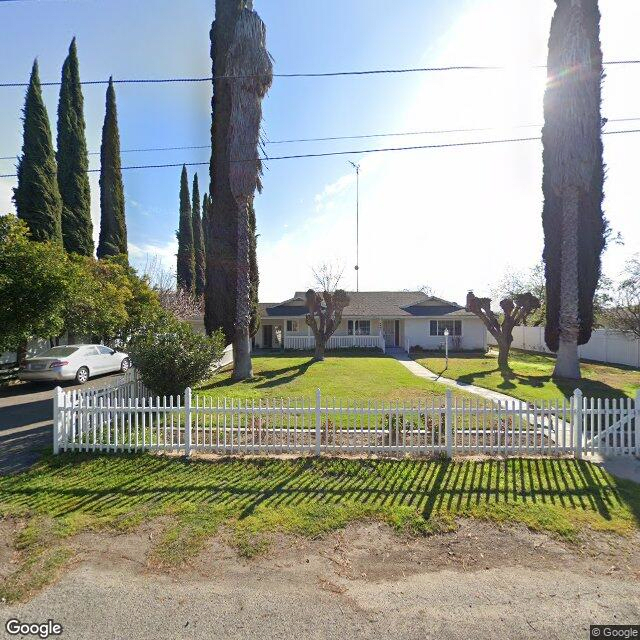
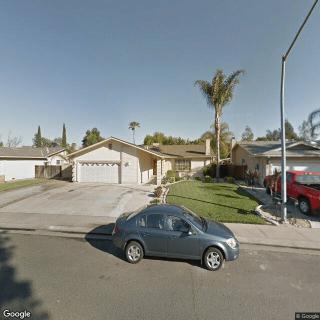
4445 Morrow Road, Modesto, CA 95356
For more information about senior living options: (866) 208-4318
Royal Home Care Costs & Pricing
Royal Home Care offers competitive pricing for its accommodations when compared to both Stanislaus County and the broader California market. For a semi-private room, Royal Home Care charges $2,500 per month, significantly lower than the county's average of $3,241 and the state average of $3,333. Similarly, in terms of private rooms, Royal Home Care's monthly fee is $3,500, which is more affordable than the county's rate of $3,754 and the state average of $3,939. These cost advantages make Royal Home Care an appealing option for those seeking quality care without straining their financial resources.
| Floor plans | Royal Home Care | Stanislaus County | California |
|---|---|---|---|
| Semi-Private | $2,500 | $3,241 | $3,333 |
| Private | $3,500 | $3,754 | $3,939 |
Assisted Living communities with a similar price nearby
-
About the same

Stetson Court Living
$2,500 / month21.1 miles away -
About the same

Rio Las Palmas
$2,510 to $3,125 / month24.9 miles away -
from +$300 / mo
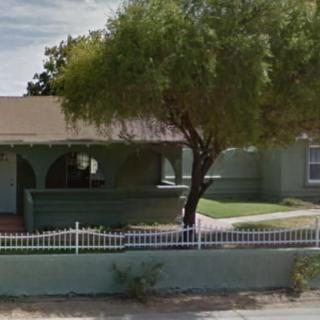
Lifespring Senior Campus
$2,800 to $3,500 / month17.4 miles away -
from -$100 / mo

Christina's Home Care
$2,400 / month22.8 miles away -
About the same
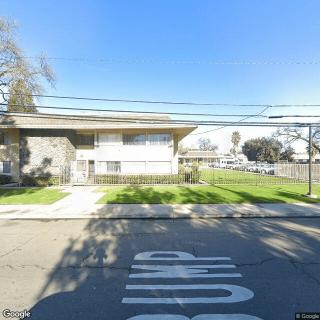
Stacie's Chalet - Stockton
$2,500 to $3,795 / month23.9 miles away
Overall Review of Royal Home Care
Pros
 The tour was pretty decent.
Cons
 The reviewer was not very impressed.
- The reviewer knew it wasn't the right place for their father's needs.
Review
Royal Home Care in Modesto, California is best suited for seniors who want a straightforward, home-like assisted-living option with predictable routines and modest amenities. The community appears to deliver basic daily support without the frills of higher-end campuses, making it a practical match for residents whose care needs are not highly complex. For families seeking a calm, unpretentious environment that emphasizes safety and routine over luxury, this facility can be a reasonable starting point. It is not an ideal fit for those requiring intensive nursing supervision, specialized memory programs, or highly proactive clinical oversight. In such cases, options with stronger clinical teams and dedicated memory care services should be pursued rather than settling for a modest setting.
Those weighing alternatives should prioritize facilities with proven capacity for higher-acuity care, better staffing coverage, and more robust activity programming. If a resident’s needs include frequent assistance with mobility, complex medication regimens, or behavioral support, other communities offering nurse availability on site, 24/7 oversight, and clearly articulated care plans will usually outperform this modest option. For families evaluating this community, it is essential to compare the level of hands-on care, the responsiveness of staff, and the quality of daily life programming against peers with stronger clinical reputations. A practice tour should probe these dimensions early and without hesitation.
From the reported tour, the impression is practical but underwhelming: the facility meets basic expectations but does not deliver the signal of confidence that would justify a long-term commitment for someone with more demanding needs. The reviewer described the tour as decent yet far from impressive and concluded that the setting would not be suitable for the father’s specific requirements. That verdict matters: a lackluster first impression often masks deeper questions about caregiver ratios, individualized care planning, and the facility’s ability to adapt to changing health status. In this light, the absence of standout positive indicators becomes a meaningful red flag for families assessing fit.
Pros show up as routine adequacy, clean, orderly spaces, standard meals, and predictable daily routines likely available. These basics matter, but they do not compensate for the core risk exposed by the review: a mismatch between what the place can offer and the resident’s needs. When a tour leaves a family with the sense that care may be adequate but not transformative, the main con, limited alignment with a highly individualized care plan, dominates the decision. The balancing act here hinges on whether predictable support suffices for the resident’s condition or if more proactive supervision, specialized programming, and proactive care management are essential.
To move toward an informed decision, prospective families should demand more from a second visit and explore concrete data. Request a sample day-in-the-life schedule, meet the lead caregiver and the supervising nurse, and observe caregiving interactions firsthand. Inquire about staff-to-resident ratios at different shifts, emergency response times, medication management processes, and the facility’s track record on safety incidents. Review state inspection reports and ask for recent surveys to identify recurring issues. If possible, arrange multiple tours at different times and days to gauge consistency, warmth, and responsiveness across different staff members and routines.
Bottom line: this community is a reasonable option for families prioritizing a straightforward, no-frills living environment with dependable daily support, provided the resident’s needs are not demanding. For anyone facing higher medical or functional requirements, or for those who demand strong evidence of individualized care and proactive engagement, this option should be weighed against higher-acuity alternatives. The prudent course is to broaden the search, conduct deeper due diligence, and test fit with a trial or temporary respite stay if available. The takeaway is clear: align care goals with proven capacity; otherwise the modest appeal, while reassuring on basics, may fall short when health status evolves.
 6 resident community capacity
 Assisted Living
 Board and Care Home
 Respite Care
 Cable or satellite TV
 Dining room
 Fully furnished
 Garden
 Housekeeping services
 Move-in coordination
 Outdoor space
 Private
 Telephone
 Wi-Fi/high-speed internet available
 Modesto City-County-Harry Sham (7 miles away)
 24-hour supervision
 Activities of daily living assistance
 Assistance with bathing
 Assistance with dressing
 Assistance with transfers
 Diabetes diet
 Diabetic care
 Incontinence care
 Meal preparation and service
 Medication management
 Special dietary restrictions
 Transportation arrangement (medical)
 Transportation to doctors appointments





 Assisted Living and Memory Care: Understanding Their Core Differences
 Beyond the Bingo Hall: 50+ Enriching Activities for Seniors in Assisted Living
 Understanding the Distinctions: Assisted Living and Memory Care Explained