
43745 Pettirosso Street., Indio, CA 92203
For more information about senior living options: (866) 208-4318
Desert Cottage III Costs & Pricing
Desert Cottage III presents a range of monthly costs that reflect the premium services and accommodations it offers compared to both Riverside County and the broader state of California. For a semi-private room, residents can expect to pay $4,200, which significantly exceeds the county's average of $2,844 and California's average of $3,333. Private rooms at Desert Cottage III are priced at $5,200, again above Riverside County's rate of $3,474 and California's average of $3,939. Additionally, the one-bedroom option is available for $6,250 - markedly higher than both the county's average of $3,611 and the state's rate of $4,340. These figures suggest that while Desert Cottage III may position itself as a more luxurious living option for seniors or those in need of assisted living services, the costs indeed reflect a premium service environment tailored to meet diverse resident needs.
| Floor plans | Desert Cottage III | Riverside County | California |
|---|---|---|---|
| Semi-Private | $4,200 | $2,844 | $3,333 |
| Private | $5,200 | $3,474 | $3,939 |
| 1 Bedroom | $6,250 | $3,611 | $4,340 |
Memory care communities with a similar price nearby
-
from -$305 / mo

Brookdale Mirage Inn
$3,895 to $5,700 / month11.8 miles away -
from +$800 / mo
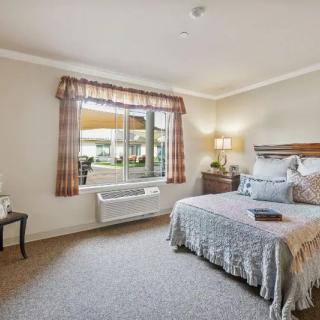
Caleo Bay Memory Care & Transitional Assisted Living
$5,000 to $7,300 / month6.3 miles away -
About the same

Atria Hacienda
$4,295 to $6,395 / month11.4 miles away -
from -$400 / mo
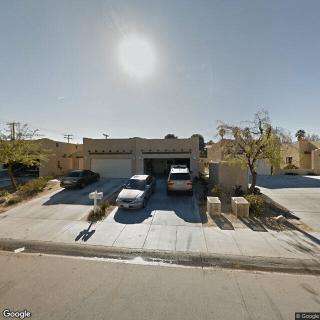
Loving Care Living
$3,800 to $4,000 / month5.6 miles away -
from +$350 / mo

The Palms at LaQuinta
$4,550 to $7,500 / month5.8 miles away
Overall Review of Desert Cottage III
Pros
 The home impresses visitors with its small size, enabling more one-on-one care.
- The community is cheerful and has a great outdoor area for residents to enjoy.
- The staff are highly regarded for attentive, resident-focused care.
- Families feel comfortable with the care provided and appreciate the staff's friendliness.
- Residents enjoy the dining experience and many activities.
Cons
 The reviewers felt that communication could have been better when hospice became involved.
- The reviewers felt the community was not as clean as they wanted, and changes were needed.
- The reviewers noted that the menu and activities were not seen.
Review
Desert Cottage III in Indio, CA is best suited for families seeking a warm, intimate, small-home setting where care can be highly personalized and residents can thrive on closer daily interaction. This community suits seniors who value a low‑stimulation pace, easy access to outdoor spaces, and a cheerful, sociable atmosphere. It is particularly well aligned with families prioritizing hands-on attention from staff and a feel of “home” rather than institutional care, where one‑on‑one time with caregivers can translate into meaningful daily routines.
The strongest positives center on the small footprint and the human scale of the operation. A compact home naturally facilitates more direct contact between residents and caregivers, translating into attentive, responsive support. Staff are consistently described as friendly, cooperative, and accommodating to individual needs, which helps families feel confident about daily care decisions. Dining experiences and resident activities receive favorable mentions, indicating that mealtime and social engagement are more than perfunctory chores here. The outdoor area is another standout, offering a pleasant, accessible space for fresh air, sunlight, and relaxed gatherings, an important factor for mood and social well-being.
On the downside, cleanliness and environmental upkeep surface as legitimate concerns in at least one review, signaling that maintenance standards may be uneven and worth confirming before move-in. Communication around care coordination, notably when hospice involvement enters the picture, could be clearer. Families also noted that they did not see a menu or a full activities schedule during tours, which suggests a potential gap in transparency about daily programming. Taken together, these cons temper the otherwise positive impression and warrant careful verification, cleanliness protocols, meticulous housekeeping, and a clear, proactive care-planning process.
Yet, the pros offset many of the drawbacks when viewed through a practical lens. The small home setting, paired with consistently friendly staff, creates a foundation of trust and comfort that large campuses often struggle to deliver. When residents enjoy the dining experience and participate in activities with peers, quality of life rises noticeably, and caregiver responsiveness becomes a meaningful safeguard for safety and personal preferences. The outdoor space complements this by enabling routine outdoor time, which supports physical health and emotional balance. While cleanliness and communication gaps exist, they are not insurmountable issues if addressed proactively through formal checklists, regular housekeeping improvements, and clear hospice-care communication protocols.
Families who require robust, structured programming, or who insist on consistently visible menus and activity calendars, may want to consider alternatives. If cleanliness standards are non-negotiable or if there is a need for highly transparent daily schedules and predictable programing, a larger, more resource-rich community could better meet those expectations. Similarly, for residents with complex medical needs requiring intensive oversight or for families seeking highly integrated hospice coordination with explicit, ongoing updates, this community may fall short of those demands. Desert Cottage III remains a strong fit for those prioritizing intimate care, personal connection with staff, and an inviting social environment, provided the expectations around maintenance and program transparency are clearly established upfront.
For a decisive next step, prospective families should arrange a meticulous on-site visit and observe both the living space and staff interactions during different times of day. Inquire specifically about housekeeping protocols, recent turnover or maintenance projects, and how housekeeping and maintenance priorities are communicated to families. Request current menu samples and a full activity calendar, and ask to meet with caregiving staff to discuss care plans and what happens when hospice services are involved. Speak with current residents or families about how often issues are resolved and how transparent communication feels in practice. With these checks, Desert Cottage III can be positioned accurately within a senior-care plan: a strong choice for intimate, attentive living in a cheerful, outdoors-friendly setting, with clear paths to improvement in the areas that matter most.
 6 resident community capacity
 Assisted Living
 Board and Care Home
 Memory Care
 Dogs allowed
 Activities on-site
 Air-conditioning
 Cable or satellite TV
 Devotional services on-site
 Dining room
 Fully furnished
 Garden
 Housekeeping services
 Indoor common areas
 Move-in coordination
 Outdoor common areas
 Private
 Private bathrooms
 Respite or short term stays offered
 Telephone
 Wheelchair accessible showers
 Wi-Fi/high-speed internet available
 Palm Springs International (19 miles away)
 24-hour supervision
 Ambulatory care
 Assistance with bathing
 Assistance with dressing
 Assistance with transfers
 Diabetes diet
 Diabetic care
 High acuity care
 Incontinence care
 Meal preparation and service
 Medication management
 Special dietary restrictions
 Transportation arrangement (medical)
 Transportation to doctors appointments
 Birthday parties

 Exploring the Power of Reminiscence Therapy for Individuals With Dementia
 An In-Depth Look at Reminiscence Therapy in Dementia Care
 Dementia-Related Hallucinations: Causes, Experiences, and Practical Approaches