

1681 Day Break Place, Escondido, CA 92027
For more information about senior living options: (866) 208-4318
Daybreak Villa West Costs & Pricing
At Daybreak Villa West, the monthly cost for a private room is set at $4,250. This figure is notably higher than the average costs in San Diego County and across California, both of which stand at $3,939 for similar accommodations. The premium pricing at Daybreak Villa West may reflect enhanced services or facilities offered at this particular location, catering to those seeking a more personalized or upscale living experience. Ultimately, while it surpasses local and state averages, prospective residents should consider the unique benefits that justify this higher rate.
| Floor plans | Daybreak Villa West | San Diego County | California |
|---|---|---|---|
| Private | $4,250 | $3,939 | $3,939 |
Assisted Living communities with a similar price nearby
-
from +$300 / mo
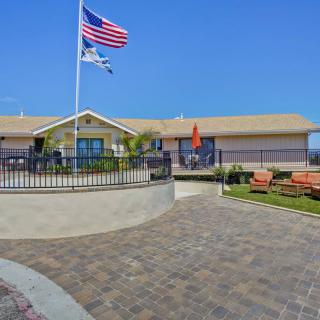
Champine Manor
$4,550 / month2.1 miles away -
from -$750 / mo

Ramona Senior Lodge Assisted Living
$3,500 to $5,500 / month13.5 miles away -
from +$250 / mo
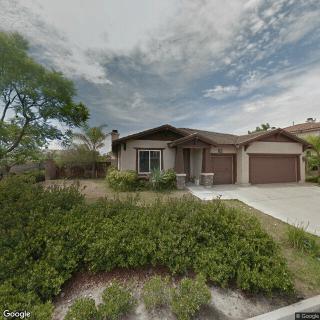
Hidden Meadows Residential Home Care
$4,500 to $4,800 / month4.5 miles away -
from +$250 / mo

La Costa Elder Care
$4,500 to $5,000 / month10.5 miles away -
from -$250 / mo
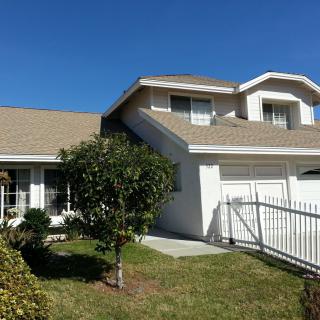
Blue Skies of Oceanside
$4,000 to $5,000 / month15.6 miles away
Overall Review of Daybreak Villa West
Pros
 Joan has recovered from her past illnesses.
- She is thriving, sleeping well, and eating.
- Joan continues to receive hospice care with confidence in the care at Daybreak Villa.
- Lori B. expresses confidence that Joan receives excellent care at Daybreak Villa.
- The care at Daybreak Villa is described as excellent.
Review
Daybreak Villa West in Escondido is best suited for families seeking a warm, home-like residential care option for a loved one who benefits from highly personalized oversight and hospice-oriented support within a small, intimate setting. It fits seniors who value predictable routines, attentive caregivers, and regular family communication, where daily meals, restful sleep, and comfort are central. In one representative account, a daughter details her mother’s journey from serious illness to a state where she is thriving, sleeping well, and eating better while remaining on hospice care, with a clear sense that Daybreak Villa West delivers steady, compassionate care. That narrative crystalizes the core strength: care that feels consistently present and deeply human, not bureaucratic or detached.
Those weighing alternatives should consider the ceiling Daybreak Villa West imposes. If the priority is aggressive medical intervention, 24/7 hospital-level nursing, or a bustling, highly programmatic community life, a larger skilled-nursing facility or a broader assisted-living campus with extensive on-site medical specialists may be more appropriate. For families needing robust memory-care programming or a wide array of therapeutic amenities, the intimate residential model here may feel limiting. In short, Daybreak Villa West is a strong fit for hospice-aligned caregiving and very personalized oversight, but it may not meet every clinical or social expectation that comes with bigger, clinically richer communities.
The principal advantages center on personalized attention and a caregiving approach that feels dedicated rather than transactional. The strongest takeaway from the observed story is that a resident on hospice can still experience meaningful quality-of-life gains, better sleep, improved appetite, and daily stability, thanks to attentive staff and a home-like rhythm. The intimate setting facilitates consistent caregiver-resident relationships, easier adjustment of routines, and a level of responsiveness that translates into timely meals, hydration, and comfort. When families worry about oversight, Daybreak Villa West’s model appears to convert that concern into tangible trust, with caregivers who know the resident’s history and preferences and can coordinate with hospice teams seamlessly.
Communication and confidence emerge as notable pros. The reviewer’s confidence in the care plan and the sense that the facility “receives excellent care” reflect not only competency but also reliability in day-to-day management. This environment often translates to fewer miscommunications, smoother transitions between care moments, and a more peaceful atmosphere for both resident and family. In a care landscape where families must balance hope with practicality, those factors, trust, clarity, and dependable routines, are substantial. They offset the potential anxiety that accompanies hospice placement by projecting consistency and humane attention at every step.
On the flip side, the compact, residential model may illuminate certain trade-offs. A smaller footprint can mean a narrower slate of activities, fewer on-site specialists, and less diversity in programming than larger communities. For someone who values an active social calendar or needs a wider array of therapeutic services without coordinating across multiple venues, Daybreak Villa West could feel limited. The key here is recognizing that intimate care does not equal limited warmth; it simply requires a different set of expectations about programming, medical resources, and variety of services.
For decision-making, the practical takeaway is clear. Prospective families should verify how hospice needs are supported, what the staff-to-resident ratio looks like across day and night shifts, and how care plans are updated and shared with family members. Ask about meal planning, sleep routines, and how comfort-focused goals are tracked over time. Tour with an eye toward how the home handles transitions, emergency protocols, and coordination with hospice teams. The community’s 4.8 rating from four reviews signals a high level of family satisfaction, but the small sample invites diligence, confirm alignment with the specific medical and social preferences of the loved one. Daybreak Villa West should be on the short list for families prioritizing intimate, compassionate hospice-oriented care in Escondido, with the caveat that broader medical services and activity diversity may warrant exploring alternatives as necessary.
 6 resident community capacity
 Assisted Living
 Board and Care Home
 Activities off-site
 Cable or satellite TV
 Dining room
 Fully furnished
 Garden
 Housekeeping services
 Indoor common areas
 Move-in coordination
 Outdoor common areas
 Private
 Private bathrooms
 Respite or short term stays offered
 Telephone
 Wheelchair accessible showers
 Wi-Fi/high-speed internet available
 MC Clellan-Palomar Airport (12 miles away)
 24-hour supervision
 Ambulatory care
 Assistance with bathing
 Assistance with dressing
 Assistance with transfers
 Diabetes diet
 Diabetic care
 High acuity care
 Incontinence care
 Meal preparation and service
 Medication management
 Special dietary restrictions
 Transportation arrangement (medical)
 Transportation to doctors appointments





 Choosing the Right Senior Care: A Detailed Exploration of Assisted Living and Nursing Homes
 Understanding the True Cost of Assisted Living in 2025: A Comprehensive Guide
 Understanding Medicaid Coverage for Assisted Living: A Comprehensive Guide