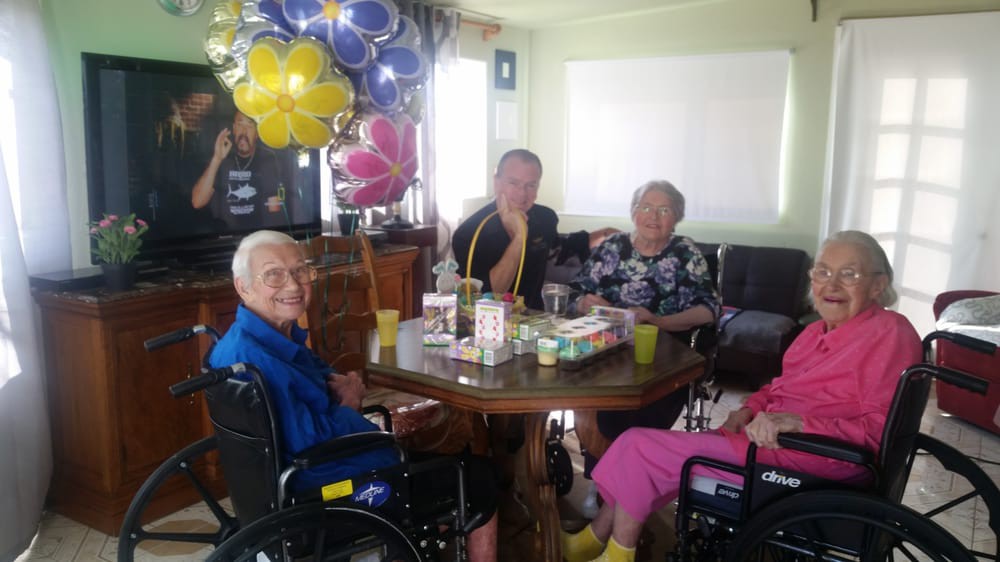




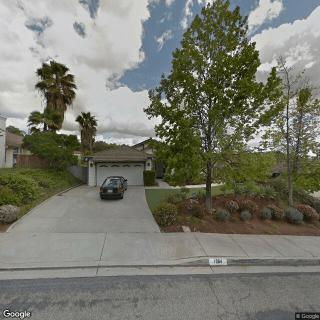
1983 Drew Road, Escondido, CA 92027
For more information about senior living options: (866) 208-4318
Eagles Nest Eldercare Homes Costs & Pricing
Eagles Nest Eldercare Homes offers competitive pricing for its services in comparison to both San Diego County and the broader California market. For semi-private rooms, the cost is $3,500 per month, slightly below the county average of $3,518 but notably higher than the statewide average of $3,333. When it comes to private rooms, Eagles Nest charges $4,500 monthly - a figure that aligns with the county's rate of $3,939 but significantly exceeds the state average of $3,939. Overall, while Eagles Nest provides quality care tailored for individual needs, potential residents should carefully consider these costs in relation to their budget and the value offered by the facility.
| Floor plans | Eagles Nest Eldercare Homes | San Diego County | California |
|---|---|---|---|
| Semi-Private | $3,500 | $3,518 | $3,333 |
| Private | $4,500 | $3,939 | $3,939 |
Assisted Living communities with a similar price nearby
-
from -$300 / mo

Wellspring Assisted Living
$3,200 to $4,000 / month24.9 miles away -
About the same

Ramona Senior Lodge Assisted Living
$3,500 to $5,500 / month12.9 miles away -
from -$250 / mo

Mountain View Manor
$3,250 / month12.1 miles away -
from -$500 / mo
North La Costa Assisted Living
$3,000 / month11.7 miles away -
from -$500 / mo
White Orchid Guest Home
$3,000 to $3,500 / month3.1 miles away
Overall Review of Eagles Nest Eldercare Homes
Pros
 The staff at Eagles Nest Eldercare were compassionate, professional, and kept residents safe and comfortable.
 - Kevin, the owner, is described as having a big heart with strong supportive values, going beyond to meet families’ needs.
- Eagles Nest Eldercare creates a home-like environment, not just a facility.
- The caregivers provide companionship and emotional support, and communicate well with families.
- Families express gratitude, calling the staff angels on earth doing God’s work.
- The therapy dog adds comfort and memorable moments for residents and their loved ones.
Cons
 The reviewer called the facility criminally bad and said they were breaking multiple laws.
- They claimed the staff were not keeping the environment warm.
- They alleged that the patients were not fed enough.
- They asserted that Kevin would not let a patient back into the facility even though all medications were available.
- They described the situation as truly dangerous and criminal.
- They urged others to stay away at all costs.
- They stated that a 95-year-old woman suffered as a result.
Review
Eagles Nest Eldercare Homes in Escondido is best suited for families seeking a small, home-like setting where caregiving is deeply personal, faith-informed, and strongly relationship-driven. The community shines when residents require hospice-like attention in their final months or days, supported by an owner-operator who leads with Christian values and a hands-on approach. Families report that Kevin and the caregiving team invest time to know each resident, coordinating daily needs and maintaining a warm, homelike atmosphere rather than a clinical feel. The consistency of care is anchored by dependable staff who tailor schedules, provide companionship, and address emotional as well as physical needs. A therapy dog adds a comforting dimension to daily life, and ongoing family communication helps relatives feel included rather than sidelined during tough chapters.
The strongest pros lean on genuine compassion and relationship-driven care. The staff is repeatedly described as kind, patient, and deeply dedicated, with caregivers who go beyond routine tasks to offer emotional support and companionship. The setting is repeatedly framed as a home rather than a facility, a distinction many families value for residents who resist impersonal environments. End-of-life care is portrayed as dignified and supportive, with staff guiding families through difficult transitions while honoring residents’ dignity. The owner’s ongoing involvement and frequent communication with families contribute to a sense of trust and transparency, an important reassurance when navigating painful decisions. In short, for families prioritizing personal attention, continuity of care, and values-aligned caregiving, Eagles Nest can feel like a comforting, almost uplifting place during life’s final chapters.
But the picture is not uniformly warm. Several reviewers raise serious red flags about safety, governance, and consistency. One account notes a family member’s death after a short stay and another family warning others to stay away, labeling the owner as a “salesman” and advising meticulous documentation. A separate, stark portrayal describes the facility as “criminally bad,” accusing it of law violations, failing to provide adequate warmth or food, and recounting a troubling incident where the resident was denied re-entry after medication-related issues. These are extreme assertions that demand careful verification, yet they are not isolated in the narratives surrounding Eagles Nest. The presence of such divergent experiences signals that outcomes may hinge on individual staff, shifts, and the adherence to basic care protocols on any given day.
When the upbeat experiences prove consistent, their benefits can substantially offset concerns, but only if safety and governance are solid in practice. The personal touch, family involvement, and the home-like atmosphere can profoundly ease the burden on residents and families facing end-of-life decisions, often translating into meaningful emotional and spiritual comfort. The emotional and moral support, together with tangible touches like a therapy dog, can significantly enhance quality of life during vulnerable moments. However, the highlighted concerns about medication handling, nutritional adequacy, and possible admission/readmission practices strike at the core of trust in caregiving. If those governance and safety issues reflect systemic patterns rather than occasional lapses, the overall value of the place erodes quickly. The practical question becomes whether the strong relational care can be reliably delivered every day.
For families who prize formal regulatory compliance, predictable staffing, and a low-risk governance environment, alternatives will be a prudent consideration. If a resident requires continuous clinical oversight, strict adherence to documented protocols, and transparent external oversight, a larger, more regulated setting may deliver greater peace of mind. Those who demand a consistently documented grievance process and verifiable licensing history tend to favor environments with visible, routine inspections and standardized operating procedures. Eagles Nest may still fit a family willing to do rigorous, firsthand due diligence, interview multiple caregivers, observe daily routines, and verify medication management practices, but the decision hinges on the degree to which reliability and accountability are non-negotiable priorities.
In sum, Eagles Nest Eldercare Homes offers a compelling option for families seeking intimate, compassionate, values-driven care with a spiritually aligned framework and a strong emphasis on resident dignity in life’s final chapters. For families prioritizing formal safety standards, consistent governance, and a proven track record of compliant operations, it pays to explore alternatives before committing. If choosing Eagles Nest, approach with thorough due diligence: request the latest licensing and inspection results, meet several caregivers, tour the facility at different times of day, and probe how medications and meals are actually managed. When the positives, deep caregiving, open family communication, and a genuine home-like environment, align with a family’s tolerance for owner-led operation and a faith-oriented culture, Eagles Nest can deliver a deeply reassuring, life-affirming experience. The bottom line is a clear calculation: value the personal, relationship-centered care and spiritual comfort, or prioritize formal risk management with a more regulated setting.
 6 resident community capacity
 Assisted Living
 Board and Care Home
 Cable or satellite TV
 Dining room
 Fully furnished
 Garden
 Housekeeping services
 Move-in coordination
 Outdoor space
 Private
 Telephone
 Wheelchair accessible showers
 Wi-Fi/high-speed internet available
 MC Clellan-Palomar Airport (13 miles away)
 24-hour supervision
 Activities of daily living assistance
 Assistance with bathing
 Assistance with dressing
 Assistance with transfers
 Diabetes diet
 Diabetic care
 High acuity care
 Incontinence care
 Meal preparation and service
 Medication management
 Special dietary restrictions
 Transportation arrangement (medical)
 Transportation to doctors appointments





 Senior Transition Services: Understanding Their Role, Cost, and Importance
 Exploring the Path to Senior Living: A Comprehensive Look at Independent Living and Assisted Living
 Is Assisted Living Deductible on Your Taxes? Understanding the Complexities of Assisted Living Expenses and Deductions