
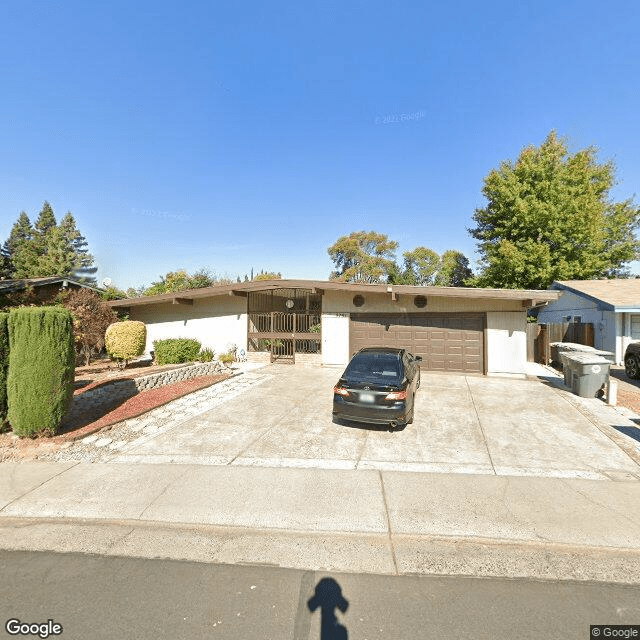
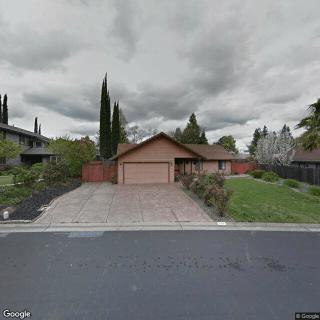
8781 Kelsey Drive, Elk Grove, CA 95624
For more information about senior living options: (866) 208-4318

Home Sweet Home II Costs & Pricing
Home Sweet Home II offers competitive pricing for its accommodations, providing a cost-effective option compared to both Sacramento County and the broader California market. For semi-private rooms, residents at Home Sweet Home II pay $2,500 per month, significantly lower than the county average of $3,106 and the state average of $3,333. Similarly, the monthly rate for private rooms is set at $3,500, which remains more affordable than Sacramento County's average of $3,686 and California's average of $3,939. These rates underscore Home Sweet Home II's commitment to providing quality care at a value that is attractive not only to residents but also to their families seeking peace of mind in a supportive environment.
| Floor plans | Home Sweet Home II | Sacramento County | California |
|---|---|---|---|
| Semi-Private | $2,500 | $3,106 | $3,333 |
| Private | $3,500 | $3,686 | $3,939 |
Assisted Living communities with a similar price nearby
-
About the same
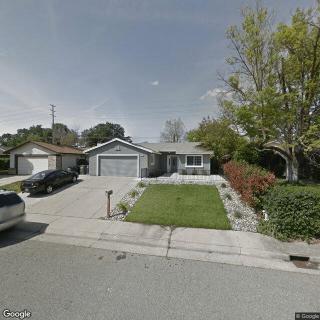
Sunrise Senior Care
$2,500 to $3,500 / month19.7 miles away -
About the same

Gina's Home Care
$2,500 / month15.5 miles away -
About the same
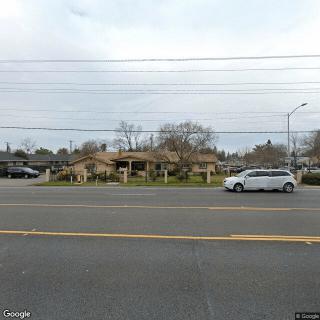
Eastern Manor
$2,500 to $3,000 / month13.7 miles away -
About the same
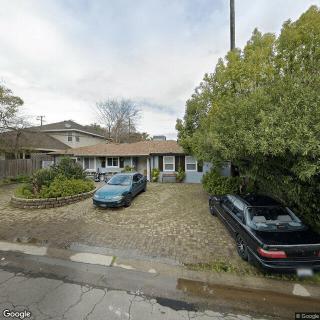
Hempstead Home
$2,500 to $6,930 / month11.6 miles away -
About the same
A.R.C. Manor of Folsom
$2,500 to $3,500 / month21.5 miles away
Overall Review of Home Sweet Home II
Pros
 Maymay was responsive, organized, and proactive throughout the entire transaction.
- She stayed on top of all the details and made sure everyone was aligned every step of the way.
- This was a meaningful purchase for the buyers, and Maymay handled it with professionalism and care.
- Maymay is the best and most caring agent one could hope for.
- Maymay is professional, knowledgeable, and adaptable.
- Maymay is a very patient, attentive, and friendly person.
- When the buyers were stuck, Maymay always had multiple ways to help solve the problem.
- Her attentive, unique, and decisive approach is definitely worth choosing and highly praised.
Cons
 Some accommodations were extremely nit-picky.
- Other agents only talk about the advantages.
Review
Home Sweet Home II in Elk Grove, CA is best suited for families that prize a highly managed, low-stress transition into assisted living. The community stands out for delivering an exceptionally coordinated move-in experience, with staff and administering partners who communicate clearly, stay on top of every detail, and tailor options to match a family’s timing and financial considerations. This is the kind of environment where questions are welcomed, explanations are thorough, and families feel guided rather than pressured. In short, it serves residents whose priority is reliable process management, transparent pricing discussions, and a steady hand through what can otherwise be a chaotic transition.
That said, certain families may want to consider alternatives. If extensive on-site medical oversight, memory care specialization, or highly intensive clinical programming are non-negotiable, other communities may be a better fit. Those evaluating long-term care needs where 24/7 nursing presence or specialized dementia care is required should compare options that explicitly market advanced clinical services, dedicated memory care units, or lower resident-to-staff ratios. Similarly, households operating under tight budget constraints may find some competitors with lower base costs or more flexible pricing structures worth exploring.
The strongest pros in this context revolve around responsiveness, clarity, and flexibility. The available feedback indicates staff consistently answers questions quickly, explains complex details in accessible terms, and remains available at odd hours when concerns arise. This level of attentiveness helps families feel informed and reduces the friction that often accompanies transitions, a practical counterweight to the anxiety that accompanies choosing a new living environment. The willingness to negotiate and to present candid assessments of options further strengthens the decision framework, because it demonstrates commitment to finding the right fit rather than pushing unnecessary upgrades.
However, the lack of facility-specific metrics in the current landscape is a notable gap. There is no direct data here on staffing ratios, clinical capabilities, incident reports, or resident outcomes within Home Sweet Home II. For families weighing care intensity, especially when medical needs may escalate, this absence matters. The key question becomes whether the practical strengths of a steady, transparent transition process can be matched by robust on-site care as needs evolve. If the answer is yes, through access to dependable nursing oversight, timely medication management, and strong care coordination, then the pros significantly offset potential drawbacks. If not, the mismatch could become a critical factor.
On the ground, prospective residents should structure their visits around concrete checks. Inquire about the on-site nursing presence, how often care plans are reviewed, and the process for physician or nurse practitioner visits. Request specifics on medication administration, emergency response times, and coordination with external medical providers. Observe resident interactions during meals and activities to gauge social engagement and the quality of life within the community. Finally, obtain a transparent picture of costs, what is included, and the flexibility to adapt services as needs change over time.
The decision framework should hinge on four priorities: care level, cost, culture, and transition experience. Rank the importance of clinical services against the value of a seamless move-in, ongoing updates to families, and the avoidance of pressure-filled sales tactics. Compare Home Sweet Home II with a shortlist of nearby alternatives to determine where staffing quality, programming variety, and dining experiences stand. If possible, negotiate a trial stay or respite arrangement to observe day-to-day operations without a long-term commitment. That experiential test often reveals more about fit than brochures ever could.
In the end, Home Sweet Home II appears well positioned for families seeking a high-quality, low-friction entry into assisted living. The emphasis on responsive communication, thorough explanations, and patient, non-pushy support signals a facility culture oriented toward enduring trust and practical problem solving. For families prioritizing a stress-free transition and reliable process management, this community is a strong contender. Those with acute clinical care requirements or highly constrained budgets should pursue direct comparisons with alternatives that emphasize medical capabilities and cost flexibility to ensure the best alignment with long-term care needs.
 6 resident community capacity
 Assisted Living
 Board and Care Home
 Cable or satellite TV
 Dining room
 Fully furnished
 Garden
 Housekeeping services
 Move-in coordination
 Outdoor space
 Private
 Telephone
 Wi-Fi/high-speed internet available
 Sacramento International (22 miles away)
 24-hour supervision
 Activities of daily living assistance
 Ambulatory care
 Assistance with bathing
 Assistance with dressing
 Assistance with transfers
 Diabetes diet
 Meal preparation and service
 Medication management
 Special dietary restrictions
 Transportation arrangement (medical)
 Transportation to doctors appointments




 Medicare Coverage for Assisted Living: An In-Depth Exploration
 Choosing the Right Senior Care: A Detailed Exploration of Assisted Living and Nursing Homes
 Understanding the True Cost of Assisted Living in 2025: A Comprehensive Guide