
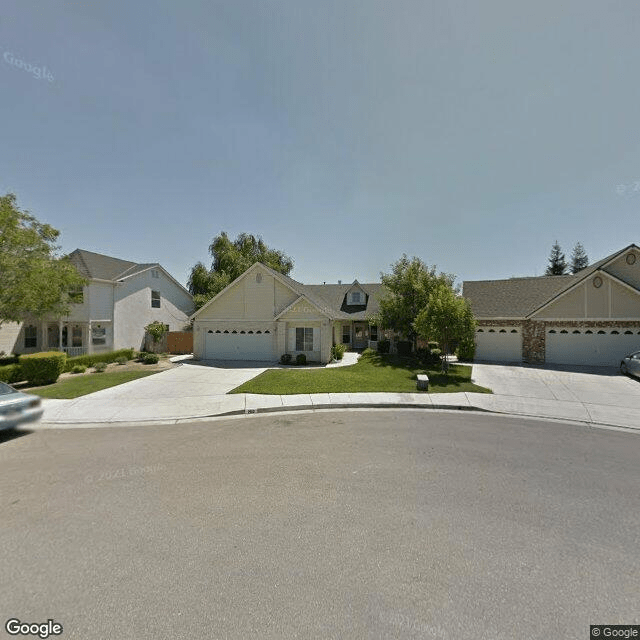
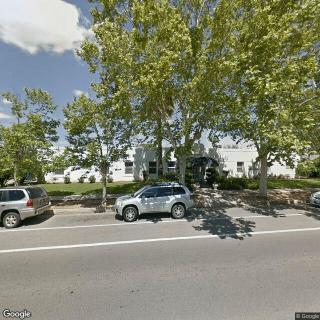
260 West Loyola Avenue, Clovis, CA 93619
For more information about senior living options: (866) 208-4318
Pryor Falls Costs & Pricing
In Pryor Falls, the monthly costs for various room types are notably higher than those of Fresno County but remain competitive when compared to overall state averages. For a semi-private room, residents can expect to pay $3,600 per month, which exceeds Fresno County's rate of $2,991 but is slightly below California's statewide average of $3,333. Private rooms in Pryor Falls are priced at $3,900, aligning closely with both Fresno County's cost of $3,589 and the state average of $3,939. Similarly, one-bedroom accommodations are also set at $3,900 in Pryor Falls - again close to Fresno County's figure of $3,398 but substantially lower than California's average of $4,340. This pricing structure reflects a unique position within the local market while still offering an appealing range for prospective residents.
| Floor plans | Pryor Falls | Fresno County | California |
|---|---|---|---|
| Semi-Private | $3,600 | $2,991 | $3,333 |
| Private | $3,900 | $3,589 | $3,939 |
| 1 Bedroom | $3,900 | $3,398 | $4,340 |
Memory care communities with a similar price nearby
-
from +$400 / mo
A Place Called Home II
$4,000 / month4.2 miles away -
from -$400 / mo
Blossom Creeks Assisted Living
$3,200 to $3,800 / month9.6 miles away -
from -$300 / mo

Nazareth House
$3,300 / month7.1 miles away -
from -$400 / mo
Clovis Guest Home
$3,200 / month4.2 miles away -
from -$500 / mo
Elim Place
$3,100 to $4,500 / month13.6 miles away
Overall Review of Pryor Falls
Pros
 The director and other patients are friendly.
- The price is favorable.
- The location is convenient.
- The owner worked with them on the price and genuinely wanted to help.
- The staff are very positive and caring.
- The home was clean and well maintained, and the tour guide was exceptional.
Cons
 One reviewer noted that there was only one person overseeing six residents, which concerned them because some residents needed more care than others and the help was spread thin.
Review
Pryor Falls in Clovis is best suited for seniors who want a compact, home‑like setting where care is personal, the price is accessible, and the surrounding environment feels calm and dependable. It works well for residents who need help with daily activities but do not require intensive medical oversight, and for families that prioritize warmth, direct communication with a friendly director, and a location convenient to errands and loved ones. The community’s strengths lie in its intimate feel, clean and well‑kept house, and a sense that staff and leadership understand the realities of aging in place. For families seeking a big campus with a wide array of on‑site programs, Pryor Falls represents the kind of smaller-scale option that can feel surprisingly comforting and straightforward.
Those considering alternatives should note that Pryor Falls may not be the best match for residents with significant or complex care needs. If 24/7 supervision, frequent medication management, or memory‑care security are essential, a larger facility with a higher staff‑to‑resident ratio is often a safer bet. Families looking for a broad schedule of structured activities, extensive on‑site amenities, and a robust calendar of outings may find the smaller setting less consequential or limiting. In short, the community tends to attract households prioritizing a homelike vibe and affordability over the depth of medical support and programming found in larger operators.
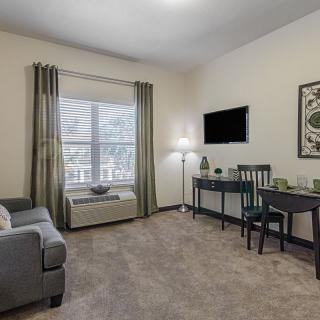
On the upside, the most consistent pros are conspicuously strong: the director and the general staff come across as genuinely friendly, positive, and caring, and the atmosphere is framed by a sense of warmth that most families value deeply. Price and location are repeatedly cited as compelling reasons to choose Pryor Falls, with families noting the owner’s willingness to work on pricing as a meaningful gesture of partnership rather than a transactional relationship. The home environment is described as clean and well maintained, with staff that make efforts to personalize spaces through decorating and a thoughtful approach to residents’ daily lives. Those attributes can be decisive for families balancing budgets with the emotional need for a safe, reassuring setting.
The principal drawback centers on staffing realism. Observations from visitors indicate that at times there is only one person overseeing six residents, which raises legitimate concerns about the pace of responses and the ability to meet varying levels of need promptly. For a resident who requires timely assistance with mobility, bathroom needs, or medical routines, that ratio can translate into moments of delayed help or less individualized attention than hoped. More broadly, the smaller footprint means fewer formal activity options and less spontaneity in programming, which can matter for residents who draw energy from a busy social calendar. The risk isn’t universal, but it is a credible constraint for long‑term residents who crave constant engagement or who have higher care demands.
These pros and cons tend to offset each other depending on what families most value. For those prioritizing safety, personal attention, and a cost structure that doesn’t overwhelm a monthly budget, the warmth of staff and the intimate setting can outweigh the potential for slower response times, provided care needs remain within the facility’s operating realities. Cleanliness and careful decorating help create a comforting day‑to‑day environment, contributing to a sense of normalcy and pride that families notice and appreciate. In practice, Pryor Falls often serves as a solid bridge option: a place to transition from independent living to assisted living without the upheaval of a larger, more clinical campus. However, this balance tilts away from suitability for residents whose needs outpace what a small team can reliably deliver.
For families weighing this option, the prudent path is to verify care patterns during peak hours, and probe the specifics of daily routines, medication management, and emergency signaling. Ask who handles nursing tasks, how quickly staff respond to calls, and what contingency plans exist when staff are briefly down a caregiver. Inspect the activity calendar, are there meaningful programs that fit the loved one’s interests, and is participation optional or encouraged? Consider the resident’s personality and level of independence: does the setting support meaningful engagement without creating a feeling of being overwhelmed, or does it risk under‑stimulating someone who thrives on structured activity? Price should be weighed against care depth, and a candid discussion about expectations with the owner or director can reveal whether Pryor Falls will stretch to meet those needs over time.
In the end, Pryor Falls stands out as a practical choice for families seeking a modestly priced, home‑like environment with attentive, friendly staff and a neighborhood feel. It is particularly well‑suited for seniors who value comfort, a personal touch, and a close‑to‑home atmosphere over the breadth of services found at larger facilities. Alternatives should be seriously considered for residents who require stronger day‑to‑day supervision, greater social programming, or a higher level of medical and memory‑care support. When the goal is a calm, intimate setting that preserves dignity and warmth while keeping costs manageable, Pryor Falls earns its keep, just with the caveat that staffing realities may shape the experience more than in larger houses.
 6 resident community capacity
 Assisted Living
 Board and Care Home
 Memory Care
 Respite Care
 Cats allowed
 Dogs allowed
 Activities off-site
 Bath tubs
 Beautician on-site
 Cable or satellite TV
 Devotional services off-site
 Dining room
 Fully furnished
 Garden
 Housekeeping services
 Indoor common areas
 Move-in coordination
 Outdoor common areas
 Private
 Private bathrooms
 Telephone
 Wheelchair accessible showers
 Wi-Fi/high-speed internet available
 Fresno Yosemite International (6 miles away)
 24-hour supervision
 Ambulatory care
 Assistance with bathing
 Assistance with dressing
 Assistance with transfers
 Diabetes diet
 Diabetic care
 High acuity care
 Meal preparation and service
 Medication management
 Special dietary restrictions
 Transportation arrangement (medical)
 Transportation to doctors appointments
 How and When Medicaid May Cover Assisted Living Costs
 A Detailed Exploration of Assisted Living Medicaid Waivers Across the United States
 Exploring the Contrasts Between Assisted Living and Skilled Nursing