

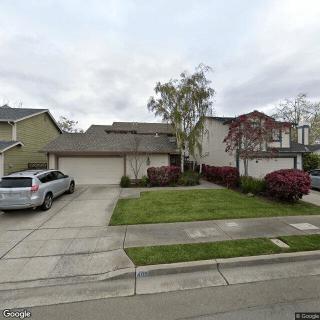
129 Humboldt Rd., Burlingame, CA 94010
To contact a resident: (650) 348-6748
For more information about senior living options: (866) 208-4318
Apple Tree Home Care Costs & Pricing
At Apple Tree Home Care, the monthly cost for a private room is set at $3,500, which reflects a competitive pricing strategy compared to broader regional rates. Within San Mateo County, the average cost for similar accommodations rises significantly to $4,281, while across California as a whole, the average sits at approximately $3,939. This positioning not only underscores Apple Tree's commitment to providing high-quality care at a more accessible price point but also highlights its appeal as an attractive option for families seeking exceptional home care services in a market where costs can vary widely.
| Floor plans | Apple Tree Home Care | San Mateo County | California |
|---|---|---|---|
| Private | $3,500 | $4,281 | $3,939 |
Senior living communities with a similar price nearby
-
from -$600 / mo

Parkside Manor
$2,900 to $3,600 / month24.9 miles away -
from -$500 / mo

Palm Garden Home Care
$3,000 to $4,000 / month24.7 miles away -
from -$305 / mo

Harbor Bay Assisted Living
$3,195 to $5,000 / month12.0 miles away -
from +$500 / mo

Golden Age Of Channing Way
$4,000 to $5,000 / month11.9 miles away -
About the same
Angels Golden Care Assisted Living
$3,500 to $5,000 / month11.7 miles away
Overall Review of Apple Tree Home Care
Pros
 The reviewers note Adrienne's attention to detail and compassion in listening to their care requests and concerns.
- The Canopy Home Care team's consistency, support, and level of care over the past year have been remarkable and impactful.
- Adrienne and the caregivers are consistently attentive, sharing information, care guidance, and activity ideas to keep seniors engaged.
- They highly recommend Adrienne and Canopy Home Care for responsive, compassionate, and genuinely caring service.
- The staff's compassion, integrity, and communication skills are exemplary.
- The Canopy team has maintained continuity of care through the pandemic.
- The caregivers are remarkably caring and reliable, with clients praising the care provided.
- The Canopy care team enables families to spend more quality time with their parents and coordinate their medical care effectively.
Cons
 Since engaging Canopy, the parents’ health has continued to deteriorate, and they are in need of ever-increasing assistance from the Canopy care team.
Review
This Burlingame-based home-care service is best suited for families who want to keep an aging loved one safely at home while receiving highly attentive, coordinated support. The_reviews consistently highlight a leadership approach that is detailed, compassionate, and responsive, with Adrienne and her team quickly translating requests into care. Caregivers are matched to individual needs and personalities, and the agency maintains a steady drumbeat of information sharing, daily updates, care guidance, and activity suggestions that keep clients engaged. For families separated by distance, this level of ongoing communication is a practical lifeline, turning a potentially stressful arrangement into a transparent, manageable care plan.
Those weighing alternatives should consider that this model is not a campus-style, social-venue living option. If a full-time assisted living community with built-in social programming, on-site nursing, and a centralized environment is the goal, traditional facilities may be a better fit. Similarly, if 24/7 on-site medical oversight by licensed professionals in a single location is essential for the loved one, a facility-based model could meet that need more directly. In short, the strength here lies in home-based continuity and coordination; for some, the trade-off is less of a community experience and more of a highly personalized caregiving network.
The strongest pros hinge on reliability, empathy, and adaptability, and these factors largely offset typical drawbacks of in-home care. The agency’s responsiveness stands out: scheduling changes are handled swiftly, care requests are met without delay, and concerns are put to rest through steady communication. Continuity is another major asset, the team builds caregiver rosters that align with the loved one’s routines and preferences, reducing anxiety about new faces. Daily feedback and proactive guidance, ranging from activity ideas to activity levels, keep elders engaged and give families confidence that care remains personal and purposeful.
A recurring theme in the reviews is the ability to stay ahead of health needs through thoughtful coordination. The caregivers don’t just assist with bathing, dressing, and transport; they manage medical appointments, coordinate among multiple physicians, and help with medication management. The practical effect is that seniors can remain in independent living longer, with family members able to reclaim time for meaningful interactions rather than logistics. The caregiving team is praised for its integrity and for navigating changing health circumstances with a steady hand, which in turn reduces family stress and preserves peace of mind.
The evidence is clear: the approach works best for families who value a flexible, person-centered service that can scale with evolving needs. The ability to deliver 24/7 assistance in a home setting, along with a caregiver network tuned to individual temperaments, creates a reliable safety net for both routine days and more demanding health phases. The caveat is that this model requires ongoing family involvement in planning and monitoring, plus a realistic appraisal of cost and the absence of a traditional campus social scene. Those factors are outweighed by the deep, practical benefits for families prioritizing independence and in-home continuity.
For families considering this path, a practical decision playbook helps. Confirm the exact scope of 24/7 coverage and how back-ups are deployed when a primary caregiver is unavailable. Probe the caregiver-matching process: how fits are evaluated, how changes are handled, and how long a caregiver typically remains in rotation. Clarify what medical coordination looks like day to day, including appointment scheduling, transport, and medication oversight. Finally, set expectations around activity planning for engagement and monitor the balance between professional care and personal connection. In this framework, the Burlingame team proves itself as a capable, reliable partner for preserving home-based living with dignity and clarity.
 Board and Care Home
 Private
 San Francisco International (3 miles away)







 Managing Nursing Home Expenses After Medicare Coverage Ends
 Is a Geriatric Care Manager the Right Choice for Your Family?
 Compassionate Conversations: How to Comfort Someone Who Is Grieving