
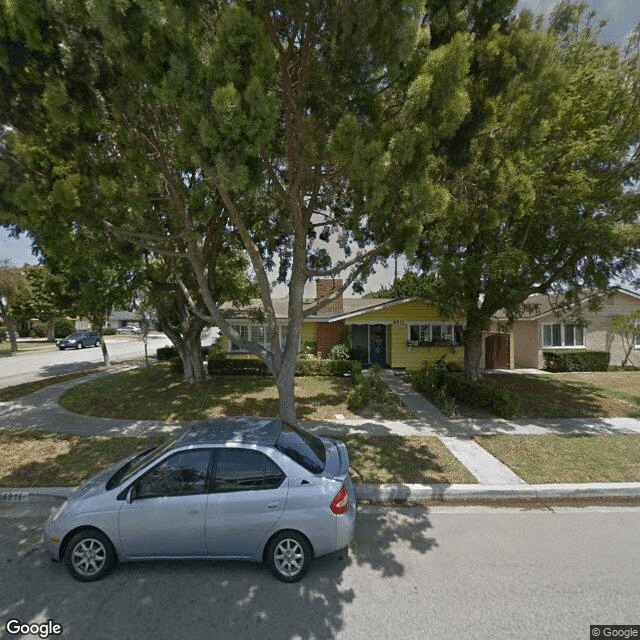
6911 San Juan Circle, Buena Park, CA 90620
For more information about senior living options: (866) 208-4318
House Of Hearts Costs & Pricing
At House of Hearts, the monthly costs for various room types reflect a competitive pricing strategy when compared to both Orange County and the broader California market. For semi-private rooms, House of Hearts offers a rate of $3,400, which is slightly below the average cost in Orange County at $3,431 and just above the state average of $3,333. When it comes to private rooms, House of Hearts charges $4,200, positioning itself above Orange County's rate of $4,104 but lower than California's average of $3,939. The one-bedroom option at House of Hearts is priced at $5,200, notably higher than both regional averages - $4,380 for Orange County and $4,340 statewide. This pricing structure suggests that while some offerings may exceed local rates, others remain very competitive within the region and state overall.
| Floor plans | House Of Hearts | Orange County | California |
|---|---|---|---|
| Semi-Private | $3,400 | $3,431 | $3,333 |
| Private | $4,200 | $4,104 | $3,939 |
| 1 Bedroom | $5,200 | $4,380 | $4,340 |
Memory care communities with a similar price nearby
-
from +$595 / mo

Cadence Brea
$3,995 to $5,500 / month8.5 miles away -
About the same
Kind Heart Home Care VI
$3,500 to $5,000 / month17.0 miles away -
from -$600 / mo
Candlewood Care Home III
$2,800 to $3,400 / month14.0 miles away -
from -$600 / mo
Leah Loving Elderly Care
$2,800 to $3,000 / month10.0 miles away -
About the same
Comfort Keepers Home Care
$3,500 to $6,500 / month9.0 miles away
Overall Review of House Of Hearts
Pros
 They provide the best care here.
- They did a lot for the wife and arranged hospice for her.
- Joana is really on the ball and a delight to have.
- Joana really helped out and secured everything the wife needed.
- The meals were good and the wife did well during her month there.
Cons
 None detected.
Review
House Of Hearts in Buena Park is best suited for families seeking intensely personalized, hospice-capable care where staff take clear ownership of a loved one’s comfort and medical coordination. The standout signal from the available experience is a level of attention that feels hands-on and responsive, with a demonstrated ability to mobilize support quickly. The caregiver ethos is person-centered, not casual; a staff member named Joana is described as being exceptionally proactive, “on the ball,” and a genuine asset to the caregiving team. In the one documented stay, the care team managed practical needs effectively, the meals were solid, and the patient’s condition improved over the month, signaling a facility that can translate attentiveness into tangible benefits during a short-term, hospice-informed chapter of care.
This community is not the right fit for families prioritizing a broad menu of activities, extensive social programming, or a large, bustling campus environment. It may also be less ideal for those seeking long-term, life-plan-driven placement beyond hospice-style support or for families needing highly specialized memory care programs with a formal, well-documented continuum of services. For households that require robust day-to-day programming, transport options, or multi-residence networking to coordinate care across multiple settings, alternatives with a wider activity calendar and more expansive clinical offerings deserve consideration. The current signal is best read as a strong match for focused, compassionate, medically coordinated caregiving rather than a one-stop, everything-in-one-place solution.
The primary advantages here are unmistakable: superior care quality paired with seamless hospice coordination and a staff culture that appears relentlessly responsive. The reviews point to a team that not only delivers routine support but anticipates needs and mobilizes resources to secure what a resident requires, fast. Joana stands out as a particularly reliable point of leadership within the care team, exemplifying the level of accountability families should look for when evaluating frontline managers. The nutrition experience, described as meals being good, also matters, because consistent, well-prepared meals support recovery, comfort, and overall well-being during a period of transition into or out of intensive support.
Yet the core limitation to consider is the scarcity of public feedback. A single glowing review provides a strong but narrow snapshot; it does not establish consistency across shifts, seasons, or a broader mix of residents with varying needs. Important practical details are not disclosed in the available account: exact staffing ratios, the breadth of clinical services beyond hospice coordination, safety and mobility supports, daily activity options, transportation, or how care plans adapt over longer stays. Without multiple data points, the extent to which high-touch care persists during weekends, holidays, or staffing surges remains unknown. For families with broader expectations, this lack of breadth warrants careful verification.
Nevertheless, the documented strengths offset many concerns for families prioritizing meticulous, compassionate care at a meaningful pace. The ability to coordinate hospice needs, rather than forcing families to navigate complex logistics on their own, reduces caregiver strain and can lead to smoother transitions and more consistent comfort management. A staff leader who is described as “on the ball” signals a culture of accountability that can translate into faster problem resolution and steadier communication with family members. When care quality, responsiveness, and reliable nutrition come together, they form a compelling case for choosing House Of Hearts when the priority is a high-touch, medically aware environment rather than a large, activity-rich campus.
In the end, the decision hinges on aligning expectations with the facility’s demonstrated strengths. For families seeking a Buena Park option that emphasizes hands-on, hospice-ready care, delivered with attentive leadership and dependable day-to-day support, House Of Hearts offers a credible, practically strong choice. It is less suitable for those who want a broad spectrum of programming, extensive long-term memory-care infrastructure, or a larger community footprint. Prospective residents should pursue a direct conversation about care plans, confirm current staffing levels and turnover, request details on hospice partnerships, and, where possible, meet Joana or other supervisory staff to gauge fit. With the right match, this community can be a reassuring home base during a crucial phase of caregiving.
 6 resident community capacity
 Assisted Living
 Board and Care Home
 Memory Care
 Activities off-site
 Cable or satellite TV
 Devotional services off-site
 Dining room
 Fully furnished
 Garden
 Housekeeping services
 Indoor common areas
 Move-in coordination
 Outdoor common areas
 Private
 Telephone
 Wheelchair accessible showers
 Wi-Fi/high-speed internet available
 Long Beach (Daugherty) (8 miles away)
 24-hour supervision
 Ambulatory care
 Assistance with bathing
 Assistance with dressing
 Assistance with transfers
 Diabetes diet
 Diabetic care
 High acuity care
 Meal preparation and service
 Medication management
 Special dietary restrictions
 Transportation arrangement (medical)
 Transportation to doctors appointments
 Christian services



 5 Early Indicators of Dementia and What You Can Do
 8 Important Indicators That Memory Care May Be Necessary
 Delving into the Inner World of Dementia: Insights into Thoughts and Awareness