
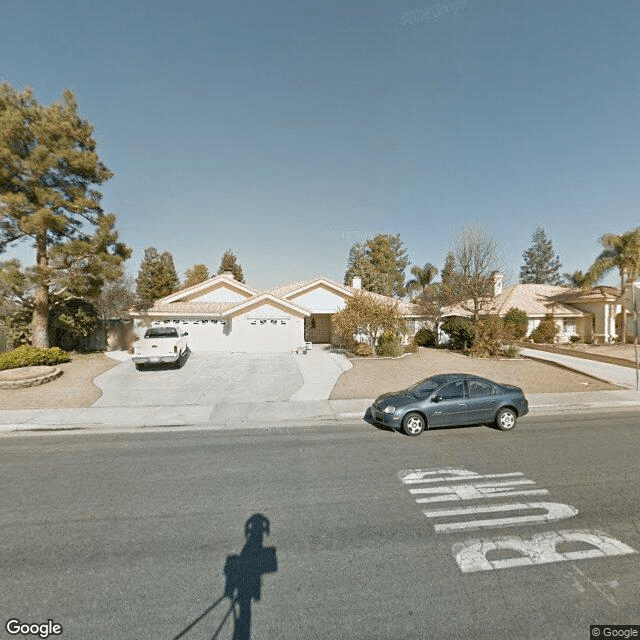
14016 Toluca Drive, Shafter, CA 93314
For more information about senior living options: (866) 208-4318
Jasmine Garden Residential Care Costs & Pricing
Jasmine Garden Residential Care offers competitive pricing for its residential services when compared to both Kern County and statewide averages. For instance, the monthly cost of a private room at Jasmine Garden is $2,800, significantly lower than the Kern County average of $3,456 and the state average of $3,939. Similarly, their studio and one-bedroom options are priced at $3,500 each, which is also quite favorable compared to county rates of $3,509 for a studio and $3,873 for a one-bedroom unit; both figures fall short of California's averages of $4,145 and $4,340 respectively. Overall, Jasmine Garden provides an attractive value for potential residents seeking personalized care within a budget-friendly framework.
| Floor plans | Jasmine Garden Residential Care | Kern County | California |
|---|---|---|---|
| Private | $2,800 | $3,456 | $3,939 |
| Studio | $3,500 | $3,509 | $4,145 |
| 1 Bedroom | $3,500 | $3,873 | $4,340 |
Memory care communities with a similar price nearby
-
from -$300 / mo
Gracious Lady Alzheimer Care
$2,500 / month10.0 miles away -
from -$100 / mo
A Comfort Care Home
$2,700 to $3,500 / month3.6 miles away -
from +$545 / mo

Brookdale Riverwalk
$3,345 to $6,495 / month2.6 miles away -
from -$100 / mo

Silvercrest Manor
$2,700 to $3,000 / month13.4 miles away -
from -$125 / mo
Hallmark Bakersfield
$2,675 to $10,195 / month6.3 miles away
Overall Review of Jasmine Garden Residential Care
Pros
 Mona and her staff take great care of residents.
- They are very friendly, respectful, and caring.
Review
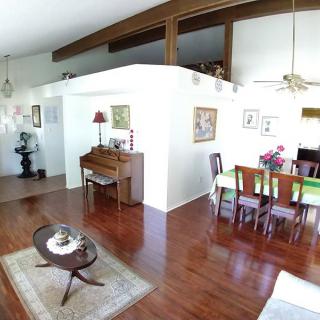
Jasmine Garden Residential Care in Shafter is best suited for families seeking a small, home-like setting where caregivers form meaningful relationships with residents and daily routines feel personal and unhurried. The community tends to fit seniors who do not require high-acuity medical oversight, but who still want attentive, hands-on support and a warm, respectful atmosphere. In short, this is a place where staff warmth and individualized attention can translate into meaningful everyday comfort for someone who thrives in a intimate, low-traffic environment.
Those weighing alternatives should consider options with stronger clinical infrastructure and more predictable administration. If a resident’s needs include complex medical coordination, frequent physician oversight, aggressive care management, or highly structured reporting to family, larger communities with formal care teams may be preferable. Families prioritizing transparent, readily accessible administrative contact, ideally with explicit channels for updates, may also find a more standardized operation elsewhere. In sum, this setting shines in warmth; it may fall short for families seeking rigorous systematization and aggressive care monitoring.
On the upside, the strongest, most repeated praise centers on the caregiving cadre. “Mona and her staff take great care of my Mom. They are all very friendly, respectful, and caring.” That sentiment isn’t casual; it signals a genuine, resident-focused culture where staff invest time in kindness, routine interactions, and personal attention. Such care can translate into calmer mornings, gentler transitions, and a sense of security for residents who value consistent, familiar faces. When care teams operate with this level of warmth, daily life in a small residential setting often feels more like a home than a facility, which is a meaningful factor for many families.
Nevertheless, the flip side is significant. A handful of reviews, constituting a notable minority in a 7-review sample, express dissatisfaction that points to gaps in consistency and communication. A 3.1 overall rating reflects a real tension between positive, person-centered care and concerns about reliability, responsiveness, or organizational smoothness. One can reasonably anticipate that families moving in with expectations of steady communication, clear updates, and dependable routines may encounter friction if administrative processes lag or staff availability fluctuates. This is not a trivial difference; it affects visibility into a loved one’s day-to-day well-being and planning.
How the positives weigh against the drawbacks depends on what families value most. For families prioritizing intimate, affectionate care and a homelike cadence, the pros can substantially offset the cons: a low-stress environment, visible staff dedication, and a culture of kindness matter greatly when a resident’s days are anchored by routine, familiar faces. However, for those requiring consistent administrative updates, reliable scheduling, or highly transparent care planning, the cons may eclipse the benefits. The overarching question becomes whether the value of close, personal caregiving can compensate for potential gaps in communication and formal governance.
Practical steps can help families decide with confidence. Arrange a direct visit and observe how staff interact with residents and families during routine moments. Ask for a transparent, written care plan with daily posting or notes, and request a clear point of contact for updates. Inquire about staff-to-resident ratios, turnover, and how emergencies are handled after hours. Seek references from current families, and request a trial stay if possible to experience daily life firsthand. With these checks, families can determine whether Jasmine Garden’s warm, intimate care aligns with the level of oversight and consistency they expect, and whether it truly fits the resident’s needs or if a more regimented alternative is warranted.
 6 resident community capacity
 Assisted Living
 Board and Care Home
 Memory Care
 Activities on-site
 Cable or satellite TV
 Devotional services off-site
 Dining room
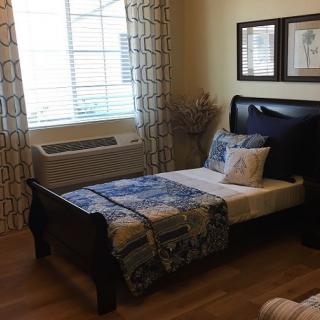
 Fully furnished
 Garden
 Housekeeping services
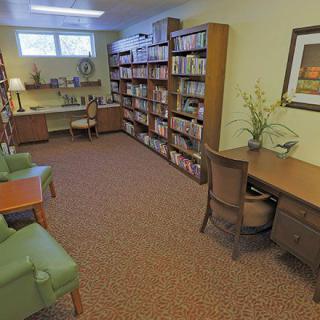
 Indoor common areas
 Move-in coordination
 Outdoor space
 Private
 Telephone
 Wi-Fi/high-speed internet available
 Meadows (8 miles away)
 24-hour supervision
 Ambulatory care
 Assistance with bathing
 Assistance with dressing
 Assistance with transfers
 Diabetes diet
 Diabetic care
 Incontinence care
 Meal preparation and service
 Medication management
 Special dietary restrictions
 Transportation arrangement (medical)
 Transportation to doctors appointments
 Nourishing the Mind: Essential Dietary Approaches for Dementia
 Understanding Dementia Behaviors: Practical Insights and Strategies for Caregivers
 When Dementia Sparks Anger and Aggression: Understanding the Connection and Ways to Cope