
29055 Wagon Road, Agoura Hills, CA 91301
For more information about senior living options: (866) 208-4318
Assisted Living America I Costs & Pricing
Assisted Living America I offers a range of pricing options that reflect the quality and care provided in a vibrant community setting. For residents seeking semi-private accommodations, the monthly cost is set at $3,900, which is notably higher than both the county average of $3,349 and the state average of $3,333 for similar arrangements. Those opting for private rooms will find that the monthly fee is $4,900, surpassing Los Angeles County's average of $4,197 and California's statewide average of $3,939. This suggests that Assisted Living America I positions itself as a premium offering in the area, likely due to enhanced services and amenities designed to support the well-being of its residents.
| Floor plans | Assisted Living America I | Los Angeles County | California |
|---|---|---|---|
| Semi-Private | $3,900 | $3,349 | $3,333 |
| Private | $4,900 | $4,197 | $3,939 |
Assisted Living communities with a similar price nearby
-
from +$600 / mo
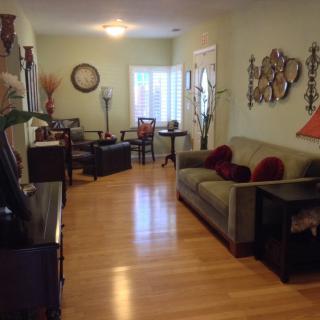
Ardenville Home Care I
$4,500 / month24.2 miles away -
About the same
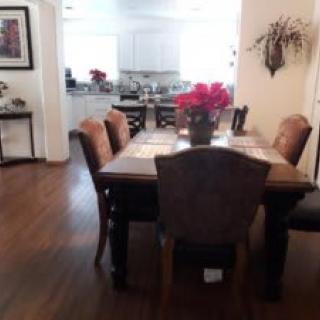
America's Care Manor
$3,800 to $4,000 / month10.5 miles away -
from -$400 / mo
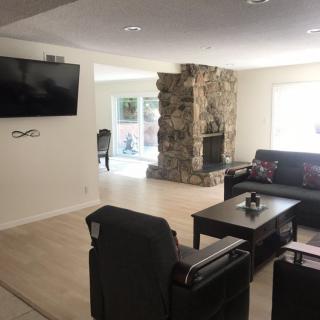
Hollywood Healthy Living
$3,500 to $5,000 / month24.2 miles away -
from +$390 / mo

An Everlasting Spring - Senior Care
$4,290 to $5,577 / month8.5 miles away -
from -$400 / mo

California Senior Of Sherman Oaks
$3,500 to $4,000 / month17.3 miles away
Overall Review of Assisted Living America I
Pros
 The staff are kind and genuinely welcoming.
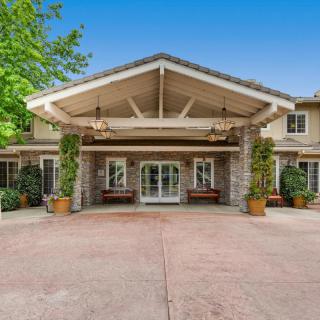
- The grounds are beautiful and serene.
- The community feels upscale and inviting.
- Mary Ann and Rachel are welcoming and helpful.
- The activities program is engaging, with virtual vacations, karaoke, and guided meditation.
- The food is delicious.
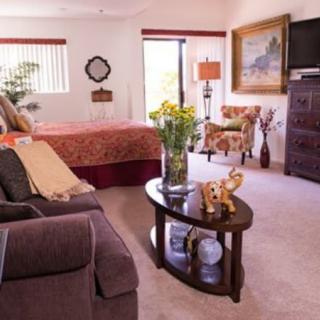
- The rooms and common spaces meet high expectations, featuring vaulted ceilings and generous square footage.
- Oakmont puts families at ease with the care it provides.
Cons
 A reviewer states Oakmont’s caregivers were unable to transfer his 95-year-old father safely, resulting in six falls in eight days, with the falls continuing despite multiple meetings with administrators.
- The same reviewer claims the facility misrepresents nursing coverage, asserting there is only one nurse on-site about 40 hours per week rather than the claimed 16 hours a day, and cautions not to move a loved one there.
- Another reviewer describes significant declines: frequent power outages with no backup generator, hot water that is hit or miss, staff that seem uninformed, ongoing management turnover, and the chef leaving.
- A reviewer notes the entrance was hard to spot for Uber riders, making first impressions less favorable.
- A reviewer observes that, after a promising start, the facility has gone downhill in a few months.
Review
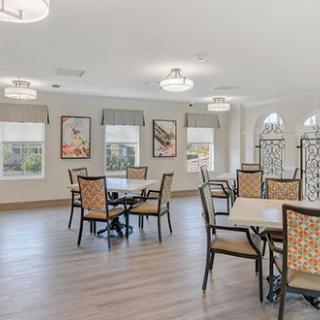
Oakmont of Agoura Hills is best suited for families seeking a polished, resident-focused environment where warmth from staff translates into reliable daily support and a lively social life. The community presents an upscale, serene setting with well-kept grounds, vaulted ceilings, and generously sized rooms that can accommodate larger beds and full appliance kitchens in many floor plans. Memory care programming stands out with a dedicated activities team delivering virtual vacations, karaoke, and guided meditation, offering meaningful engagement for residents who thrive on structured stimulation. Front-line staff, receptionists, sales coaches, and care teams, are repeatedly described as welcoming and responsive, and the admissions process supports flexible, tech-enabled tours and one-on-one meetings. This combination gives families confidence, especially those living far away and needing dependable communication.
For families evaluating alternatives, it is essential to note that not all care needs align with Oakmont’s strengths. Residents who will require consistent, high-level medical support or who rely on safe, predictable transfers should scrutinize the caregiving model, because multiple reports point to transfer-related safety challenges and a staffing gap in hands-on skills during transfers. A notable discrepancy also arises between marketing claims and practical realities: a single nurse on-site around 40 hours per week contrasts with the impression of broader coverage. Infrastructure gaps, power outages, inconsistent hot water, and ongoing management turnover, compound concerns for those balancing medical needs with everyday reliability. In such cases, alternatives with guaranteed nursing presence and stronger operational resilience deserve serious consideration.
On balance, the strongest pro-arguments center on the human element and the social fabric. The team’s warmth, genuine care, and depth of engagement create a reassuring environment for residents and families alike, with staff consistently described as compassionate and professional. Dining quality and a lively activity calendar, two on-site restaurants, a movie theater, bingo, and vibrant memory-care programming, enhance daily life and support sustained engagement. For memory care, the accessibility of specialized activities and a dedicated coordinator can translate into meaningful routines and reduced anxiety for families. The combination of attractive amenities and attentive staff often makes Oakmont feel like a true home, easing the transition for many new residents.
However, the other side of the ledger cannot be ignored, and it centers on safety and consistency. Instances of falls in a care setting raise red flags about transfer technique and staff training, demanding transparent corrective action and ongoing supervision. Likewise, reliability issues, sporadic power, intermittent hot water, and leadership turnover, undercut confidence in day-to-day dependability, especially for residents needing dependable routines and predictable staffing. These factors don’t necessarily negate the positives, but they do reframe risk assessment for families with loved ones who require steady, highly skilled care. The property’s beauty and culture of warmth are a strong counterweight, yet the practical realities of care must be consistently met for long-term suitability.
For decision-making, the prudent path combines a candid assessment of current needs with a rigorous due-diligence process. Prospective buyers should validate the current nurse coverage model, obtain concrete transfer protocols, and request recent safety incident logs and action plans. Touring with the memory-care team and asking for a direct line of communication to leadership can clarify responsiveness during emergencies. Given the distance factor noted by many families, insist on a structured update plan and access to real-time care notes. If a resident’s needs skew toward high-touch medical support or continuous caregiver presence, exploring other communities with proven 24/7 nursing coverage and stronger infrastructure may be prudent.
In sum, Oakmont of Agoura Hills stands out as a vibrant, resident-centered option that delivers beauty, sociability, and a compassionate staff core. It serves well those who prize engagement, social connection, and a refined living environment, particularly in memory care where activity programming helps maintain cognitive engagement. Yet for families facing ongoing high-acuity needs or seeking guaranteed reliability in staff training and utilities, alternatives deserve serious consideration. With disciplined due diligence, focusing on nursing coverage, transfer safety, incident transparency, and infrastructure, families can determine whether this community will align with the resident’s care trajectory or whether a more fault-tolerant option is warranted.
 6 resident community capacity
 Assisted Living
 Board and Care Home
 Activities off-site
 Beautician on-site
 Cable or satellite TV
 Devotional services off-site
 Dining room
 Fully furnished
 Garden
 Housekeeping services
 Indoor common areas
 Move-in coordination
 Outdoor common areas
 Private
 Private bathrooms
 Respite or short term stays offered
 Telephone
 Wheelchair accessible showers
 Wi-Fi/high-speed internet available
 Burbank-Glendale-Pasadena (23 miles away)
 24-hour supervision
 Assistance with bathing
 Assistance with dressing
 Assistance with transfers
 Diabetes diet
 Diabetic care
 High acuity care
 Meal preparation and service
 Medication management
 Special dietary restrictions
 Transportation arrangement (medical)
 Transportation to doctors appointments
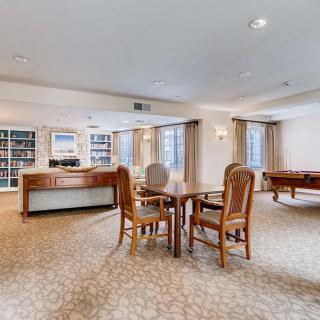

 How and When Medicaid May Cover Assisted Living Costs
 A Detailed Exploration of Assisted Living Medicaid Waivers Across the United States
 Comprehensive Residential Support and Assisted Living Solutions for Individuals with Disabilities