

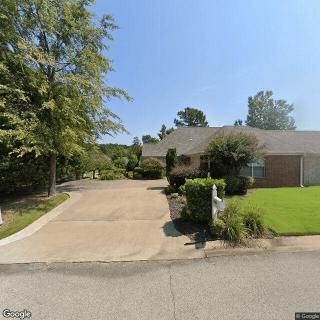
1301 Stone St, Jonesboro, AR 72401
To contact a resident: (870) 932-2133
For more information about senior living options: (866) 208-4318
Overall Review of Care Partners
Pros
 Absolute Care is hands down the best at caring for loved ones who would rather have their care at home.
- Absolute Care strives to make home care its top priority.
- Absolute Care is the go-to choice for at-home care for oneself or a loved one.
- The staff at Absolute Care are highly valued by clients and their families.
- Absolute Care's caregivers have been lifesavers and greatly increased clients' quality of life.
- Absolute Care goes above and beyond for all clients and co-workers.
- Mrs. Sharon Myles is praised for her dedication to patients, helping with paperwork, and checking in on them.
Cons
 This company is abhorrent.
- These people showed up to my house to harass me after I dropped them.
Review
Care Partners in Jonesboro is best suited for families seeking in-home care with a strong emphasis on personal attention, continuity, and hands-on coordination. The collected impressions point to a culture where caregivers are described as genuinely devoted, with leadership that communicates care for both clients and staff. This is not a brand built on distant, routine checks; it is characterized by proactive outreach, a readiness to handle paperwork and logistics for families, and a palpable commitment to improving a loved one’s quality of life in a home setting. For families prioritizing stability, reliable contact, and a compassionate caregiver network, this option stands out as a practical, caregiver-centered choice.
The core strengths align around compassion in action and a responsive operating style. Care Partners seems to win trust through caregivers who repeatedly express tenderness, attentiveness, and a “going the extra mile” mindset. Several accounts highlight the ease of access to help, regular check-ins, and a team that treats clients with respect and warmth. The leadership voice in these narratives, described as caring and supportive, helps sustain a stable, values-driven workplace. For families who want someone who will advocate for a loved one, coordinate appointments, and navigate paperwork without constant family friction, these elements form a compelling value proposition.
However, the experience is not uniformly perfect. A small but real caveat appears in the reviews: at least one account describes harassment after a service transition, signaling that boundary management and demeanor matter as much as capability. That outlier underscores a truth: any home-care arrangement relies on the behavior pattern of individual caregivers and the systems that govern interaction with families. In a field so person-centered, even a single negative encounter can color a family’s confidence. Given 21 total reviews, the existence of two one-star accounts means risk is real, not theoretical, and warrants careful due diligence.
Still, the aggregate signal remains strong on performance, with a practical balance of warmth and competency that tends to offset the potential downsides. The overwhelmingly positive feedback on caregiver commitment and client-first behavior creates a meaningful margin of reliability. When care teams consistently demonstrate empathy, respond quickly to concerns, and simplify the family’s logistical burden, a negative incident becomes more likely to be perceived as an exception rather than a pattern. For families weighing the pros and cons, that pattern matters: a capable team backed by a leadership culture that values clients can absorb occasional missteps if there are clear protocols and accessible escalation paths.
This is a decision point for those who value a home-centric approach over a campus-based setting. Care Partners appears to deliver the tangible benefits families most often seek: dependable caregivers, proactive communication, and a system-wide emphasis on clients first. The caveat is the potential for boundary or conduct issues in rare cases, so prospective clients should insist on transparent policies for incident handling, caregiver matching, and a defined escalation ladder. Ask for written care plans, expect consistency in caregiver assignments, and request examples of how conflicts are resolved. These steps will illuminate whether the available team dynamics align with the loved one’s needs and temperament.
In practical terms, Care Partners should be on the short list for families prioritizing at-home care with a compassionate, responsive staff. It is worth pursuing with a clear set of expectations: concrete caregiver assignment guidelines, regular progress updates, and a reliable point of contact for concerns. If those elements are in place and the family is comfortable with a home-care model, the strength of the reviews, particularly the persistent affirmations of care quality, kindness, and problem-solving, offers a persuasive case. For households that require a traditional, on-premises assisted living environment or where boundary risk is especially concerning, exploring alternative providers or a different care model may be prudent to avoid potential friction.






 Comprehensive Insights into Palliative Home Care: What It Is and What to Expect
 Skilled Nursing Facilities vs. Nursing Homes: Making Sense of the Differences
 A Detailed Examination of Nursing Home Costs Across the U.S.