
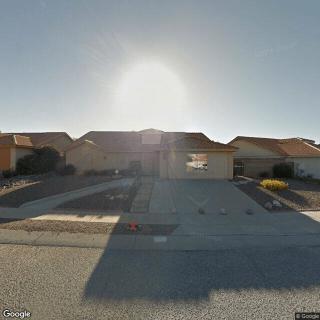
2501 West Cezanne Circle, Tucson, AZ 85741
To contact a resident: (520) 575-8559
For more information about senior living options: (866) 208-4318
J & E's Caring Hands Assisted Living Home Costs & Pricing
At J & E's Caring Hands Assisted Living Home, the monthly cost for a private room is set at $2,900, which is quite competitive compared to the average costs in Pima County and across Arizona. In comparison, similar accommodations in Pima County average around $3,332 per month, while the state-wide average reaches approximately $3,345. This positions J & E's Caring Hands as a cost-effective option for those seeking quality assisted living services without exceeding their budget, all while providing a nurturing environment that prioritizes individual care and comfort.
| Floor plans | J & E's Caring Hands Assisted Living Home | Pima County | Arizona |
|---|---|---|---|
| Private | $2,900 | $3,332 | $3,345 |
Senior living communities with a similar price nearby
-
from -$100 / mo

Abella Manor Senior Care, LLC
$2,800 to $3,200 / month15.1 miles away -
from +$250 / mo

Casa De Buena Vida
$3,150 to $3,450 / month2.4 miles away -
from +$300 / mo

Academy Villas
$3,200 to $7,000 / month24.8 miles away -
from -$400 / mo
Grace Home I
$2,500 to $3,200 / month16.0 miles away -
from +$100 / mo
Lisa's Loft
$3,000 to $4,000 / month16.9 miles away
Overall Review of J & E's Caring Hands Assisted Living Home
Pros
 The company is described as hardworking, compassionate, understanding, and respectful toward people.
- Caring Hands is praised for treating people with respect.
- The reviewer describes the experience as real nice.
- The owners’ medical backgrounds imply skilled, qualified caregivers.
- The reviewer expresses gratitude to Caring Hands.
Cons
 There was a 50% staff turnover after the sale to a new owner, and the care became less than desirable.
- It is no longer the same place as advertised.
- The change in ownership led to a decline in care quality.
Review
J & E's Caring Hands Assisted Living Home in Tucson is best suited for families seeking a small, home-like setting where four residents share four bedrooms and receive highly personalized, hands-on attention. The intimate scale invites staff to know each resident’s routines, preferences, and medical cues intimately, delivering care that feels less like institution and more like dedicated family oversight. With an owner who is a nurse and a spouse with medical background living next door, residents can expect direct clinical judgment paired with daily proximity, a combination that particularly benefits seniors who want predictable schedules, minimal roommate churn, and a caregiver presence that reads as consistently available.
Those weighing alternatives should note who may want to consider other options. If a family requires the stability of a larger, multi-staff operation with broader backup coverage, this home’s small footprint can be a vulnerability, especially if ownership changes or staffing shifts occur. A recent turnover at the leadership level reportedly coincided with a significant departure of staff and a decline in care quality, underscoring the risk that a four-resident home can be disproportionately affected by personnel changes. For families prioritizing long-term predictability, a larger, more diversified community with formal continuity policies may offer greater reassurance.
The strongest positives, compassionate, diligent caregiving; respect for residents; and a clinically grounded leadership team, tend to offset some of the inherent risks the model carries. The owner’s nursing background and the medical savvy of the spouse provide practical, on-the-spot medical oversight, which can translate into timely med administration, more attentive symptom monitoring, and faster escalation when needed. The staffing arrangement, including a full-time night employee and a part-time helper, creates a baseline of coverage that, in a four-person house, can yield a remarkably responsive day-to-day rhythm. The ability to keep residents on Medicaid without forcing a move is a meaningful financial and emotional stability factor for families relying on subsidized care.
Nevertheless, the downsides are real and must be weighed against the upsides. The most conspicuous risk is the sensitivity of care quality to staffing continuity in such a small setting; a major staff turnover can translate into uneven care, missed routines, or slower response times. The once-strong impression of the home can fade if new ownership or new staff struggle to recreate the prior level of familiarity and trust. The waiting list note adds a practical constraint: even when the model is a strong fit, immediate placement isn’t guaranteed, a critical factor for families in urgent need. A related concern is whether marketing and current representations align with the present operation, an area where due diligence is essential before committing.
To move forward with confidence, inquiries should focus on concrete, current conditions. Confirm who owns and manages the home now, and whether ownership is stable or subject to change. Request a current staffing roster, including roles, shifts, and backup coverage for weekends and holidays, plus a clear plan for continuity of care during any future transitions. Obtain specifics on medical oversight, daily routines, medication protocols, emergency procedures, and how emergencies are escalated. Clarify Medicaid policies, bed availability, and whether there’s any risk of relocation if care needs intensify. Finally, probe beyond medical care into daily life: activity programming, social opportunities for four residents, transportation options, and recent resident or family references to gauge how the community actually operates day to day.
In the end, this community works best for families who prize a tightly knit, highly accountable, nurse-led small-home model and are comfortable with the possibility of change in ownership or staffing. When the core team remains cohesive and the owners stay closely engaged, the advantages of intimate, hands-on care can outweigh the disadvantages of limited size. If, instead, continuity, a larger care network, and broader programming are non-negotiables, exploring alternatives with more robust staffing infrastructures is prudent. The right choice hinges on the resident’s medical needs, desired level of independence, and the family’s tolerance for potential shifts in care dynamics over time.
 Board and Care Home
 Activities on-site
 Beautician on-site
 Devotional services off-site
 Indoor common areas
 Outdoor common areas
 Private
 Respite or short term stays offered
 Tucson International (16 miles away)
 Ambulatory care
 Diabetic care
 High acuity care
 Incontinence care
 Medication management
 Meals provided







 Comprehensive Guide to Qualifying for Home Health Care Services
 Powerful Realities of Elder Abuse and the Most Effective Ways to Report It
 Ten Vital Duties of a Senior Caregiver: A Comprehensive Guide