
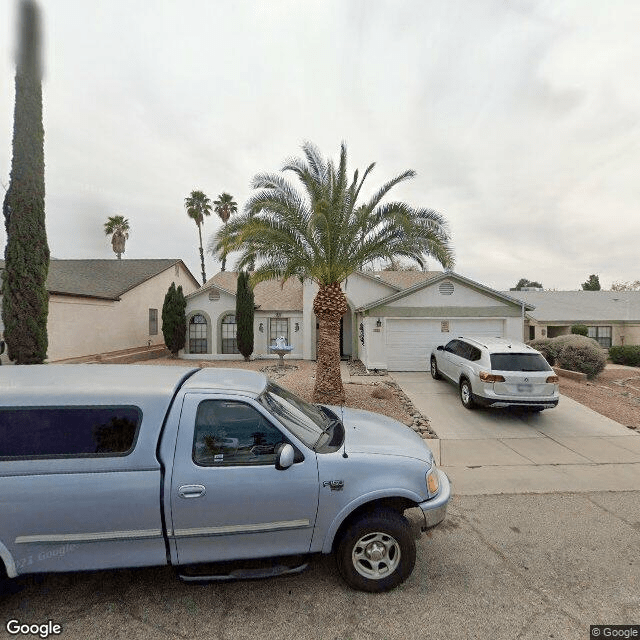
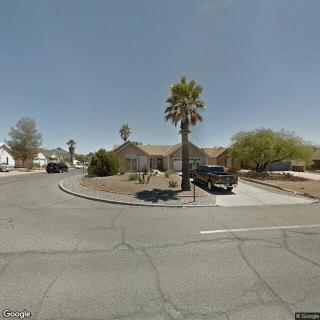
5331 W Eaglestone Loop, Tucson, AZ 85742
To contact a resident: (520) 744-6633
For more information about senior living options: (866) 208-4318
2nd Horizons Adult Care Home Costs & Pricing
At 2nd Horizons Adult Care Home, the monthly costs for various room types are competitively structured compared to the broader averages for Pima County and the state of Arizona. For a semi-private room, residents can expect to pay $2,500, which is notably lower than the county average of $2,805 and the state average of $2,820. Similarly, the private room rate at 2nd Horizons is set at $3,500 - again more affordable than both the county's average of $3,332 and the state's average of $3,345. This pricing strategy not only reflects a commitment to providing quality care but also ensures that residents enjoy cost-effective options in a comfortable living environment.
| Floor plans | 2nd Horizons Adult Care Home | Pima County | Arizona |
|---|---|---|---|
| Semi-Private | $2,500 | $2,805 | $2,820 |
| Private | $3,500 | $3,332 | $3,345 |
Senior living communities with a similar price nearby
-
from +$300 / mo

Abella Manor Senior Care, LLC
$2,800 to $3,200 / month19.2 miles away -
from -$300 / mo
Abuelos At La Canada
$2,200 to $2,800 / month6.5 miles away -
from -$200 / mo
Northwest Assisted Living
$2,300 to $2,500 / month5.1 miles away -
from -$300 / mo

Gentlemen's Inn I
$2,200 / month18.4 miles away -
About the same
Grace Home I
$2,500 to $3,200 / month20.0 miles away
Overall Review of 2nd Horizons Adult Care Home
Pros
 The new manager is an RN and is extremely knowledgeable about all areas of geriatrics and adult care options.
Cons
 The reviewer dislikes that the new manager is not the listed manager (Robin).
- The reviewer thinks the drive to the home is too far.
Review
This community is best suited for families that prize close, medically informed oversight within a small, home-like setting. An RN anchors the operation, bringing deep geriatrics knowledge to care planning and daily problem-solving. That credentialed leadership translates into sharper clinical judgment, better coordination with physicians, and a capacity to tailor care to each resident’s evolving needs. The intimate environment supports daily routines and personalized attention, making it a solid fit for seniors who want more than basic supervision without the formality and bustle of a larger campus. The caveat for decision-makers is the question of leadership stability and how easily families can stay connected with the on-site team from a distance.
Who may want to consider alternatives? Families that cannot tolerate a long drive for routine updates should weigh closer options, where in-person communication is simpler and more frequent. The review highlights a new manager who is not the one previously listed (Robin), which signals potential turnover or miscommunication at the top. For those seeking a larger, more resource-rich campus with broader amenities, more expansive memory care options, or round-the-clock staffing, this home may feel undersized. In short, proximity to family and clear, stable leadership are critical factors that could tilt the balance toward a different community.
The strongest pro, clinical leadership, often offsets several common drawbacks when a known, highly capable clinician is at the helm. An RN with broad geriatrics expertise can facilitate nuanced care decisions, guide families through complex options, and adjust plans in real time as medical needs shift. In a smaller home, this translates into responsive symptom management, careful medication oversight, and a more personalized dialogue about what care looks like day to day. Yet the power of this advantage hinges on continuity. If leadership shifts or is unclear to families, the benefit diminishes because daily trust and predictable communication are undermined, which is precisely what the noted mismatch in management signals.
Distance looms as the central practical obstacle. The ability, or lack thereof, to participate in care decisions through regular, in-person visits materially affects the experience for loved ones. In an intimate setting where family input matters, being far away can slow difficult conversations and limit the sense of control that families often need during transitions or emergencies. The leadership ambiguity compounds this risk: if the person in charge isn’t the one families were told to expect, accountability erodes and care planning can feel reactive rather than proactive. For a family prioritizing ease of engagement and straightforward oversight, these are real, not theoretical, barriers.
A disciplined, action-focused evaluation approach can clarify whether this option fits. Verify the current administrator and on-site supervisor, including tenure and credentials, to establish a stable point of contact. Request a tour with explicit questions about staff-to-resident ratios, daily on-site nursing presence, and how care plans are updated and communicated to families. Probe emergency response protocols, staff training, and hospital discharge coordination to gauge how medical complexity is handled on a day-to-day basis. Finally, map the travel burden against a realistic cadence of visits and consider whether teleupdates complemented by periodic in-person reviews can sustain a sense of oversight and confidence.
Bottom line: 2nd Horizons Adult Care Home in Tucson presents a credible, well-led option for families who value clinical insight and a small, personable setting, so long as distance and leadership clarity can be managed. The standout feature is the RN-led expertise that can translate into stronger daily care and smarter medical decisions. The principal caveats are the practical challenges of long travel for ongoing oversight and the reported discrepancy between the listed manager and the person in charge, which can shake trust. For families willing to engage actively, confirm leadership, plan travel thoughtfully, and demand transparent communication, this home can be a strong match. If proximity and unambiguous leadership are non-negotiable, it is prudent to explore nearby alternatives.
 Board and Care Home
 Bath tubs
 Private
 Wheelchair accessible showers
 Tucson International (20 miles away)
 Diabetic care
 High acuity care



 A Detailed Exploration of Living Wills and Advance Directives
 Comprehensive Guide to Medicare Coverage for Hospice Care
 Caring for Those Who Care: Recognizing, Understanding, and Overcoming Caregiver Burnout