
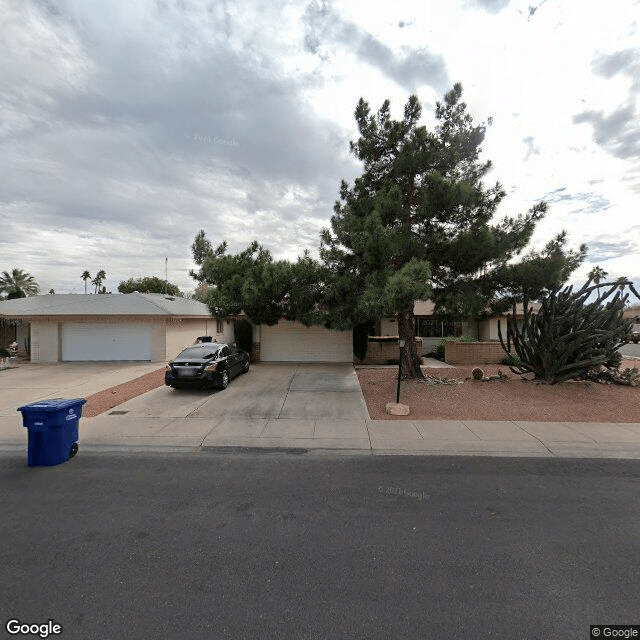
1985 E. Pebble Beach Drive, Tempe, AZ 85282
To contact a resident: (480) 596-0579
For more information about senior living options: (866) 208-4318
The Homestead Costs & Pricing
The Homestead offers competitive pricing for its resident accommodations when compared to both Maricopa County and the broader state of Arizona. For a semi-private room, The Homestead's monthly rate stands at $3,200, which is notably higher than the county average of $2,801 and the state average of $2,820. Meanwhile, its private rooms are priced at $4,000 per month - again exceeding the local and state averages of $3,318 and $3,345 respectively. This suggests that while The Homestead may be positioned at a premium relative to its surrounding options, it likely reflects enhanced services or amenities that cater to residents seeking a more luxurious or supportive living environment.
| Floor plans | The Homestead | Maricopa County | Arizona |
|---|---|---|---|
| Semi-Private | $3,200 | $2,801 | $2,820 |
| Private | $4,000 | $3,318 | $3,345 |
Senior living communities with a similar price nearby
-
from +$450 / mo
SeniorBridge - Scottsdale, AZ
$3,650 / month14.5 miles away -
from -$400 / mo
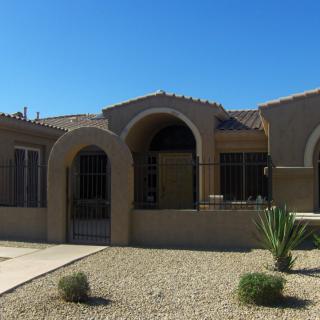
Pinnacle Peak Assisted Living
$2,800 to $3,100 / month21.3 miles away -
from -$575 / mo

The Eldercare Home Of Tempe
$2,625 to $3,412 / month0.9 miles away -
from -$250 / mo
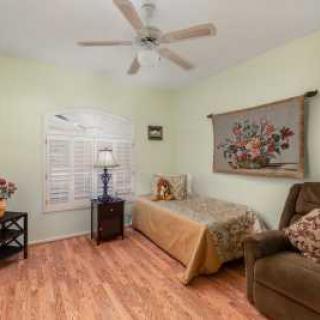
Endeavor AL I
$2,950 to $4,200 / month18.4 miles away -
from +$500 / mo
Endeavor AL III
$3,700 to $4,000 / month18.2 miles away
Overall Review of The Homestead
Pros
 The facility is described as very nice, and the staff take good care of residents.
- The staff are attentive and provide good care.
- The setting has a small, intimate community with five residents.
- A cute little dog is present at the facility, adding charm.
- The overall impression is that the place can be a good option for care.
Cons
 He is a little upset at times because he can't come home yet.
- The main caregiver told him to go in his diaper because he was busy.
- He was so miserable that his grandmother took him home after 17 days.
- She was forced to pay for 1,000 pairs of gloves to take home for which she has no use.
- One resident has her own bathroom while the other is shared by four people.
- The pricing for the rooms seems high compared with other pricing.
Review
The Homestead in Tempe is best suited for families seeking a small, home-like assisted living option where residents are few in number and staff can provide focused, personal attention. It works for someone who wants a calm, intimate environment and does not require intensive 24/7 medical oversight. The experience described by families suggests a setting where a resident can settle in and feel cared for, even as they miss being at home. This is a place where the pace and personal touch matter more than breadth of services, so it suits residents who value stability and a sense of belonging over a bustling, activity-filled campus.
Alternatives are worth considering for anyone who prioritizes consistent, rapid assistance, greater privacy, or clearer pricing. The Homestead’s small size naturally limits social programming and fast turnarounds for help, which can be a problem for residents needing frequent transfers or urgent bathroom assistance. Families with strong privacy priorities may prefer facilities where private bathrooms are the norm rather than shared configurations. And for those who want transparent, straightforward pricing without ambiguity, the pricing conversations here suggest diligence elsewhere to avoid sticker shock or confusion down the line.
The positive elements, the neat, pleasant facility, and staff who appear attentive in routine moments, do offset some concerns for families who value a tranquil, individualized setting. A five-resident model can enable closer observation, better one-on-one routines, and a quieter day-to-day experience. The presence of a resident-friendly dog and the sense of a close-knit community add to the appeal for residents who prize familiarity and a homelike feel. Yet these advantages do not fully neutralize the more serious red flags, particularly when basic assistance is not delivered promptly or with dignity, which undermines the core promise of assisted living.
That notable lapse in care becomes the defining risk. Reports of a caregiver telling a resident to use a diaper instead of providing needed bathroom assistance, and of refused help during a routine, are not small missteps; they indicate a fundamental concern about staffing responsiveness and the safety of daily living activities. When a family endures a prolonged stay, only to pull a loved one out after a short period because of such treatment, the trust calculus shifts dramatically. Any assessment of the Homestead has to weigh whether these kinds of care lapses can be mitigated through staffing changes, supervision, or updated protocols.
Pricing and room configuration add another layer of complexity. The smaller room reportedly runs around $2,800, with a larger option near $3,200, a premium that sits on the high end relative to a small, five-resident community. The presence of open rooms suggests some flexibility, but it also raises questions about value for money and occupancy pressure. Privacy is uneven, one resident has a private bathroom while others share, and that disparity can be a meaningful factor for families weighing comfort, dignity, and practical daily routines. In a market where several legitimate alternatives exist, the Homestead’s pricing must be justified by impeccable care and clear, reliable service.
Bottom line: The Homestead may still appeal to families who prize a quiet, intimate setting and can secure strong assurances around staffing levels, caregiver training, and incident management. It is less suitable for residents who require highly reliable, immediate assistance, especially with bathroom needs, or for those who insist on uniform private bathrooms and transparent, up-front pricing without ambiguity. Prospective families should demand a concrete care plan, a signed service agreement, and direct references; observe a transfer or bathroom assistance scenario; and assess whether staff responsiveness can meet peak-time needs. If those assurances align with expectations, the Homestead can be a viable fit; if not, exploring larger, more staffed options with clearer financial terms is the prudent path.
 Board and Care Home
 Private
 Phoenix Sky Harbor International (7 miles away)

 Comprehensive Guide to Blood Pressure Charts for Older Adults: Understanding Normal and High Readings by Age
 Financing Long-Term Nursing Home Care Through Social Security: A Thorough Exploration
 Essential Knowledge on Pneumonia in Older Adults