
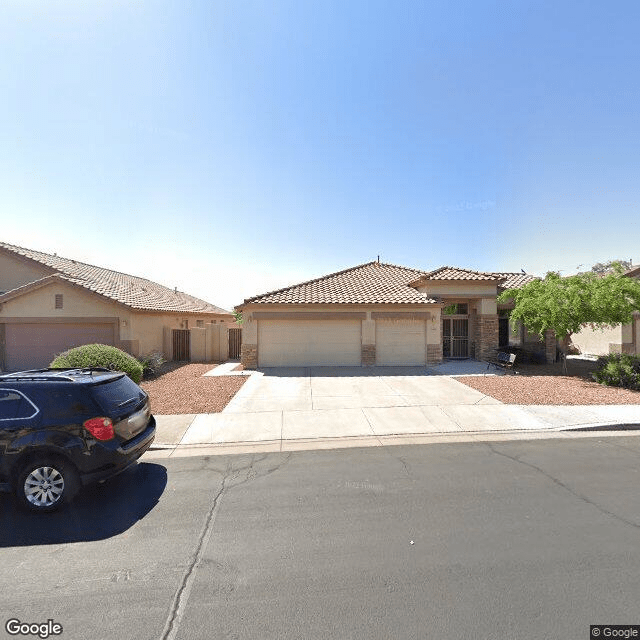
13365 West Banff Lane, Surprise, AZ 85379
For more information about senior living options: (866) 208-4318
Serenity Care Home Costs & Pricing
Serenity Care Home offers competitive pricing for its residents compared to the broader market in Maricopa County and the state of Arizona. The monthly cost for a semi-private room at Serenity Care Home is $2,500, which is notably lower than the county average of $2,801 and the state average of $2,820. For those seeking more privacy, the private room option at Serenity Care Home is priced at $3,500, again presenting a value compared to the higher county rate of $3,318 and state average of $3,345. This positions Serenity Care Home as an attractive choice for families looking for quality care without exceeding budgetary constraints.
| Floor plans | Serenity Care Home | Maricopa County | Arizona |
|---|---|---|---|
| Semi-Private | $2,500 | $2,801 | $2,820 |
| Private | $3,500 | $3,318 | $3,345 |
Assisted Living communities with a similar price nearby
-
from +$400 / mo
Royal Paradise Care
$2,900 to $3,800 / month0.4 miles away -
from +$350 / mo

Covenant Care Assisted Living Home
$2,850 to $3,705 / month3.9 miles away -
About the same
Anc Assisted Living Homes I
$2,500 to $3,500 / month6.2 miles away -
from -$100 / mo
Arabian Views Assisted Living One
$2,400 to $3,200 / month22.3 miles away -
from +$200 / mo

Caring Hearts Senior Care
$2,700 to $3,500 / month3.0 miles away
Overall Review of Serenity Care Home
Pros
 A friend recommended Serenity Care.
- They provide short visits to help, and things seem to be going OK.
- They promptly sent a caregiver within a week.
- They offer additional support on days when someone isn’t doing well, including help with showering and fall prevention.
- The reviewer was very happy with the service.
Cons
 They were disappointed that the caregiver only checks dad’s vitals, implying limited care.
- They felt the service offered minimal assistance, with little proactive help beyond basic tasks.
Review
Serenity Care Home in Surprise, AZ is best suited for families seeking light, reliable in-home care support that complements daily living rather than replacing it. The model described shows up as a few hours of caregiver time, with vitals monitoring and targeted help on days when the loved one is struggling. This arrangement works well for relatively independent seniors who want a safety net and reassurance without committing to full-time care. The service has begun to establish a workable onboarding cadence, contact is made promptly, and within about a week a caregiver is deployed. For families navigating transitions or testing what in-home support feels like, this setup provides a practical, low-commitment entry point.
Those with more demanding needs should consider alternatives. If 24/7 supervision, intensive daily living assistance, medication management beyond vitals, or specialized memory care are required, Serenity Care Home will likely fall short. Established in-home agencies with broader care menus, facilities offering assisted living with comprehensive ADLs, or skilled nursing for complex medical needs are more appropriate for sustained, ongoing support. For families planning long-term care in Surprise, the current footprint may not deliver the consistent, all-day coverage needed to manage progressive health changes or frequent fluctuations in care demands.
On the upside, the strongest points are straightforward and tangible. The ability to mobilize a caregiver within a week after initial contact provides real peace of mind during transitions or when immediate help is needed. The option for a caregiver to be present on days when health or safety is more fragile, assisting with showers, providing fall-prevention presence, and handling “minimal type” tasks, adds a meaningful layer of safety and independence. Vital signs monitoring, while not a full clinical service, offers an added sense of oversight that many families value when balancing independence with protection.
Yet several core drawbacks temper the promise. The care model appears narrow, with emphasis on vitals checks and minimal assistance rather than a full spectrum of daily living support. As the service is described as new, consistency and staff familiarity may still be developing, which can translate to variability in reliability over time. Coverage appears limited to certain hours, creating potential gaps in evenings, nights, or weekends for families relying on steady support. For residents with increasing disability, mobility challenges, or complex medical needs, the current offering risks becoming insufficient unless layered with additional providers.
To make an informed decision, practical diligence matters. Prospective families should request a written care plan that details hours, permitted tasks, and back-up coverage, along with clear qualifications for all caregivers and supervisory oversight. Clarify whether vitals monitoring is performed by a clinician or a trained aide, and what escalation protocols exist when medical concerns arise. Consider piloting Serenity Care Home for a defined period with concrete milestones and a formal review, ensuring alignment with medical guidance, daily routines, and family expectations. This approach converts a promising entry point into a controlled, evidence-based step in constructing a complete care strategy.
Overall, Serenity Care Home presents a promising option for transitional or supplemental support in Surprise, AZ. It suits families seeking a dependable, lighter-touch care presence with prompt staffing and the comfort of vitals monitoring, plus practical hands-on help on days when more assistance is needed. However, it is not a substitute for a full daily-care plan or ongoing medical oversight for residents with significant or escalating needs. Those scenarios call for alternatives with more comprehensive coverage, or a facility-based plan that guarantees consistent, around-the-clock support. For families prioritizing steady oversight with a lighter touch, Serenity Care Home deserves careful consideration; for more intensive care requirements, exploring established agencies or facility options will yield a more sustainable, all-encompassing solution.
 6 resident community capacity
 Assisted Living
 Board and Care Home
 Respite Care
 Cats allowed
 Activities off-site
 Beautician on-site
 Cable or satellite TV
 Devotional services on-site
 Dining room
 Fully furnished
 Garden
 Housekeeping services
 Indoor common areas
 Move-in coordination
 Outdoor common areas
 Private
 Private bathrooms
 Telephone
 Wheelchair accessible showers
 Wi-Fi/high-speed internet available
 Phoenix Sky Harbor International (23 miles away)
 24-hour supervision
 Assistance with bathing
 Assistance with dressing
 Assistance with transfers
 Diabetes diet
 Diabetic care
 High acuity care
 Incontinence care
 Meal preparation and service
 Medication management
 Special dietary restrictions
 Transportation arrangement (medical)
 Transportation to doctors appointments

 Exploring the Path to Senior Living: A Comprehensive Look at Independent Living and Assisted Living
 Is Assisted Living Deductible on Your Taxes? Understanding the Complexities of Assisted Living Expenses and Deductions
 Assisted Living Support for Veterans: A Complete and Detailed Overview