
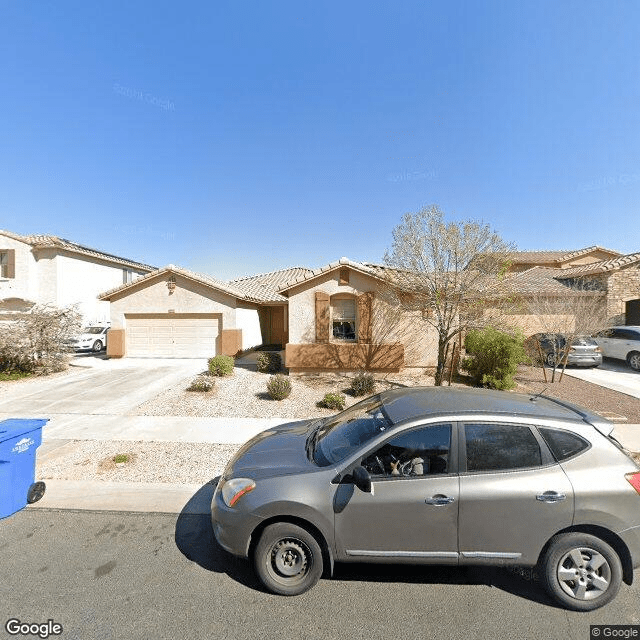
15550 West Cameron Drive, Surprise, AZ 85379
For more information about senior living options: (866) 208-4318
Peachtree Assisted Living Home Costs & Pricing
Peachtree Assisted Living Home offers competitive pricing for its residents, significantly lower than both the county and state averages. With a monthly cost of $1,800 for semi-private rooms, Peachtree provides an attractive option compared to the average of $2,801 in Maricopa County and $2,820 across Arizona. For those seeking more privacy, the private room rate at Peachtree is $3,000, which also undercuts Maricopa County's average of $3,318 and the state average of $3,345. These favorable rates reflect Peachtree's commitment to delivering quality care while making assisted living accessible for families in need.
| Floor plans | Peachtree Assisted Living Home | Maricopa County | Arizona |
|---|---|---|---|
| Semi-Private | $1,800 | $2,801 | $2,820 |
| Private | $3,000 | $3,318 | $3,345 |
Assisted Living communities with a similar price nearby
-
from +$200 / mo

All Stars Assisted Living
$2,000 to $2,500 / month1.1 miles away -
from +$75 / mo

Marybela's Loyal Care
$1,875 to $3,010 / month3.1 miles away -
from +$200 / mo

Desert Breeze Care Home
$2,000 / month16.6 miles away -
from +$200 / mo

Christine's Rose Garden Home Care
$2,000 to $2,500 / month8.3 miles away -
from +$200 / mo

All Care Assisted
$2,000 to $2,500 / month4.5 miles away
Overall Review of Peachtree Assisted Living Home
Pros
 They have caregivers on site 24 hours a day.
- If there’s a problem, they take care of it.
- The staff monitors his medications.
- They watch his diet and get him to move, contributing to healthier weight.
- They help keep him from falling by providing shower assistance.
- They feed him and keep his room and bedding clean.
- They have a real nice yard with outdoor seating where residents can sit or walk around.
Cons
 Lorna is on site only 2-3 hours a day and then she employs caregivers who do not speak English, making communication impossible.
- The food is of poor quality and she does not serve a healthy diet; only three meals during the month included vegetables, meals often consisted of macaroni (sometimes cold) and oatmeal for two of the three meals, and no snacks were offered.
- The reviewer lost 30 pounds during the month there.
- The room was not cleaned for the last two weeks.
- Interaction with staff is difficult to impossible because they do not speak English.
- There were no activities during the stay and the advertised amenities are outright lies.
- Lorna is perceived to see dollar signs when caring for residents.
- The facility has multiple serious violations.
- The meals are not what the reviewer would serve.
Review
Peachtree Assisted Living Home in Surprise, AZ is best suited for families seeking constant staff presence and basic daily oversight, with the expectation that care will be hands-on yet lean in its amenities and communication. This community can work for residents who prioritize supervision and risk management over engaging activities, robust dining, or polished odor of professionalism. However, families who require clear English-speaking staff, consistent housekeeping, a nutritious menu with regular vegetables, and transparent regulatory compliance should seriously consider alternatives. The combination of on-site access, medication monitoring, and around-the-clock attention must be weighed against notable gaps in communication, nutrition, and cleanliness.
On the upside, the model of care appears to hinge on continuous staffing and staff accessibility. Reports indicate that caregivers are present most hours, with medical oversight and help with daily tasks like showers and medications. A visible routine of supervision can be reassuring for families worried about falls or uncontrolled medication, and some residents do benefit from regular assistance and a stable daily structure. There is a modest outdoor area that offers a chance for fresh air and gentle activity. In a pinch, that level of visible oversight can prevent acute crises, and it is the strongest argument in favor of this setting for the most vulnerable residents.
Yet the core drawbacks are severe enough to overshadow those positives. The most persistent and damaging issues revolve around communication barriers: caregivers primarily do not speak English, making meaningful interactions and timely updates difficult for families and residents alike. The owner’s limited on-site presence, two to three hours daily, amplifies that disconnect, leaving staff authority and daily decision-making clustered away from management oversight. Nutrition stands out as a major flaw: menus described as limited and unhealthy, with few vegetables, repetitive grains, and occasional cold meals. One resident experienced drastic weight loss within a single month, a red flag for adequacy of calories and nourishment. Room cleanliness and activity offerings also appear inconsistent, undermining comfort and social engagement.
The reported advantages do not fully offset these critical concerns. Medication management and consistent monitoring are valuable safeguards, yet they lose bite when staff communication is ineffective. Cleanliness and daily housekeeping are not reliably demonstrated, which raises safety and dignity questions for residents who cannot advocate for themselves. The evidence of a robust activities program is weak, and the existence of several serious violations cited by state records cannot be ignored. In short, the facility delivers basic oversight but falls short on core quality metrics that families rely on for peace of mind: nutrition, communication, cleanliness, and regulatory transparency.
Prospective families should take concrete steps before committing. Request current inspection and compliance records from AZcarecheck and ask for direct examples of how meals are prepared and supervised, including menus and any dietary accommodations. Demand English-speaking caregivers or a clear plan for language access, and insist on a written daily schedule that includes housekeeping, activities, and social engagement. Visit multiple times at different hours to gauge consistency, talk directly to staff and residents, and observe how problems are resolved. Compare with nearby communities that offer stronger nutrition, more robust programming, and clearer communication protocols; use the red flags here as a baseline for what must be improved.
In the final assessment, Peachtree Assisted Living Home should be approached with caution and clear conditions. It is not a default choice for families seeking comprehensive quality for a loved one, especially when nutrition clarity, language access, and consistent cleanliness are non-negotiable. Only those who can tolerate and verify improved language access, demonstrable regulatory compliance, and a credible plan to elevate meal quality should consider it further. For most families, exploring other licensed options with stronger dietary standards, transparent management, and richer activity schedules will yield better long-term outcomes and greater confidence in daily life at the facility.
 8 resident community capacity
 Assisted Living
 Board and Care Home
 Activities off-site
 Beautician on-site
 Cable or satellite TV
 Devotional services off-site
 Dining room
 Fully furnished
 Garden
 Housekeeping services
 Indoor common areas
 Move-in coordination
 Outdoor common areas
 Private
 Private bathrooms
 Respite or short term stays offered
 Telephone
 Wheelchair accessible showers
 Wi-Fi/high-speed internet available
 Phoenix Sky Harbor International (25 miles away)
 24-hour supervision
 Ambulatory care
 Assistance with bathing
 Assistance with dressing
 Assistance with transfers
 Diabetes diet
 Diabetic care
 High acuity care
 Incontinence care
 Meal preparation and service
 Medication management
 Special dietary restrictions
 Transportation arrangement (medical)
 Transportation to doctors appointments
 Christian services



 8 Key Indicators That Suggest It May Be Time to Transition from Assisted Living to Skilled Nursing Care
 Vibrant Senior Living: A Comprehensive Guide for Active Older Adults
 When to Transition from Assisted Living to Memory Care: Key Indicators, Steps, and Finding the Right Community