
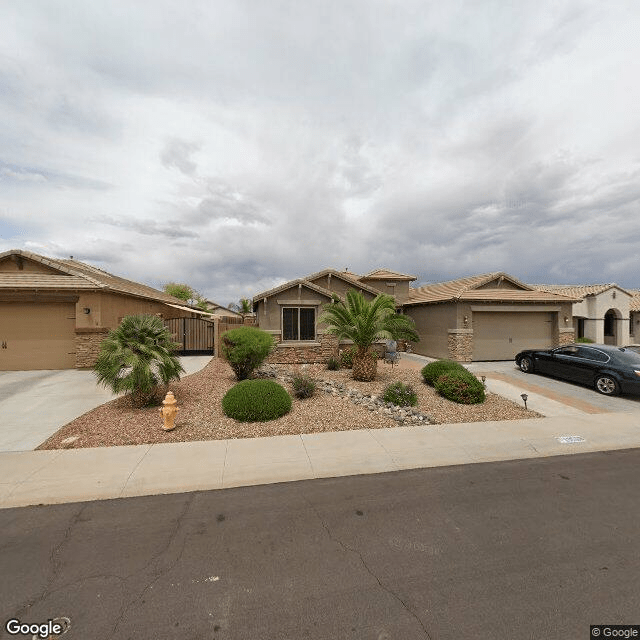
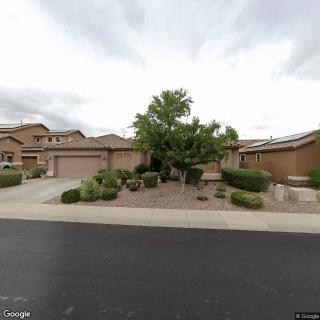
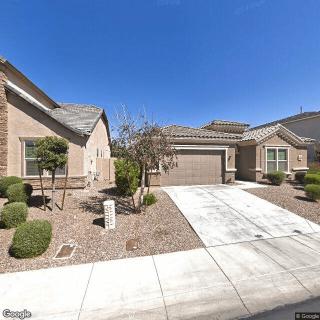
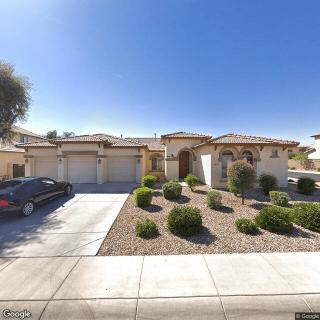
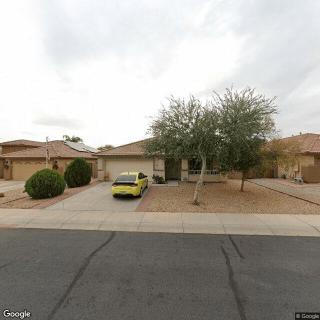
18508 West Post Drive, Surprise, AZ 85388
For more information about senior living options: (866) 208-4318
Cozy Home Care Costs & Pricing
Cozy Home Care offers competitive pricing compared to both Maricopa County and the broader state of Arizona, making it an appealing choice for those seeking quality care without compromising their budget. For semi-private rooms, Cozy Home Care is priced at $2,300 per month, significantly lower than the county average of $2,801 and the state average of $2,820. Similarly, one-bedroom accommodations are available for $3,000 monthly at Cozy Home Care, which is more affordable than the county's $3,473 and the state's $3,532 rates. Private room options also reflect this trend; they are offered at $3,000 in Cozy Home Care compared to $3,318 in Maricopa County and $3,345 statewide. These cost efficiencies highlight Cozy Home Care's commitment to providing accessible housing solutions while maintaining a high standard of care.
| Floor plans | Cozy Home Care | Maricopa County | Arizona |
|---|---|---|---|
| Semi-Private | $2,300 | $2,801 | $2,820 |
| 1 Bedroom | $3,000 | $3,473 | $3,532 |
| Private | $3,000 | $3,318 | $3,345 |
Memory care communities with a similar price nearby
-
from +$200 / mo
Anc Assisted Living Homes I
$2,500 to $3,500 / month0.7 miles away -
from +$400 / mo

Caring Hearts Senior Care
$2,700 to $3,500 / month3.8 miles away -
from +$200 / mo
Northlands Assisted Living Home
$2,500 / month12.2 miles away -
from -$100 / mo
Paseo Highlands ALH
$2,200 to $3,500 / month19.4 miles away -
from +$400 / mo

Surprise Farms Assisted Living
$2,700 to $3,500 / month0.7 miles away
Overall Review of Cozy Home Care
Pros
 Priority Home Care Agency provided outstanding care during his recovery at home.
- Their professionalism, compassion, and attention to detail stood out from the very first interaction.
- The team was attentive to his medical needs and genuinely cared about his comfort and emotional well-being.
- They went above and beyond to ensure he was safe, comfortable, and always had everything he needed.
- They created a personalized care plan tailored to his specific needs, enabling him to regain strength at his own pace in the comfort of his home.
- The agency places loved ones’ health and happiness first and makes a significant difference in recovery journeys.
Cons
 The staff were described as very intrusive.
Review
This community is best suited for families seeking highly personalized, at-home recovery and ongoing care that keeps a loved one in familiar surroundings. It excels for post-acute recovery, daily living support, and emotional reassurance delivered in the home setting, where safety, comfort, and consistency matter most. The model works best when caregivers are reliable, punctual, and capable of tailoring a plan to the specific medical and personal needs of the elder adult. Those who prize privacy and a more autonomous daily routine, or who want a traditional, 24/7 facility environment, should consider alternatives.
The strongest positives focus on professional, compassionate, and detail-oriented care. Family members repeatedly note that the care team is attentive to medical needs while also prioritizing comfort and emotional well-being. The staff’s knowledge, kindness, and timely responses help reduce anxiety during a challenging period. Perhaps most important, the care plan is described as highly personalized, crafted after listening to concerns and adjusted to support gradual strength recovery at the client’s own pace, all while remaining in the comfort of home. This combination of expertise and individualized planning can translate into real peace of mind for families.
Nevertheless, the feedback includes a notable caveat: some clients describe the team as intrusive. The perception of intrusiveness can color the overall experience, suggesting that the level of day-to-day involvement may feel overbearing to privacy-conscious individuals. With only a pair of reviews contributing to the impression, the variance is real enough to merit emphasis. In practical terms, the intrusiveness concern means that expectations about daily routines, boundaries, and the degree of supervision should be clarified before care begins.
Despite the potential downside, the pros can meaningfully offset the cons when a clear framework is established. For families prioritizing activity in the home, safety, and cognitive-emotional support, the combination of professional care and a tailored plan often outweighs the sense of intrusion, provided boundaries are discussed upfront and revisited regularly. A well-structured onboarding, transparent visit schedules, and explicit privacy guidelines can preserve independence while preserving the benefits of skilled, compassionate oversight. In short, success hinges on clear communication and a compatible match between caregiver style and family expectations.
Alternatives become relevant for anyone who cannot tolerate frequent in-home involvement or who requires a different care setting. If privacy, independence, and less daily oversight are paramount, consider facility-based options such as assisted living or skilled nursing communities, where supervision is standardized and room-to-room boundaries are more clearly defined. For those needing extensive medical management or 24/7 monitoring, a more traditional long-term care setting may be appropriate. When evaluating options, seek agencies with explicit privacy policies, predictable visit frequencies, and a transparent plan for updating care as needs evolve. References and a trial period remain critical to determine whether a given model truly aligns with the elder’s preferences.
In summary, this home-based care approach is a compelling fit for families prioritizing personalized, professional support delivered in the comfort of home, with a strong emphasis on safety and emotional well-being. The biggest caveat is potential intrusiveness, which can be mitigated through explicit boundary-setting and robust communication. For most scenarios, the advantages, professionalism, tailored care, and reliable, caring staff, outweigh the concerns when paired with a clear care plan and a thoughtful trial arrangement. If privacy or a less hands-on approach is non-negotiable, pursue alternatives with a stronger emphasis on autonomy and facility-based supervision, but otherwise enter the process prepared to align expectations, confirm credentials, and confirm that the caregiving style matches the elder’s daily rhythm.
 9 resident community capacity
 Assisted Living
 Board and Care Home
 Day Program
 Memory Care
 Respite Care
 Cable or satellite TV
 Dining room
 Fully furnished
 Garden
 Housekeeping services
 Move-in coordination
 Outdoor space
 Private
 Telephone
 Wi-Fi/high-speed internet available
 24-hour supervision
 Assistance with bathing
 Assistance with dressing
 Assistance with transfers
 Diabetes diet
 Diabetic care
 High acuity care
 Incontinence care
 Meal preparation and service
 Medication management
 Special dietary restrictions
 Transportation arrangement (medical)
 Transportation to doctors appointments
 How to Communicate with a Loved One Living with Dementia: 10 Supportive Strategies
 Comprehensive Guide to VA Nursing Homes: A Crucial Long-Term Care Resource for Veterans
 Estimating the Expenses of At-Home Dementia Care: A Detailed Exploration