
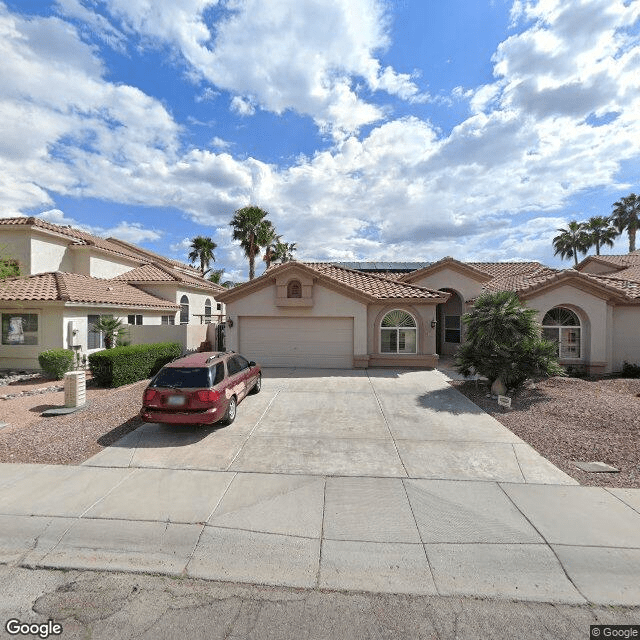
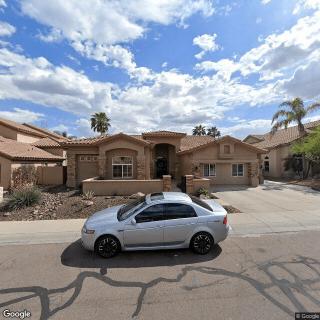
5241 E Anderson Dr., Scottsdale, AZ 85254
To contact a resident: (602) 574-4369
For more information about senior living options: (866) 208-4318
A & I Adult Care Home II Costs & Pricing
A & I Adult Care Home II offers competitive pricing for its services, with monthly costs reflecting the quality of care provided. For semi-private accommodations, residents can expect to pay $3,200 per month. This rate is notably higher than the average costs in Maricopa County and across Arizona, which are approximately $2,801 and $2,820, respectively. For private rooms, A & I Adult Care Home II charges $3,700 per month, again surpassing the county and state averages of $3,318 and $3,345. While the costs at A & I may be higher than some alternatives in the region, they may correspond to enhanced services or amenities offered at this facility.
| Floor plans | A & I Adult Care Home II | Maricopa County | Arizona |
|---|---|---|---|
| Semi-Private | $3,200 | $2,801 | $2,820 |
| Private | $3,700 | $3,318 | $3,345 |
Senior living communities with a similar price nearby
-
from +$450 / mo

SeniorBridge - Scottsdale, AZ
$3,650 / month5.4 miles away -
from -$400 / mo

Pinnacle Peak Assisted Living
$2,800 to $3,100 / month5.0 miles away -
from -$575 / mo

The Eldercare Home Of Tempe
$2,625 to $3,412 / month18.8 miles away -
from -$250 / mo
Endeavor AL I
$2,950 to $4,200 / month0.7 miles away -
from +$500 / mo
Endeavor AL III
$3,700 to $4,000 / month0.5 miles away
Overall Review of A & I Adult Care Home II
Pros
 The resident is very pleased with the quality of care they have received.
- The staff are caring.
Cons
 The review implies the home is only suitable for paralyzed bedridden or very independent clients, not for Alzheimer’s patients who need a BR schedule or medication assistance.
- It claims staff from other countries are cared for in a servitude role, suggesting exploitative working conditions.
- It alleges neglect, such as not providing needed medications.
- It states deposits and care fees were kept despite the resident staying only about three months.
- It suggests hospital admission could have been avoided with better medication management, support, a routine BR schedule, and more activities.
- It notes there are no designated bedrooms for staff, implying poor staffing accommodations.
Review
This community is best suited for two profiles: either highly independent seniors who want a very small, home‑like setting, or residents who are medically stable but require minimal daily hands‑on care and supervision. It is less appropriate for those with cognitive impairment, dementia, or any resident who needs routine medication management, consistent schedules, or frequent, hands‑on assistance. Families should be prepared to consider alternatives if a loved one needs structured routines, memory support, or regular med administration and monitoring.
On the upside, the home appears to deliver meaningful care quality for residents who fit its wheelhouse. A resident notes satisfaction with the level of care after two years in residence, signaling a degree of stability and staff reliability for somebody who does not require intensive cognitive or behavioral support. That sustained placement implies a calm, predictable environment where basic needs and comfort can be met without constant disruption. For families seeking a small, intimate setting with familiar faces and a straightforward care dynamic, these are credible strengths.
Yet the strongest caveat centers on staffing and medical management, which emerge as outsized risks for anyone outside the described niche. A candid assessment warns against placement for Alzheimer’s or confused residents who require reminders, a medication schedule, or help with daily routines. Reports point to staffing practices that lack explicit, dedicated spaces for caregivers, and to experiences where those from outside the local community are described in ways that raise concerns about role clarity and supervision. The practical consequence is potential lapses in timely medication, supervision gaps, and limited attention to personal routines, issues that can propel hospital visits or unnecessary crises.
Financial and operational red flags compound the risk. A deposit and ongoing care fees were reportedly retained after a relatively short stay, even when the resident had limited time there; this raises red flags about transparency and refundability for families budgeting closely for long‑term care. In addition, there are accounts of medication delays or omissions that could have been prevented with a more reliable medication management process, and a broader sense that daily activities and structured routines were not consistently embedded into the resident’s day. Taken together, these factors make the setting more fragile for anyone who does not perfectly fit the “low‑care, highly predictable” profile.
For families weighing alternatives, this home may still be a viable option if the goal is a compact, low‑traffic environment with a stable, low‑demand resident population. However, those needing robust cognitive support, dementia care, or a clearly defined, strict medication administration system should look at other options first. Larger assisted living communities with dedicated memory care wings, or smaller homes with transparent staffing models and explicit care schedules, are more likely to meet needs where memory or med management is a central concern. The key is matching the resident’s actual daily needs to the home’s operational strengths.
The prudent approach is to visit with clear questions and a reality check on delivery versus promises. Ask for a detailed care plan that covers medication administration times, staff shifts, and how daily activities are structured for residents who may not verbalize needs. Request a copy of the deposit policy and any refund terms, and seek references from current families who can speak to consistency in care and bill integrity over time. If the senior presents as largely independent or requires only minimal hands‑on care, this setting can deliver comfort and continuity; if not, a more structured environment with explicit dementia care capabilities and tighter regulatory hygiene around medications and finances will be the wiser choice. In sum, this community serves a narrow, well‑defined niche well, but it does not stand as a universal solution for all seniors seeking assisted living in Scottsdale.
 Board and Care Home
 Private
 Phoenix Sky Harbor International (15 miles away)
 Ambulatory care
 Diabetic care
 High acuity care
 Incontinence care
 Medication management


 Exploring the World of Home Health Nurses: Qualifications, Roles, and Hiring Tips
 Navigating Medicare Coverage for In-Home Care Services
 In-Home Care Costs in 2025: A Detailed State-by-State Exploration