
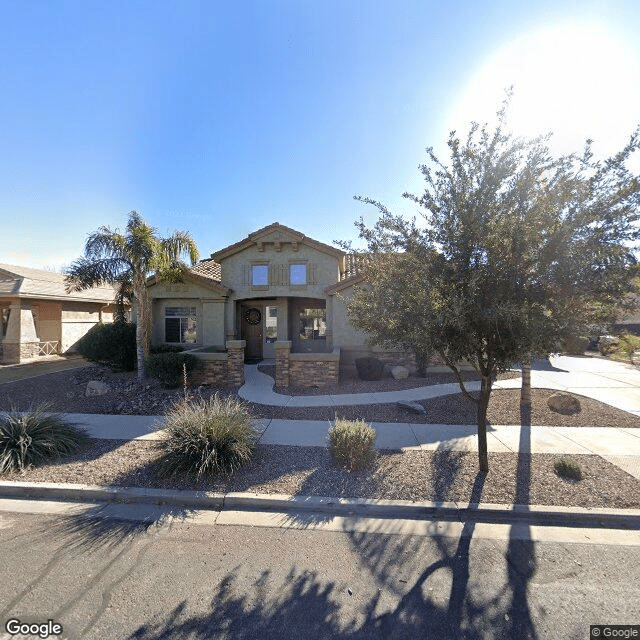
18727 E Pine Valley Dr, Queen Creek, AZ 85142
To contact a resident: (480) 987-6582
For more information about senior living options: (866) 208-4318
Allegiance Senior Living Costs & Pricing
At Allegiance Senior Living, the monthly cost for a private room is set at $4,000. When compared to the average costs in Pinal County, which stands at $3,209, and the broader state of Arizona, where the average is approximately $3,345, it is evident that Allegiance positions itself as a premium option. This pricing reflects not just accommodation but an array of services and amenities designed to enhance residents' quality of life. While Allegiance may be higher than the regional averages, many families find value in the personalized care and vibrant community atmosphere offered here.
| Floor plans | Allegiance Senior Living | Pinal County | Arizona |
|---|---|---|---|
| Private | $4,000 | $3,209 | $3,345 |
Senior living communities with a similar price nearby
-
from -$400 / mo

Sonoran Adult Care
$3,600 to $4,000 / month10.8 miles away -
from +$600 / mo
Madeira Villa Assisted Living, LLC
$4,600 to $5,500 / month13.6 miles away -
from -$500 / mo
Jim & Patti Jones II
$3,500 to $4,500 / month15.1 miles away -
from -$500 / mo
Blue Sage Assisted Living - Biltmore/Arcadia
$3,500 / month24.9 miles away -
from -$500 / mo

Winston Park Assisted Living
$3,500 to $4,000 / month16.0 miles away
Overall Review of Allegiance Senior Living
Pros
 The family was very happy to have placed their mother there.
- The personal care at Everland Living is excellent.
- Families have nothing to worry about when their loved one is there.
- Residents are treated with love and care.
- The owners, Michelle and Scott, go the extra mile to create a warm and comfortable living environment.
- The staff, including NP Trang, Stella, and Joanie, are excellent.
- Everland Living provides a warm environment and feels like home.
- New residents are greeted with a warm welcome and feel at home from the start.
- Everland Living is a godsend to families; the staff are loving and caring and feel like family.
- The care team stays by residents' sides during difficult times and provides attentive support.
Review
Allegiance Senior Living in Queen Creek, AZ is best suited for seniors who want a genuinely intimate, home-like environment where care feels personal and deeply attentive. The available experiences describe a setting that functions more like a welcoming family home than a large campus, with staff and leadership actively shaping the atmosphere and routines. This is the kind of place where relatives feel comfortable walking in and seeing a warm welcome, a calm pace, and daily interactions that emphasize presence, not just tasks completed. It serves residents who value routine, meaningful engagement, and meals that feel like home, delivered by a team that treats every resident as an individual.
Those who may want to consider alternatives are families seeking the scale and clinical breadth of a larger community. If a senior requires robust on-site medical oversight, a wide calendar of campus-wide activities, or specialized memory-care programming across multiple neighborhoods, a larger facility with more extensive clinical resources may be a better fit. Prospective residents who prioritize hospital-adjacent access, multi-disciplinary teams, or highly structured programming should objectively compare what a smaller, home-style setting can, and cannot, provide. In short, the strength here is warmth and personal connection, not campus-level breadth of services.
The strongest pros, uncompromising warmth, hands-on leadership, and a care-first culture, tend to offset the typical trade-offs of a small home. Reviews consistently highlight attentive staff, caregivers who stay at a loved one’s side, and leaders who influence daily life directly, which produces a sense of trust and reliability. Residents benefit from fresh, homemade meals, opportunities for daily activities, and a sense of normalcy, tiny comforts like a TV in the private room and familiar routines that soften transitions. Family members report peace of mind knowing a dedicated team is present around the clock and that end-of-life care, when needed, is delivered with dignity and sensitivity. The caveat is that a smaller setting may carry fewer on-site clinical amenities and less 24/7 nursing coverage than a large campus.
Behind the warmth lies a distinctly human tone supported by specific staff and leadership dynamics. The accounts describe a team that feels more like a trusted circle than an institution, with caregivers and an on-site nurse practitioner contributing to a coherent care approach. The home-like vibe, where visits feel welcome and caregiving is collaborative, appears consistently in the narrative, reinforcing trust during difficult moments such as transitions to hospice. The emphasis on emotional support for families, not just physical care, is a meaningful differentiator that reduces the stress associated with aging and caregiving. These elements combine to create a practical, actionable sense of how day-to-day life unfolds in this model.
When evaluating Allegiance against alternatives, prospective residents should pursue concrete, practical answers. Ask about caregiver-to-resident ratios during day and night, the mechanisms for emergencies, and how medical oversight is arranged on site. Probe how hospice or palliative care fits into the care plan and how flexible family involvement remains as needs evolve. Inquire about daily schedules, meal quality and options, and the breadth of activities available to keep residents engaged. Finally, clarify the transition process if needs escalate or change, ensuring there is a clear path for continued care without upheaval. The most telling signals are clear communication, demonstrated continuity of care, and a home-centered routine.
Overall, Allegiance Senior Living stands out for families who prize a close-knit, compassionate environment where residents are treated as members of a caring circle. The prevailing impressions suggest that for seniors who value personal attention, dignity, and a homelike atmosphere, the benefits dramatically outweigh the constraints of a smaller operation. Those seeking a broad medical footprint, campus-scale amenities, or highly structured dementia programming should explore other options with larger clinical resources. For the right situation, Allegiance offers a level of peace of mind and daily life harmony that is hard to match in larger, more institutional settings.
 Board and Care Home
 Activities on-site
 Devotional services off-site
 Indoor common areas
 Private
 Phoenix Sky Harbor International (23 miles away)
 Ambulatory care
 Diabetic care
 Medication management
 Meals provided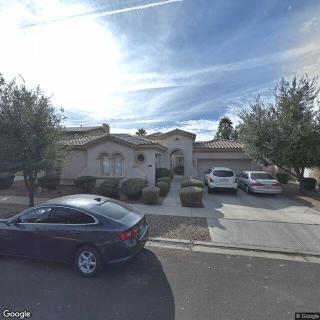


 A Detailed Exploration of Living Wills and Advance Directives
 Comprehensive Guide to Medicare Coverage for Hospice Care
 Caring for Those Who Care: Recognizing, Understanding, and Overcoming Caregiver Burnout