For more information about senior living options: (866) 208-4318
3.9 from 96 reviews
5 stars
58
4 stars
12
3 stars
2
2 stars
2
1 stars
22
Overall Review of The Terraces of Phoenix
common18 reviews mention this
Staff support shows up clearly
Residents and families repeatedly describe staff as friendly, caring, and responsive.
Many reviewers highlight a consistent tone of kindness, with staff members described as professional, understanding, and helpful day to day. Several families specifically call out nurses, therapists, and aides for taking time with questions and providing hands-on assistance. A few reviews also praise how staff follow through on concerns once they’re routed to the right people, while others contrast that experience with communication or staffing gaps during rehab.
common10 reviews mention this
Dining is a frequent bright spot
Food and meal variety are a recurring reason families feel comfortable.
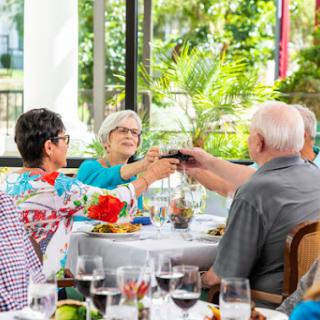
Across multiple reviews, residents and families describe the food as good, delicious, and offering plenty of choice. Several mention multiple meal options and the ability to enjoy meals in a dining setting rather than feeling like a cafeteria. The experience isn’t uniformly positive—some rehab reviews focus on timing or temperature—but overall dining shows up as a common positive theme that matches the community’s restaurant-style setup.
differentiator8 reviews mention this
Activities and grounds keep it lively
Residents describe a busy routine of activities alongside well-kept outdoor spaces.
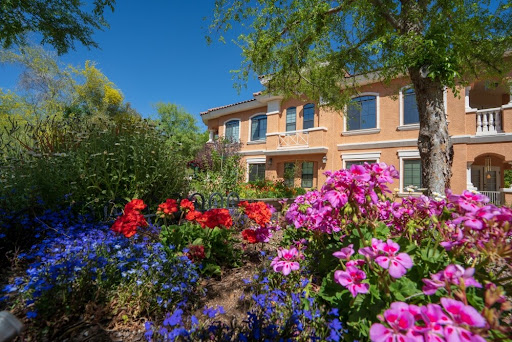
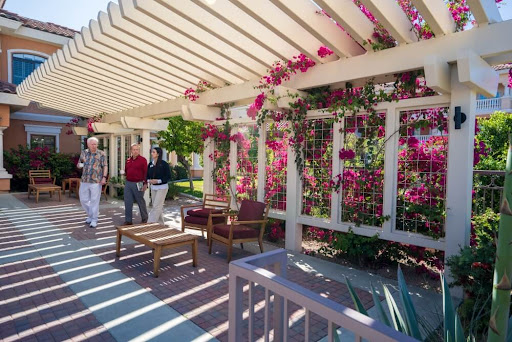
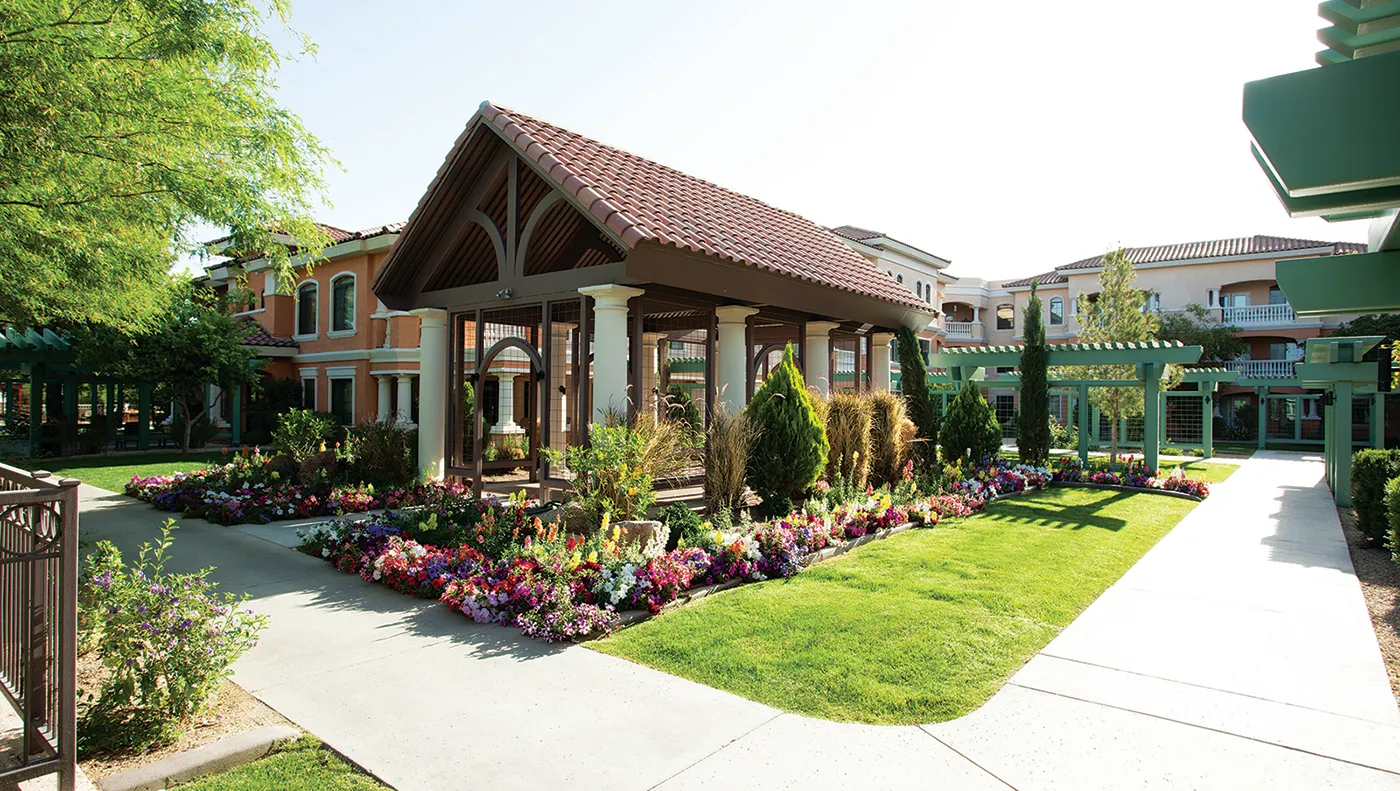
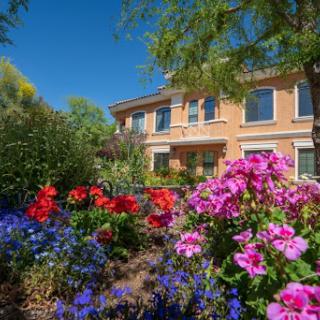
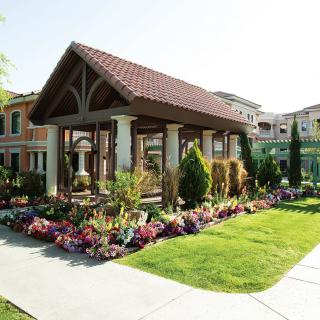
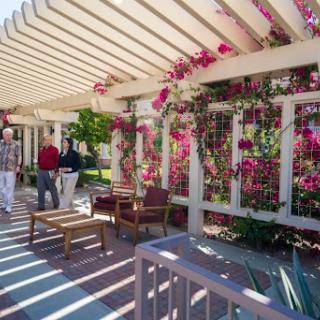
Reviewers repeatedly mention lots to do, including scheduled daily activities, community events, and religious or fitness-focused programming. Families also describe the grounds as attractive and well maintained, with outdoor areas and landscaping that make the community feel welcoming. This lines up with the community’s activity and amenity offerings, including fitness programming, live performances, planned outings, and indoor-and-outdoor spaces to spend time.
common3 reviews mention this
Location feels convenient
Reviewers appreciate the community’s convenient location around Phoenix.
Some families describe the location as well situated, including proximity that helps them stay connected to appointments and daily life. Others mention ease of access compared with what they saw while touring other options. Nearby conveniences in the area include pharmacy and restaurant options as well as a nearby preserve and parks.
caveat9 reviews mention this
Rehab and communication get mixed
Rehab experiences vary, with some reviews describing understaffing and weak communication.
Several reviewers caution that rehab care may be inconsistent, pointing to delays in getting help and problems with communication among front-line staff and administration. A few reviews describe specific safety or responsiveness concerns, including call-button access and how quickly assistance is provided. At the same time, other rehab-focused reviews are strongly positive about therapy progress and nursing attention, so the overall feedback depends on the specific stay and circumstances.
caveat2 reviews mention this
Cost is a common concern
Some reviews say the community is too expensive for the value they received.
A couple of reviewers directly raise price concerns, including comments that it can be pricey and charges may not match the level of service they experienced. These complaints appear alongside other positive observations, including praise for the physical spaces and staff, which suggests the value question isn’t universal. For anyone comparing options, it’s worth clarifying what’s included and what triggers additional fees based on the level of care needed.
How we summarize
Counts show how many written reviews mention each theme; a review can touch several themes, and only frequently mentioned themes are displayed.
Features
Housing
98 resident community capacity
1-bedroom apartments
2-bedroom apartments
Studio apartments
Types of Care
Assisted Living
Continuing Care Retirement Community (CCRC)
Independent Living
Memory Care
Respite Care
Skilled Nursing Facility
Amenities
Air-conditioning
Beautician on-site
Beauty salon
Cable or satellite TV
Computer center
Dining room
Fitness room
Fully furnished
Gaming room
Garden
Golf
Housekeeping services
Kitchenette
Laundry
Move-in coordination
Outdoor space
Private bathrooms
Respite or short term stays offered
Restaurant-style dining
Small library
Spa
Swimming pool
TV room
Telephone
Wellness center
Wi-Fi/high-speed internet available
Transportation
Phoenix Sky Harbor International (8 miles away)
Community operated transportation
Transportation & parking
Transportation arrangement
Transportation arrangement (non-medical)
Care Services
24-hour call system
24-hour supervision
Activities of daily living assistance
Assistance with bathing
Assistance with dressing
Assistance with transfers
Diabetes diet
Hospice care
Meal preparation and service
Medication management
Special dietary restrictions
Dining
Diabetes diet
Special dietary restrictions
Activities
Arts and crafts
Community-sponsored activities
Concierge services
Fitness programs
Live musical performances
Planned day trips
Religious services
Resident-run activities
Scheduled daily activities
Yoga / chair yoga
Languages Spoken
English
Nearby Places of Interest
Pharmacies
Walgreens (0.6 miles)
CVS Pharmacy (1.8 miles)
CVS Pharmacy (2 miles)
CVS Pharmacy (2.6 miles)
Walgreens (3 miles)
Walgreens (3.2 miles)
CVS Pharmacy (3.7 miles)
Restaurants
Taco Bell (1.5 miles)
The Whining Pig (1.6 miles)
Raising Cane's Chicken Fingers (1.8 miles)
Wrigley Mansion (2.1 miles)
Arriba Mexican Grill (2.6 miles)
Beatitudes Bistro (2.6 miles)
McDonald's (2.6 miles)
Parks
Phoenix Mountain Preserve (1.5 miles)
Royal Palm Park (2.6 miles)
Granada Park (3.2 miles)
Encanto Park (5.7 miles)
Moon Valley Park (5.8 miles)
Margaret T. Hance Park (6.1 miles)
Physicians
Keystone Natural Family Medicine (2.1 miles)
Phoenix Skin Medical Surgical Group (2.9 miles)
Arizona Eye Specialists (4.2 miles)
Aoc (4.5 miles)
Wyse, Mark Family Practice Specialists Limited (4.6 miles)
Dignity Health Peppertree Family Medicine (4.9 miles)
Elite Plastic Surgery (4.9 miles)
Places of Worship
First United Methodist Church of Phoenix (2.5 miles)
Open Door Fellowship Church (3 miles)
Christ Church of the Ascension (3.4 miles)
Roosevelt Community Church (6.3 miles)
Cafes
Panera Bread (2.8 miles)
Starbucks (2.8 miles)
Press Coffee - The Roastery (3.2 miles)
Lux Central (3.5 miles)
Provision Coffee Bar (3.7 miles)
Dutch Bros Coffee (4.1 miles)
Dark Hall Coffee (4.6 miles)
Hospitals
Surgical Specialty Hospital Of Arizona (3 miles)
Abrazo Central Campus (3.4 miles)
Carl T Hayden VA Medical Center, Recreation Therapy (3.7 miles)
St Josephs Neurological ICU (4.7 miles)
St Joseph's Hospital & Med Center: Deguzman Brian J MD (4.8 miles)
Banner – University Medical Center Phoenix (5.7 miles)
The Terraces of Phoenix offers 24-hour supervision, ensuring that residents are continuously monitored for their safety and well-being, which is crucial for individuals with dementia or Alzheimer's disease who may experience disorientation or wandering. Activities of daily living assistance helps residents maintain a sense of independence while receiving the necessary support to manage everyday tasks, reducing anxiety and promoting dignity. Assistance with bathing and dressing further enhances personal hygiene and comfort, which can significantly impact overall mood and self-esteem. Support during transfers ensures safe mobility for residents who may struggle with balance or coordination, minimizing the risk of falls. Meal preparation and service cater to dietary needs while fostering a routine that residents can rely on, encouraging social interaction during mealtimes. Lastly, medication management provides essential oversight for complex medication regimens often required by individuals in advanced stages of these conditions, helping to ensure compliance and address health concerns effectively.
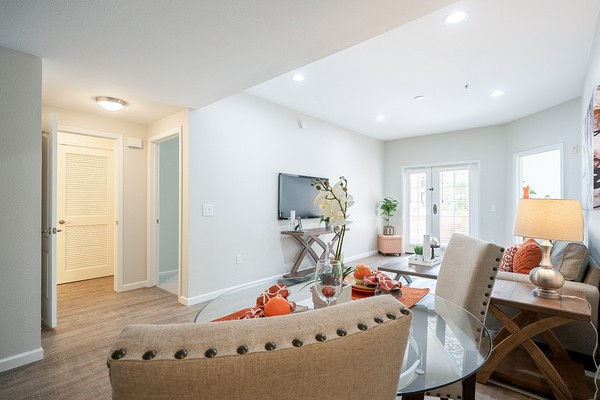
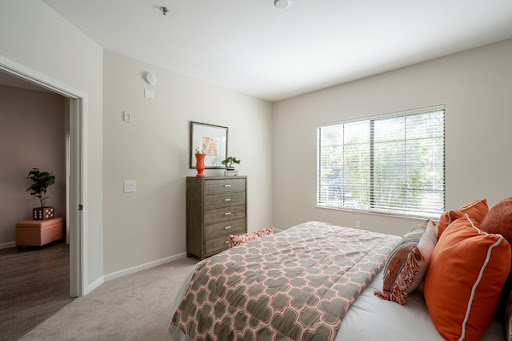
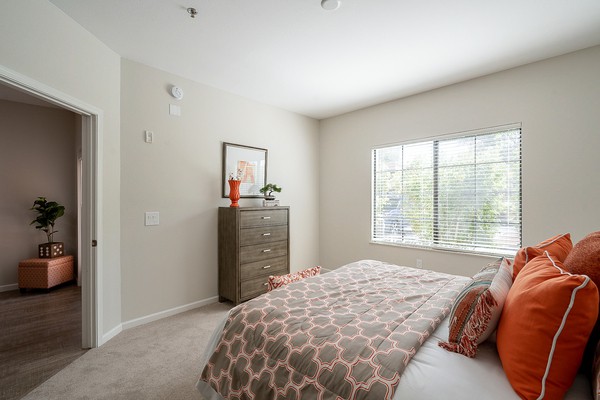
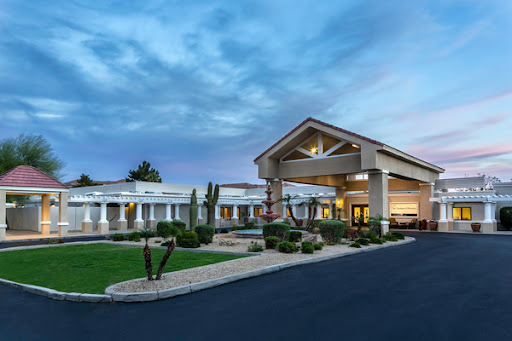
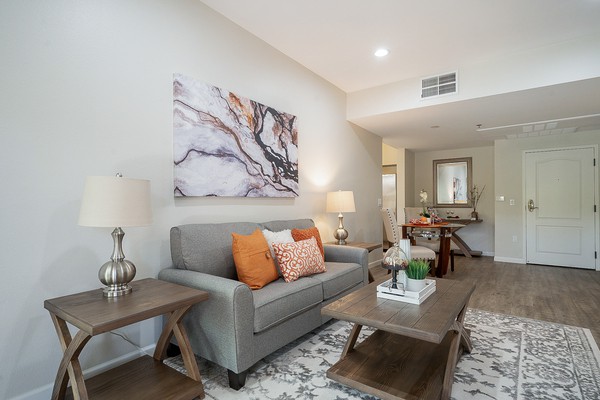
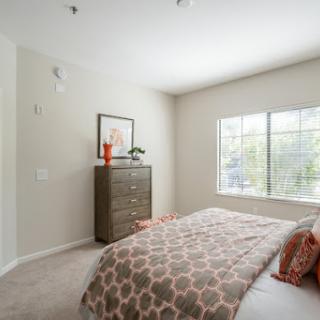
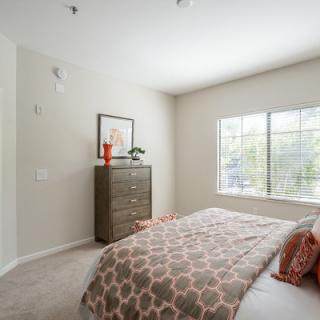
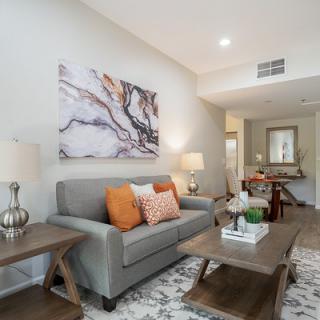
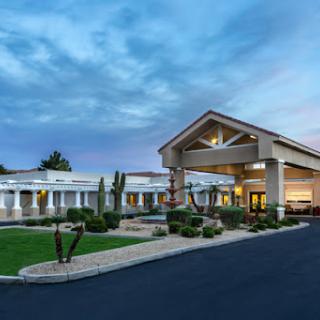
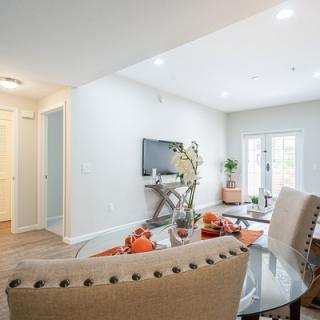
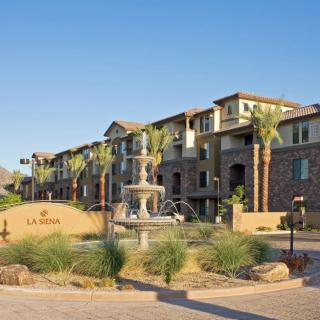
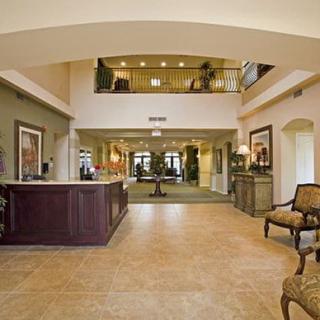
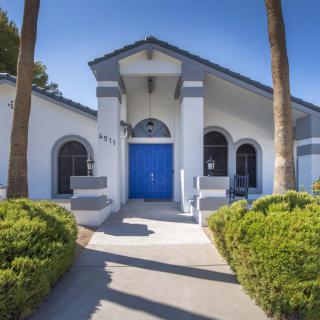
The Terraces of Phoenix on seniors.fyi includes 10 photos including images showing garden, landscaping, outdoor, bedroom, interior, decor, nature, windows, and more.
Nearby Communities
Desert Palm Adult Care
Phoenix, AZ
4.2 from 5 reviews
$2,500 to $3,000 / month
Warm, homey atmosphere with attentive staff and a welcoming owner.
Golden Times Assisted Living Home
Phoenix, AZ
3 from 4 reviews
$1,800 to $2,000 / month
Competitive pricing for semi-private and private rooms.
First Choice Assisted Living
Phoenix, AZ
4.6 from 9 reviews
Clean, spacious and well-lit with attentive staff and home-cooked meals; intimate small-community setting with flexible furnishing options.
Bella's Care Home
Phoenix, AZ
3 from 2 reviews
Warm, homelike atmosphere with attentive, proactive staff.
La Siena
Phoenix, AZ
4.4 from 133 reviews
$3,075 to $3,600 / month
Friendly, attentive staff and well-maintained, resort-style facilities with ample activities.
Care With Love
Phoenix, AZ
4.3 from 13 reviews
Improved daily living and well-being, nutritious meals, and a warm, compassionate environment.
Avista Senior Living North Mountain
Phoenix, AZ
4.5 from 143 reviews
$2,495 to $3,500 / month
Caring staff in a home-like setting with good dining.
Ridge at The Stratford
Phoenix, AZ
4.2 from 122 reviews
$3,266 to $4,305 / month
Caring, approachable staff in a warm, home-like setting with active resident engagement.
The article presents five subtle indicators of dementia, such as memory lapses and mood swings, to help families assess cognitive decline in loved ones. It emphasizes early detection, open communication, and seeking professional help while providing practical support steps.
Dementia encompasses progressive neurological disorders that impair cognitive functions and can lead to paranoia due to cognitive decline and emotional changes. The article discusses the triggers of paranoia in dementia, caregiver strategies for managing it, and the importance of distinguishing between dementia-related paranoia and other psychiatric conditions.
Memory care activities are essential for improving the quality of life of seniors with cognitive impairments, as they stimulate cognitive function, promote well-being, and encourage social interaction through tailored strategies. These activities combine structured exercises with spontaneous tasks, sensory engagement, physical workouts, creative pursuits, and intergenerational interactions to enhance emotional connection and a sense of purpose.
Get PricingAsk A QuestionSchedule A TourContact Senior Advisor
By clicking submit, you agree to our Partner's Terms of Use. You
also consent to receive calls and texts, which may be autodialed, from our Partner. Your consent is not a condition to
using our Partner's service. Please visit our Partner's Privacy Policy for information about their privacy practices.


 98 resident community capacity
 1-bedroom apartments
 Assisted Living
 Continuing Care Retirement Community (CCRC)
 Independent Living
 Memory Care
 Respite Care
 Skilled Nursing Facility
 Air-conditioning
 Beautician on-site
 Cable or satellite TV
 Computer center
 Dining room
 Fitness room
 Fully furnished
 Gaming room
 Garden
 Golf
Golf Housekeeping services
 Kitchenette
 Laundry
 Move-in coordination
 Outdoor space
 Private bathrooms
 Restaurant-style dining
 Small library
 Spa
Spa Swimming pool
 Telephone
 Wi-Fi/high-speed internet available
 Phoenix Sky Harbor International (8 miles away)
 Community operated transportation
 24-hour call system
 Activities of daily living assistance
 Assistance with bathing
 Assistance with dressing
 Assistance with transfers
 Diabetes diet
 Hospice care
 Medication management
 Special dietary restrictions
 Arts and crafts
 Concierge services
 Live musical performances
 Planned day trips
 Religious services
 English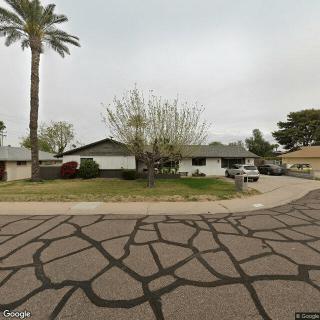
 Warm, homey atmosphere with attentive staff and a welcoming owner.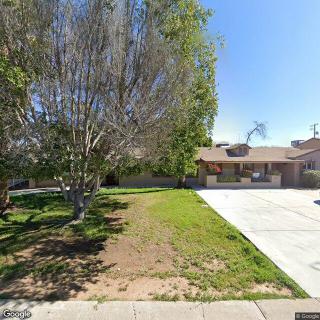


 Five Subtle Dementia Indicators to Observe: An In-Depth Guide to Understanding “Does My Mom Have Dementia?”
 Dementia, Paranoia, and Caregiver Guidance: Understanding the Connection
 Engaging Memory Care Activities That Enhance Quality of Life