
1544 West Las Palmaritas Drive, Phoenix, AZ 85021
For more information about senior living options: (866) 208-4318
Premier Assisted Living Costs & Pricing
Premier Assisted Living offers competitive pricing that stands out in both Maricopa County and the broader Arizona area. For instance, their semi-private rooms are priced at $2,448 per month, significantly lower than the county average of $2,801 and the state average of $2,820. Similarly, their studio apartments, available for $3,255 monthly, are also more affordable compared to the local rate of $3,960 and the state average of $3,829. Even for one-bedroom units, Premier Assisted Living maintains a reasonable price point at $3,613 versus Maricopa County's average of $3,473 and Arizona's typical charge of $3,532. This pricing strategy not only reflects a commitment to providing quality care but also ensures that residents receive excellent value while enjoying a comfortable living environment.
| Floor plans | Premier Assisted Living | Maricopa County | Arizona |
|---|---|---|---|
| Semi-Private | $2,448 | $2,801 | $2,820 |
| Studio | $3,255 | $3,960 | $3,829 |
| 1 Bedroom | $3,613 | $3,473 | $3,532 |
Assisted Living communities with a similar price nearby
-
from +$352 / mo

Pinnacle Peak Assisted Living
$2,800 to $3,100 / month14.3 miles away -
from +$177 / mo

The Eldercare Home Of Tempe
$2,625 to $3,412 / month16.6 miles away -
from +$452 / mo
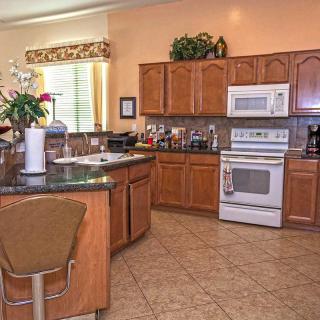
Royal Paradise Care
$2,900 to $3,800 / month15.5 miles away -
from +$402 / mo
Covenant Care Assisted Living Home
$2,850 to $3,705 / month18.3 miles away -
About the same
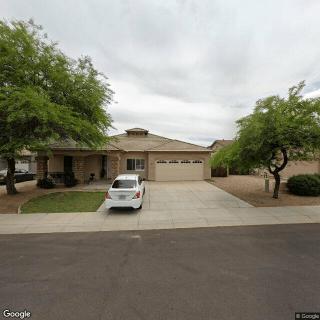
Anc Assisted Living Homes I
$2,500 to $3,500 / month21.4 miles away
Overall Review of Premier Assisted Living
Pros
 The Bella Vita team is professional, with Laura and Jamie easy to contact, responsive and accommodating.
 - The staff are consistently friendly, attentive, and willing to listen to residents’ unique needs.
- The facility is well maintained, with ample space for socializing and comfortable, well-equipped bedrooms.
- The environment feels like a warm, inclusive, true family home.
- Residents benefit from engaging programs such as exercise and live music, and meals prepared on-site.
- The care team collaborates closely with hospice and medical professionals to ensure high-quality care.
- Families feel fortunate and relieved knowing their loved ones are cared for with kindness, respect, and personal attention.
Cons
 Bella Vita misrepresented its activities and prompt care for infections.
- A caretaker punched a resident in the stomach while he was choking.
- The on-site manager is only present 3 to 5 hours a week, is rude on several occasions, and lacks communication and management skills.
- Three staff members left during the four-month stay.
- One fired staff member appeared drunk or high on more than one occasion.
- The owner is rarely present (likely less than an hour a week) and is there mainly for tours or to drop off groceries.
- The owner told residents' family to visit less frequently and for shorter periods.
- Residents pay top dollar for their services.
Review
This community is best suited for families that prize a home-like, intimate setting where nearly every resident is known by name and care is tailored to individual needs. The 10-bed model described in these reviews consistently delivers a warm, family-style atmosphere, with owners and managers who are reachable and engaged. For seniors who benefit from close daily contact with caregivers, memory-care attention, and programs designed to stimulate engagement, yet without the feel of a large campus, this setting excels. The environment is reinforced by a notable emphasis on personalized routines, small-group activities, and ongoing coordination with families, which is especially meaningful for residents with memory challenges or progressive conditions such as Parkinson’s disease, where staff training is highlighted as a real differentiator.
However, potential residents and their families should consider alternatives if they require a larger, more industrialized operation with a broader spectrum of on-site specialists, or if the preferred care style leans toward a plaques-and-policies corporate feel. Some reviewers flag a limited on-site management presence and a history of staffing turnover, which can translate into uneven daily operations during peak hours. There are also cautions raised about the consistency and transparency of activity programming, and, in one highly critical account, a serious incident and perceived gaps in supervision. For families seeking a facility with robust, visible corporate oversight, predictable daily schedules across a larger campus, or more formalized complaint-handling channels, alternatives may deliver greater peace of mind.
The strongest positives center on the intimacy and attentiveness that come with a small-scale operation. Residents benefit from hands-on care, timely medication management, and a staff that is consistently described as friendly, patient, and engaged. Several families emphasize that the staff not only attends to routine needs but also helps residents stay mentally and socially engaged through in-house programs, live music, exercise classes, group activities, and hobby-oriented sessions. The environment is repeatedly described as clean, well maintained, and aesthetically welcoming, with features like a sunlit common area, safe access controls, and thoughtfully designed spaces that encourage conversation and connection. The presence of a managing nurse and proactive communication with families further strengthens a sense of reliability when concerns arise.
Yet the main risks emerge in the form of governance and programming in practice. A standout negative review paints a troubling picture of misrepresented activities, delayed infection care, and limited on-site management time, culminating in a perception that residents’ social needs and safety could be compromised during high-demand periods. Another reviewer highlights staffing instability, with several staff departures and an impression that some days run with leaner coverage. A different voice notes friction around visitation norms and the balance between resident bonding with staff and maintaining appropriate boundaries. These are significant considerations: they do not negate the warmth and capability documented elsewhere, but they do demand careful due diligence and direct conversations about supervision, caregiver turnover, staff training quality, and the facility’s concrete activity calendar.
When the positives and the caveats are weighed, the logic is clear. The strength of this model lies in its ability to deliver deeply personalized care, quick caregiver access, and genuine, ongoing family involvement within a tightly knit team. Residents appear to benefit from targeted memory-care practices, specialized training for conditions like Parkinson’s, and a culture that rewards staff who show up consistently and treat residents with dignity. The small footprint promotes accountability: with fewer residents, staff can tailor routines, monitor health signals more closely, and foster meaningful daily interactions. For families who value a caregiver team that becomes an extended family, one that communicates openly, adapts meals and activities to resident preferences, and maintains a bright, engaging day-to-day rhythm, these strengths are compelling and hard to equal in larger settings.
The bottom-line decision comes into sharp focus: this is an optimal choice for families prioritizing intimate, personalized care where staff know residents well, and where memory and cognitive support are integrated into daily life. It is less likely to satisfy those who require large-scale programming, continuous on-site executive presence, or a rock-solid guarantee of zero staffing disruptions. To move confidently toward a decision, prospective families should immerse in due diligence: request a current activity calendar, observe several shift changes to gauge consistency, tour at different times of day, and speak directly with several caregivers about day-to-day responsibilities. Ask for written care plans and safety protocols, confirm licensing status, and request references from a range of families, both those new to the facility and those with residents who have complex needs. In short, this small, care-forward model can deliver a remarkably high quality of life for the right resident; the key is aligning expectations with the realities of staffing, management visibility, and program vitality.
 5 resident community capacity
 Assisted Living
 Board and Care Home
 Cable or satellite TV
 Dining room
 Fully furnished
 Garden
 Housekeeping services
 Move-in coordination
 Outdoor space
 Telephone
 Wi-Fi/high-speed internet available
 Phoenix Sky Harbor International (10 miles away)
 24-hour supervision
 Activities of daily living assistance
 Assistance with bathing
 Assistance with dressing
 Assistance with transfers
 Diabetes diet
 Meal preparation and service
 Medication management
 Special dietary restrictions
 Transportation arrangement (medical)
 Transportation to doctors appointments




 Securing Financial Support for Assisted Living: A Comprehensive Overview
 Social Security Benefits and Assisted Living: Navigating Options Across the U.S.
 An Extensive Exploration of the VA Aid and Attendance Benefit