
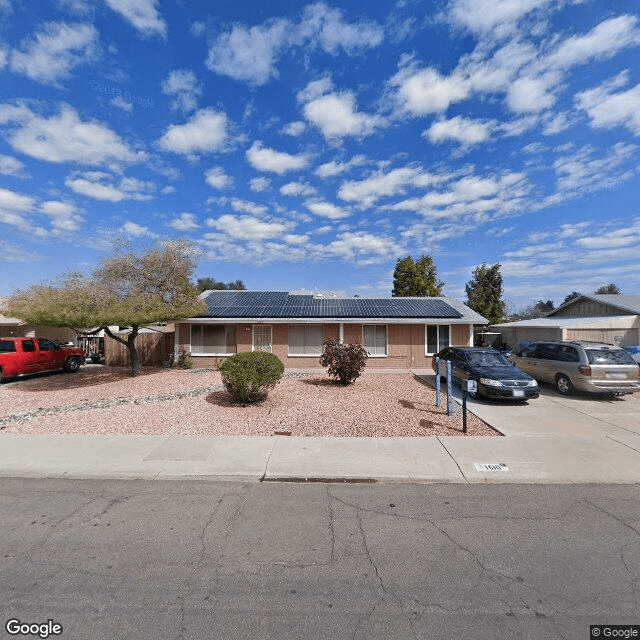
1610 West Charleston Ave., Phoenix, AZ 85023
To contact a resident: (602) 315-8161
For more information about senior living options: (866) 208-4318
Desert Footprints Adult Care Costs & Pricing
Desert Footprints Adult Care offers competitive pricing for its services, standing out as an affordable option within both Maricopa County and the broader state of Arizona. For semi-private rooms, Desert Footprints charges $2,200 per month, significantly lower than the county average of $2,801 and the state average of $2,820. Similarly, their private rooms are priced at $2,500 each month - again more economical compared to Maricopa County's average of $3,318 and Arizona's overall average of $3,345. This positioning not only underscores the commitment to providing quality adult care at a reasonable cost but also emphasizes the value residents can find at Desert Footprints compared to neighboring facilities.
| Floor plans | Desert Footprints Adult Care | Maricopa County | Arizona |
|---|---|---|---|
| Semi-Private | $2,200 | $2,801 | $2,820 |
| Private | $2,500 | $3,318 | $3,345 |
Senior living communities with a similar price nearby
-
from -$255 / mo

Home Instead - Fountain Hills, AZ
$1,945 to $3,525 / month21.1 miles away -
from -$339 / mo

Endeavor Senior In-Home - Mesa
$1,861 / month24.6 miles away -
from +$425 / mo
The Eldercare Home Of Tempe
$2,625 to $3,412 / month21.8 miles away -
from -$200 / mo
Garcia's Assisted Living Home LLC
$2,000 / month17.2 miles away -
from -$200 / mo
Martha Bonilla Care Loving Home
$2,000 to $2,200 / month23.9 miles away
Overall Review of Desert Footprints Adult Care
Pros
 They love helping those who need it.
- He absolutely loves it.
- There are up to three activities for him each hour, with daily changes.
- The staff, including a social worker and nurse, are consistently present and supportive.
- They find the staff to be very attentive.
- The prescription was eventually refilled after a major ordeal, bringing relief.
Cons
 They refused to fill the reviewer’s medication even though there was no appointment until January 14.
- The reviewer feared they might have another stroke due to the delay in refilling medication.
- The reviewer planned to seek a new primary care physician immediately.
- The reviewer felt that the doctor's office stressed them out.
- The reviewer criticized staff for getting mad, upset, and mean before addressing any needs.
Review
Desert Footprints Adult Care in Phoenix is best suited for adults who need assistance with daily living tasks and benefit from a structured daytime routine, especially those with cognitive challenges or physical handicaps. The community shines as a dependable respite option for families, delivering steady on-site oversight from a social worker, a nurse, and other staff who stay in close contact with participants. It works well for someone who can participate part-time, examples in the reviews show two days a week can deliver meaningful engagement and real relief for caregivers. For families prioritizing meaningful daytime activity over 24/7 medical supervision, this program offers a focused environment built around activity, supervision, and social connection, rather than a full-time care facility.
The strength of Desert Footprints lies in its engaging, varied programming and the visible staff presence. Reviewers highlight that participants are offered up to three activities each hour, with choices changing from day to day, which helps sustain attention, mood, and a sense of autonomy. The combination of intentional programming and constant staff attendance creates a safety net that can reduce caregiver anxiety and improve day-to-day quality of life for both the participant and their family. Attentive staff further bolster this dynamic, with caregivers noting the approachability and responsiveness of the personnel, which is crucial when cognitive or physical needs require quick and compassionate responses.
However, a notable caution appears in one review that spotlights potential gaps in medical coordination. A caregiver reported a significant delay in a prescription refill and expressed distress about the difficulty of obtaining timely assistance, eventually resulting in frustration with the surrounding medical ecosystem. This instance underscores a real-world dependency on external providers and the importance of clear, proactive communication channels between Desert Footprints, the participant, and the family’s primary care team. It is not presented as a universal failure, but it does flag a scenario where coordination gaps can affect continuity of care and cause considerable caregiver concern.
That risk is offset by the program’s primary advantages: a dedicated social work presence, on-site nursing support, and a structured schedule designed to keep participants engaged and monitored. The staff’s attentiveness, combined with regular activity options, creates a practice of daily accountability that can mitigate isolation and behavioral drift for adults facing cognitive or physical challenges. Prospective families should inquire about care-planning processes, how medical issues are escalated, and what on-site medical support looks like on a typical day. Understanding these procedures helps determine whether the current setup aligns with the elder’s medical needs and the family’s expectations for timely intervention.
For decision-making, Desert Footprints is a strong fit for families seeking reliable daytime engagement and caregiver relief rather than a facility offering continuous medical oversight. It suits individuals who can participate in scheduled activities and tolerate a part-time arrangement that provides social interaction and structured supervision. Those whose care requires 24/7 presence, highly integrated medical management, or rapid response to medical changes should consider alternatives with stronger on-site medical infrastructure or full-time supervision. It is essential to verify hours, participation requirements, and how prescriptions and urgent medical concerns are handled before committing.
In sum, Desert Footprints Adult Care proves to be a practical, well-regarded option for enhancing daily life and providing caregiver respite through engaging activities and professional staff support. The rating reflects broad satisfaction, tempered by at least one account of coordination hiccups that could influence the decision for families with high medical needs. The decisive question is whether daytime engagement and on-site supervision align with the elder’s needs or if a more medically integrated setting is required. A targeted visit, conversations with the social worker and nursing staff, and a careful review of the medication-management policy will reveal whether Desert Footprints is the right match or if another option better safeguards medical continuity and overall safety.
 Board and Care Home
 Activities on-site
 Bath tubs
 Beautician on-site
 Devotional services off-site
 Indoor common areas
 Outdoor common areas
 Private
 Respite or short term stays offered
 Wheelchair accessible showers
 Phoenix Sky Harbor International (16 miles away)
 Diabetic care
 High acuity care
 Incontinence care
 Medication management
 Meals provided





 In-Depth Look at the VA Aid and Attendance Program
 Nurturing Our Loved Ones: A Daughter's Journey in Caring for Her Mother
 Nurturing Our Elders: Linda's Journey of Supporting Her Mother