For more information about senior living options: (866) 208-4318
4.4 from 57 reviews
5 stars
46
4 stars
1
3 stars
2
2 stars
1
1 stars
7
Bethesda @ carefree Costs & Pricing
At Bethesda @ Carefree, the monthly costs for care reflect a competitive pricing structure relative to both Maricopa County and the broader state of Arizona. For a semi-private room, residents can anticipate a monthly fee of $2,400, which is notably lower than the county average of $2,801 and the state average of $2,820. Similarly, for those seeking private accommodations, Bethesda offers a rate of $3,000 - again more affordable than Maricopa County's average of $3,318 and Arizona's overall average of $3,345. This positions Bethesda @ Carefree as an appealing option for families looking for quality care in a cost-effective environment.
Floor plans
Bethesda @ carefree
Maricopa County
Arizona
Semi-Private
$2,400
$2,801
$2,820
Private
$3,000
$3,318
$3,345
Senior living communities with a similar price nearby
from +$400 / mo
Pinnacle Peak Assisted Living
5 from 47 reviews
$2,800 to $3,100 / month
13.6 miles away
from +$450 / mo
Covenant Care Assisted Living Home
5 from 18 reviews
$2,850 to $3,705 / month
21.9 miles away
from +$100 / mo
Anc Assisted Living Homes I
5 from 18 reviews
$2,500 to $3,500 / month
22.9 miles away
from -$400 / mo
All Stars Assisted Living
5 from 18 reviews
$2,000 to $2,500 / month
22.3 miles away
About the same
Arabian Views Assisted Living One
5 from 17 reviews
$2,400 to $3,200 / month
13.9 miles away
Overall Review of Bethesda @ carefree
common5 reviews mention this
Clean, well-kept facility
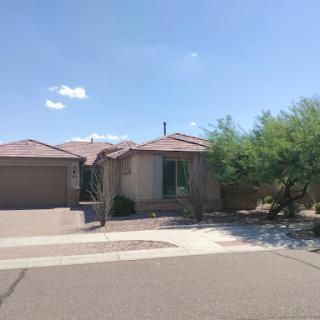
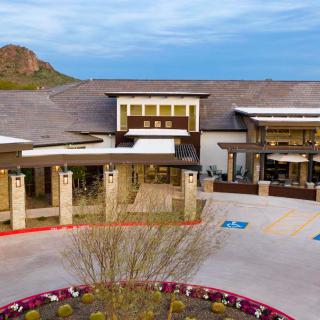
Residents describe a bright, clean, and well-kept environment.
Several reviews focus on how clean and well maintained the community looks and feels. Residents also mention the facility being bright and generally kept up, with one describing the inside and outside as attractive. Overall, cleanliness and upkeep show up as a consistent reason people feel comfortable visiting or settling in.
common5 reviews mention this
Activities keep residents engaged
Many reviews say daily activities help residents stay engaged.
Reviews frequently mention that residents have things to do, including games and organized events. A few also say the community encourages participation and offers regular opportunities to get involved. There are also dissenting notes, with at least one reviewer saying residents seem bored with activities and another calling meals and activities a mixed experience.
caveat4 reviews mention this
Dining is mixed
Dining quality and service timing receive mixed feedback.
Some residents and families describe the food positively, while others report that meals are only so-so or not good. Timing is another recurring issue, with one reviewer saying dining service can be slow. Taken together, dining appears to vary based on what residents experience day to day.
caveat2 reviews mention this
Memory care is a concern
Memory care reviews describe gaps with behavioral support.
Two reviews specifically raise concerns about the memory care side when dealing with worsening dementia-related behaviors. One reviewer describes agitation and injuries during the stay, while another says staff on the assisted living side were not trained to handle redirection needs for someone who did not quite meet memory care requirements. These accounts stand out as the clearest memory-care caveats in the set.
How we summarize
Counts show how many written reviews mention each theme; a review can touch several themes, and only frequently mentioned themes are displayed.
Features
Types of Care
Board and Care Home
Amenities
Private
Care Services
Diabetic care
Nearby Places of Interest
Pharmacies
Carefree Compounding & Wellness (0.2 miles)
Walgreens (0.2 miles)
Fry's Pharmacy (0.7 miles)
Albertsons Pharmacy (0.7 miles)
Roadrunner Pharmacy (3 miles)
CVS Pharmacy (3.7 miles)
Walgreens (4.4 miles)
Cafes
Starbucks (0.7 miles)
Elevate Coffee (5.5 miles)
Starbucks (8.5 miles)
Dutch Bros Coffee (8.6 miles)
Starbucks (8.6 miles)
The Human Bean (8.8 miles)
Starbucks (8.8 miles)
Restaurants
In-N-Out Burger (0.9 miles)
Sauce (5.6 miles)
Carlos O'Brien's Mexican Restaurant & Pub (5.7 miles)
Biscuits Cafe (7.3 miles)
McDonald's (7.6 miles)
McDonald's (7.7 miles)
McDonald's (7.7 miles)
Places of Worship
Canyon Church (0.9 miles)
Phoenix Arizona Temple (7.4 miles)
CCV Childrens Building (8 miles)
Christ's Church of the Valley (8 miles)
Copper Hills Church (8.9 miles)
St Thomas More Parish (10.2 miles)
Physicians
EuroMed Foundation (0.9 miles)
Tramonto Crossing Family Medicine (0.9 miles)
Pain Center Of Arizona (5 miles)
Anthem VA Clinic (5 miles)
Anthem Health Center (5.1 miles)
Gavilan Peak Family Practice / Urgent Care (5.1 miles)
At Bethesda @ Carefree, the monthly costs for care reflect a competitive pricing structure relative to both Maricopa County and the broader state of Arizona. For a semi-private room, residents can anticipate a monthly fee of $2,400, which is notably lower than the county average of $2,801 and the state average of $2,820. Similarly, for those seeking private accommodations, Bethesda offers a rate of $3,000 - again more affordable than Maricopa County's average of $3,318 and Arizona's overall average of $3,345. This positions Bethesda @ Carefree as an appealing option for families looking for quality care in a cost-effective environment.
Geriatric care managers create personalized care plans for older adults, addressing their medical, social, financial, and psychological needs while coordinating services and advocating for their well-being. They help families navigate caregiving challenges but may be hindered by high costs and a shortage of qualified professionals.
The article highlights the importance of empathy and open communication when comforting someone who is grieving, noting that grief is unique to each individual and emphasizing the need for sincere expressions of condolence, active listening, and ongoing support. It also addresses cultural differences in mourning practices and encourages tailored approaches to provide effective comfort.
Home health care aides provide vital medical and non-medical support to individuals at home, assisting with daily living activities and promoting emotional well-being, while the demand for these services increases due to an aging population. Families benefit from in-home care's flexibility and cost-effectiveness but face challenges like scheduling consistency and caregiver turnover.
Get PricingAsk A QuestionSchedule A TourContact Senior Advisor
By clicking submit, you agree to our Partner's Terms of Use. You
also consent to receive calls and texts, which may be autodialed, from our Partner. Your consent is not a condition to
using our Partner's service. Please visit our Partner's Privacy Policy for information about their privacy practices.


 Board and Care Home
 Private
 Diabetic care
 Lower-than-average private-room pricing with comprehensive care.
 Is a Geriatric Care Manager the Right Choice for Your Family?
 Compassionate Conversations: How to Comfort Someone Who Is Grieving
 Home Health Care Aides: Understanding Their Role and Supporting Your Family