

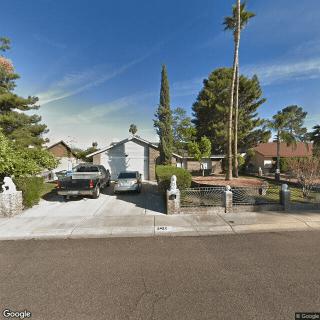
3420 W Angela Drive, Phoenix, AZ 85053
To contact a resident: (602) 863-1811
For more information about senior living options: (866) 208-4318
Overall Review of Artemis Assisted Living II LLC
Pros
 The facility and its caregivers are top notch and extremely professional.
- The facility is nicely decorated and clean.
- Anita and her crew are outstanding.
- The home is clean and staff are attentive to residents’ needs.
- Anita and her staff welcome families with open arms, helping residents settle in with patience and care.
- The staff are respectful and willing to do anything needed to assist residents.
- The owner and staff show compassion, empathy, and knowledge in serving the elderly.
- The home is clean, smells good, and feels family-oriented.
- Families would highly recommend Angel’s Senior Care without hesitation.
Review
Artemis Assisted Living II LLC in Phoenix is best suited for families seeking a warm, intimate, home-like assisted living experience where caregivers deliver attentive, individualized care and staff stay closely connected with residents and their families. The voice of the reviews centers on a small-scale, respectful environment where cleanliness, decor, and a welcoming atmosphere set the tone for daily life. This model resonates with seniors who prefer a traditional, family-oriented setting over a large campus, and who value steady routines, personal attention, and staff who know their names and preferences. It is a fit for residents who need daily assistance and ongoing companionship, rather than those requiring complex hospital-level medical oversight.
Those considering Artemis should also acknowledge who may want alternatives. Families pursuing robust, around-the-clock clinical nursing or highly specialized memory-care programming may want to look at larger facilities with on-site medical teams and dedicated memory-care wings. Similarly, residents who require extensive rehabilitation services, frequent transport to medical appointments, or a wide network of on-site activities and programs might find a larger community more fitting. For those prioritizing sheer scale, abundant social events, or a broad range of therapy options, a different configuration could offer more of what is sought.
The strongest positives in the reviewed experiences point to a caregiving culture that is professional, compassionate, and highly engaged. Care teams are described as respectful, empathetic, and knowledgeable about the needs of elderly residents, with staff who communicate clearly with families and demonstrate a willingness to accommodate requests. Cleanliness and a well-kept, home-like setting contribute to a sense of safety and comfort, while the atmosphere feels genuinely family-oriented. End-of-life or transition moments are described as handled with patience and care, reinforcing the impression of a facility where residents are treated with dignity and affection.
Those clear strengths offset several typical concerns about smaller, home-like communities. The hands-on leadership and a culture of responsiveness help compensate for potential gaps in scope that might accompany a smaller operation. When families want a setting where staff know their loved one personally, where requests are met with flexibility, and where a resident’s daily life feels nurturing rather than clinical, these advantages can substantially outweigh the absence of a large, on-site medical hub. In essence, the trade-off favors intimate attention, predictable routines, and a comforting environment, provided expectations align with the level of medical oversight the resident requires.
Practical decision-points emerge from the review pattern. Prospective residents should verify the exact balance of daily assistance versus medical services, inquire about staff-to-resident ratios, and confirm how care plans are coordinated with external providers. It is wise to observe staff interactions during routine activities, assess how meals, housekeeping, and transportation are managed, and ask for recent examples of how complex medical needs were addressed. Families should also explore memory-care capabilities, respite availability, and the process for welcome-and-orientation experiences to gauge how smoothly transitions occur.
In the end, Artemis appears well-positioned for families seeking a genuine, home-based feel with highly engaged caregivers and a respectful, clean, and welcoming setting. The strongest caveat is the potential mismatch for those requiring expansive medical services, advanced rehab, or specialized memory-care infrastructures. If the goal is steady companionship, dependable daily support, and a personal touch that treats residents like family, Artemis delivers with notable conviction. For households prioritizing size, clinical breadth, or aggressive programming, it warrants comparing options that place greater emphasis on medical staffing and large-scale activity offerings.
 Assisted Living
 Activities on-site
 Devotional services off-site
 Indoor common areas
 Phoenix Sky Harbor International (16 miles away)
 Ambulatory care
 Diabetic care
 Meals provided


 Choosing the Right Senior Care: A Detailed Exploration of Assisted Living and Nursing Homes
 Understanding the True Cost of Assisted Living in 2025: A Comprehensive Guide
 Understanding Medicaid Coverage for Assisted Living: A Comprehensive Guide