
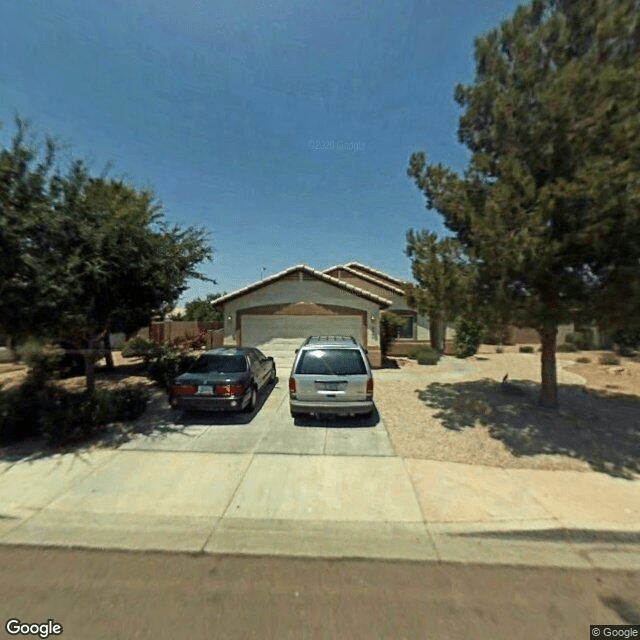
8340 North 86Th Lane, Peoria, AZ 85345
For more information about senior living options: (866) 208-4318
Grace Living Care Costs & Pricing
Grace Living Care offers competitive pricing for its services, particularly when compared to the broader market in Maricopa County and across Arizona. For a semi-private room, residents can expect to pay $3,000 per month, which is notably higher than the county average of $2,801 and the state average of $2,820. In contrast, the facility's private rooms are priced at $5,000 monthly, significantly exceeding both the county rate of $3,318 and the state average of $3,345. These costs reflect the quality care and amenities provided by Grace Living Care but suggest that potential residents should weigh these figures against their specific preferences and budgetary considerations when exploring their options.
| Floor plans | Grace Living Care | Maricopa County | Arizona |
|---|---|---|---|
| Semi-Private | $3,000 | $2,801 | $2,820 |
| Private | $5,000 | $3,318 | $3,345 |
Assisted Living communities with a similar price nearby
-
from -$200 / mo

Pinnacle Peak Assisted Living
$2,800 to $3,100 / month21.6 miles away -
from -$375 / mo

The Eldercare Home Of Tempe
$2,625 to $3,412 / month23.4 miles away -
from -$100 / mo

Royal Paradise Care
$2,900 to $3,800 / month7.5 miles away -
About the same

Bella Amore Assisted Living
$3,000 / month7.1 miles away -
from -$150 / mo
Covenant Care Assisted Living Home
$2,850 to $3,705 / month9.7 miles away
Overall Review of Grace Living Care
Pros
 The family member was thankfully moved to a better place.
- There was an air-conditioned roof over their head during a very hard time.
- The staff were consistently present during phone calls with family.
- The family member's condition improved after leaving the facility.
Cons
 They are negligent.
- They will give you lots of attitude about care.
- They will badger you about more money.
- Their small staff are not nurses, just caretakers.
- It is unclear what training they undergo.
- It feels creepy that they are always present during phone calls with family.
- The monitoring during phone calls felt creepy and overly intrusive.
- The staff did not feed the patient or move them enough and were abusive enough to frighten them into telling the family.
- No one called them back after leaving a message.
Review
Grace Living Care in Peoria is best suited for families facing an urgent placement where options are severely limited and relentless hands-on oversight is both possible and expected. It is not a fit for those counting on steady, professional nursing care, predictable communication, and consistently compassionate daily routines. In practice, this setting demands that families assume active, ongoing advocacy, be prepared to press for answers, monitor care plans, and challenge staff whenever gaps appear. If a calm, transparent care environment with reliable medical oversight is the priority, this community should not be the first choice.
Explicitly, alternatives should be considered by families prioritizing licensed nursing presence, timely responsiveness, and a demonstrable track record of safety. Those with medical needs requiring regular medication management, wound care, or mobility support will want a facility with trained nurses, clear staffing ratios, and documented care plans. Anyone who cannot dedicate substantial time to supervise care or who expects consistent, respectful communication from administration should seek other options. The reviews point to fundamentals, training, accountability, and proactive care, that this community appears to struggle to deliver.
The main downsides are severe enough to override any weak or theoretical benefits. The most troubling concerns center on safety and trust: allegations of neglect, inappropriate handling of meals and mobility, and the development of bed sores, all tied to a staff pool described as caretakers rather than licensed nurses with verifiable training. Add in reports of residents being monitored during phone conversations in a way that feels intrusive, and a pattern of poor responsiveness when families attempt to raise issues. When a resident’s condition declines after placement and only improves after a move, the implication is that the baseline care is not meeting basic needs. Such dynamics create a climate where fear and withholding information replace genuine, proactive care.
There are any real positives to weigh against these downsides? The facility does provide a basic shelter and a staffed environment, elements that every senior living option should offer. The air-conditioned, secure space is a minimal comfort, and some degree of staff presence exists in a physical sense. However, these slender advantages do not compensate for the core failures in medical oversight, feeding and turning practices, or the credibility of communication with families. In this context, any perceived upside is overwhelmed by safety risks and the erosion of trust necessary for a resident’s well-being.
In evaluating Grace Living Care, the alchemy does not tip in favor of staying. The potential advantages are too fragile to offset the real and documented risks. Families should insist on transparent evidence of licensed nursing staff, formal training records, robust med-management protocols, and a proven track record of timely, compassionate care. If these assurances cannot be provided, the prudent course is to explore alternatives, nearby facilities with strong state inspections, clear care plans, and open channels for family involvement, or consider home health options that allow hands-on oversight and direct caregiver supervision. If questions persist, prioritize safer, more accountable environments where daily routines, dignity, and health needs are consistently addressed without the burden of constant, stressful oversight on the part of family members.
 10 resident community capacity
 Assisted Living
 Board and Care Home
 Cats allowed
 Dogs allowed
 Activities on-site
 Air-conditioning
 Bath tubs
 Cable or satellite TV
 Dining room
 Fully furnished
 Garden
 Housekeeping services
 Indoor common areas
 Move-in coordination
 Outdoor common areas
 Private
 Private bathrooms
 Respite or short term stays offered
 Telephone
 Wheelchair accessible showers
 Wi-Fi/high-speed internet available
 Phoenix Sky Harbor International (16 miles away)
 24-hour supervision
 Ambulatory care
 Assistance with bathing
 Assistance with dressing
 Assistance with transfers
 Diabetes diet
 Diabetic care
 High acuity care
 Incontinence care
 Meal preparation and service
 Medication management
 Special dietary restrictions
 Transportation arrangement (medical)
 Transportation to doctors appointments



 8 Key Indicators That Suggest It May Be Time to Transition from Assisted Living to Skilled Nursing Care
 Vibrant Senior Living: A Comprehensive Guide for Active Older Adults
 When to Transition from Assisted Living to Memory Care: Key Indicators, Steps, and Finding the Right Community