
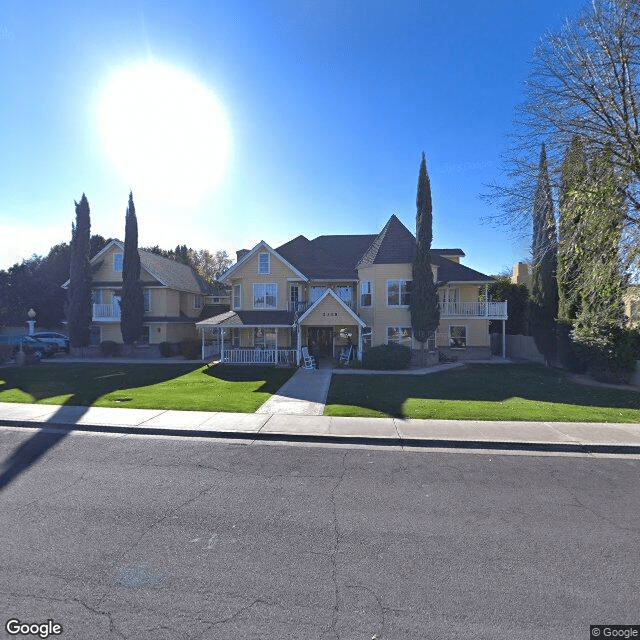
2308 North Kachina, Mesa, AZ 85203
For more information about senior living options: (866) 208-4318
Jim & Patti Jones II Costs & Pricing
Jim and Patti Jones II are currently facing monthly costs that significantly exceed the average rates in both Maricopa County and the broader state of Arizona. For a semi-private room, their expense stands at $3,500, which is notably higher than the county's average of $2,801 and the state average of $2,820. When it comes to private accommodations, Jim and Patti's monthly rate of $4,500 surpasses the local and state averages of $3,318 and $3,345 respectively. Additionally, for a one-bedroom unit, they again find themselves paying $4,500 while regional averages hover around $3,473 in Maricopa County and $3,532 statewide. This discrepancy highlights not only the unique circumstances surrounding their housing but also indicates a potential need for further exploration of more cost-effective options within their area.
| Floor plans | Jim & Patti Jones II | Maricopa County | Arizona |
|---|---|---|---|
| Semi-Private | $3,500 | $2,801 | $2,820 |
| Private | $4,500 | $3,318 | $3,345 |
| 1 Bedroom | $4,500 | $3,473 | $3,532 |
Memory care communities with a similar price nearby
-
from -$500 / mo

Desert Garden Senior Living
$3,000 to $3,500 / month22.4 miles away -
from -$500 / mo
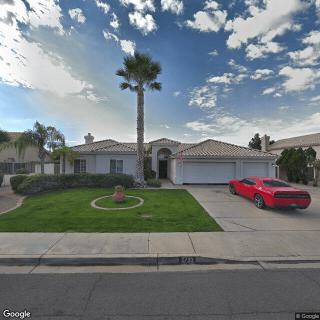
Desert Winds I
$3,000 to $3,800 / month1.1 miles away -
from +$500 / mo
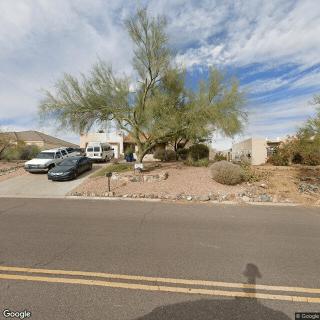
Sunrise Assisted Living Facility
$4,000 to $5,000 / month12.1 miles away -
from -$500 / mo
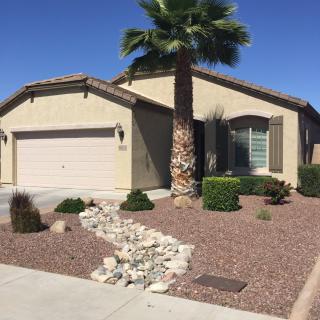
Altercare Assisted Living Home
$3,000 to $3,500 / month14.5 miles away -
from +$200 / mo

Hazelwood Manor
$3,700 / month7.3 miles away
Overall Review of Jim & Patti Jones II
Pros
 The family is grateful for Patti and her team, noting that the mother is well cared for and truly loved.
- They would urge others to secure a space quickly.
- They describe the staff as a wonderful, compassionate family with over 30 years of experience, and they are very happy with the care.
- They view the facility as great, run by helpful professional staff.
- They describe the care as caring and compassionate, a wonderful home for their family member, and they are very happy with the care he is receiving.
- They thank the staff for taking such good care of their dad, noting he feels part of the staff’s family through compassionate care, and they call them unsung heroes.
- They describe Jim and Patty Jones as the nicest people who truly care about their residents; they are awesome.
- They indicate that Patti and Jim genuinely care about their residents, that their two homes surpass others, and that they trust the staff.
Review
Jim & Patti Jones II in Mesa, Arizona is best suited for families seeking a small, home-like assisted living environment where care feels personal, constant, and deeply loving. This community thrives under hands-on ownership and a long-running, family-centered approach. The reviews repeatedly highlight the staff’s compassion, the owners’ direct involvement, and a culture that treats residents as part of the family. For families who want a tight-knit setting with clear, trust-based relationships between caregivers, residents, and loved ones, this offering is a natural fit. The two-home model reinforces continuity of care, with a capacity to maintain that intimate, personalized atmosphere.
Those who may want to consider alternatives are families prioritizing scale, breadth of medical oversight, or a wider array of on-site amenities. If a resident requires intensive or highly specialized medical management, or if a larger campus with more formal memory-care programming is desirable, a bigger, more structured community may deliver more predictable access to certain services. Similarly, if immediate bed availability or a broader menu of recreational options and facilities is non-negotiable, other operators with larger staffs and more extensive activity calendars could be preferable. In short, the best fit favors warmth and continuity over institutional breadth.
The core advantages, unwavering compassion, a family-owned ethos, and trusted, long-tenured staff, more than justify the trade-offs that come with a smaller operation. The care culture is palpable: one reviewer notes that a mother is not only well cared for but truly loved, and another describes staff as “unsung heroes.” The owners are described as genuinely kind, and hospice professionals who visit regularly speak to a level of trust that is hard to find in larger, more anonymous settings. This depth of relationship translates into residents feeling included, not hidden away, and it creates a sense of security for families who witness the daily, consistent attention their loved ones receive.
That same warmth can offset potential drawbacks inherent to a smaller, family-run model. The intimate scale means more hands-on, responsive caregiving, fewer layers of administration to navigate, and a steadier sense of community for residents who prize familiarity and routine. However, the implied limits, space constraints, potentially fewer on-site specialists, and a leaner activity calendar, are real considerations. For families evaluating needs, the positives center on emotional well-being, trust, and continuity, while the possible gaps revolve around medical breadth and the speed with which specialized services can be mobilized. The verdict: the offset is substantial when personal connection and reliability are the priority.
From an actionable perspective, this community shines for those who want transparent, attentive care anchored by two long-standing homes and an owner-operator team that visibly cares. Prospective residents should verify practicalities that matter for ongoing comfort: current occupancy status and wait times, the level of daily medical oversight, how outside professionals coordinate with staff, and what flexibility exists around care plans as needs evolve. Prospective families should also explore the daily routine, meal quality, and activity options to ensure alignment with the resident’s preferences. Above all, assess the comfort level with a small team that carries a strong sense of purpose and personal accountability.
In sum, Jim & Patti Jones II stands out as a highly compelling choice for families seeking a dependable, emotionally grounded, family-led living environment in Mesa. It is best suited for residents who prioritize belonging, individualized attention, and a trusted, intimate setting over the breadth of services offered by larger communities. Those whose priority is highly professional, large-scale medical infrastructure or a broad spectrum of on-site amenities should explore other options. For families who want their loved one to feel genuinely cared for as part of a caring extended family, this community delivers with remarkable clarity and consistency.
 10 resident community capacity
 Assisted Living
 Board and Care Home
 Memory Care
 Respite Care
 Cats allowed
 Activities off-site
 Bath tubs
 Beautician on-site
 Cable or satellite TV
 Dining room
 Fully furnished
 Garden
 Housekeeping services
 Move-in coordination
 Outdoor common areas
 Private
 Swimming pool / hot tub
 Telephone
 Wheelchair accessible showers
 Wi-Fi/high-speed internet available
 Phoenix Sky Harbor International (13 miles away)
 24-hour supervision
 Ambulatory care
 Assistance with bathing
 Assistance with dressing
 Assistance with transfers
 Diabetes diet
 Diabetic care
 Incontinence care
 Meal preparation and service
 Medication management
 Special dietary restrictions
 Transportation arrangement (medical)
 Transportation to doctors appointments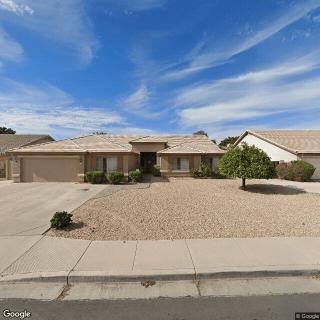


 Are Dementia and Alzheimer's Disease Lethal? A Comprehensive Exploration
 Exploring the Power of Reminiscence Therapy for Individuals With Dementia
 An In-Depth Look at Reminiscence Therapy in Dementia Care